
Why should councils keep picking up the bill for pothole repairs after bad repair jobs by utility companies? - Yorkshire Post Letters

From: Councillor William Shaw, Reform UK for Conisbrough ward, Doncaster.
The news has been awash with articles on potholes. Winter damage to the roads is everywhere and complaints flood into councils.
Newspapers and broadcasters churn out articles trying to outdo each other showing the worst roads and potholes and also the latest and greatest ways to fix them. All the focus is on mending them, which of course needs doing. But maybe there should be more focus on stopping them forming in the first place?
Plenty of potholes just happen. A slight movement in the road structure can let in water and that's it.
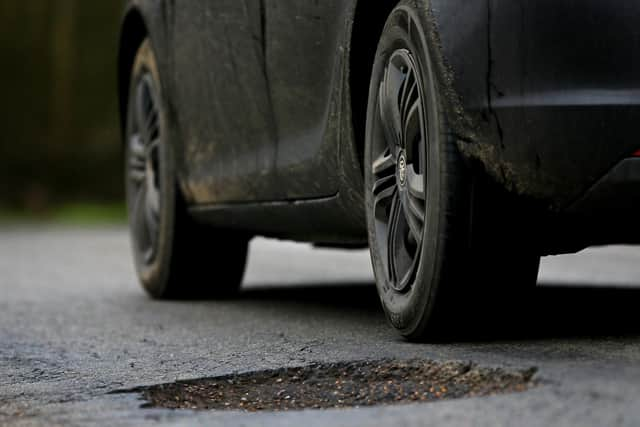

But if you notice as you drive around, a lot of potholes and road damage is where utilities have been working, with potholes and damage often forming on the edge joint. In fact the more you look, you will notice how many roads are in bad condition where utility work has been done. Potholes forming, dips in the surface where the repair has sunk down, manhole edges all crumbled away, etc. These all need repairing and it all comes down to the local council to fix them which is of course funded by the taxpayer.
Is this really fair? If a utility does not do a quality repair job, then why should it be up to the council to foot the bill to repair the bad job?
Well the main reason is that there is currently only a two or three year guarantee period for the work they do, depending on the depth of the works. This reduces the incentive for high-quality and long-lasting repairs. A hot rolled asphalt road surface can last 15 to 20 years, so why is a repair only guaranteed two to three years when poor repairs can drastically reduce a road surface lifespan?
There are two main problems with poor utility reinstatement. First is that sometimes a depression forms after traffic use over the repair due to poor compaction of the hole before the asphalt is put back. This causes standing water which damages the road surface, especially in winter with the freeze thaw effect.
Second is sealing the edge joint of the repair. This to me is the critical one. At the moment repairs can be done by 'edge sealing' the joint. This is the application of a bitumen-based spray or paint to the vertical sides of the hole before the new asphalt is filled in the hole. While this is the normal method, it is impossible to check if it has been done correctly without drilling and coring the joint.
To stop this second problem, all joints should also be top sealed with hot or cold applied over banding. This is where liquid sealant is applied as a band over the joint. It is done at times, but it is not a requirement for all repairs.
The problem for councils is that these various repair rules are made at Government level and so there is nothing that councils can do.
So, to help solve the pothole problem, stop many of them forming in the first place, so the number of repairs needed decreases. To do this the government needs to change the guaranteed length to at least five to six years and also insist on over bonding all repairs. This won't help with the current potholes but will reduce the number in future - allowing councils to get on top of the problem.
I ask everyone to write to their MP to demand a change in the legislation rules on road repairs to 5-6 years guarantee and over-banding joints as this will save councils money and so save the taxpayer as well. The public is tired of potholes. Here is a way we can all help combat the problem.