
'Thriving and vibrant high streets need an economy that is growing' - Centre for Cities
Government is writing the latest High Streets Strategy. For it to have a greater chance of breathing life back into struggling high streets and shuttered shops than previous versions, it needs to address the economic challenges holding them back.
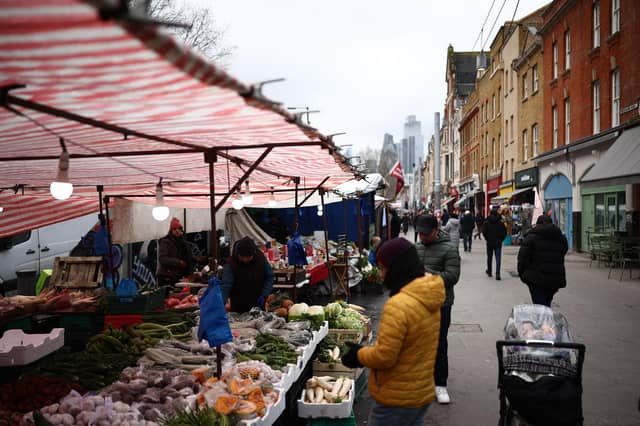

Centre for Cities research shows there is huge variation in high streets’ performance across the country – in the centres of London and Brighton, less than one in ten shops is empty, while in Blackpool and Newport, its almost one in five.
Since not every high street is struggling, what should the strategy focus on to help more places perform as well as the country’s most successful cities and towns?
The first lesson is that success is mostly about incomes. Few places can maintain a successful high street without being surrounded by prosperous households.

People living in a city like Leeds – where wages are among the highest in Northern England – can afford more shopping trips. As a result, central Leeds’ vacancy rate is below the UK average of 12.8 per cent. In Huddersfield and Doncaster their wages among the lowest in the country, and their city-centre high street vacancy rates are around 15 per cent.
So, for the High Street Strategy to have any chance of success it needs the Government to deliver its economic growth mission and raises wages and living standards in every area of the country. Without that, most high streets stand little chance of a long-term revival.
The second lesson is that the future of high streets is likely to be less dominated by retail. Take York: York’s city centre is a top performer. A big reason for this is that its city centre attracts a lot of visitors – two in every five pounds spent in York’s city centre is by a visitor.
Nowhere else attracts as many visitors as York – only Blackpool comes close – but places can learn from York, even if they can’t copy it. York offers experiences that people can’t experience online – such as visiting its majestic, world-renowned Minster – and that most other places can’t offer.
But it also provides lots of places to eat and drink while people are visiting. In the centre of York, £1 in every £4 is spent on food and drink and the share of commercial space dedicated to businesses like cafes and restaurants – rather than shops – has risen by over 4 percentage points since 2010, while the share of retail has fallen.
In contrast, retail still occupies the same share of space as it did in 2010 in many places, including places like Hull and Huddersfield, and that can raise problems.
Struggling city centres like Newport, Wigan and Middlesbrough all have over twice the amount of retail space per shopper as more successful city centre like Brighton or Liverpool.
York shows that high streets’ continued success depends on them being places where people want to be. Even if they don’t have a Minster, they can offer opportunities for people to try new experiences and cuisines.
That brings us to lesson three: places with too many empty shops need to reduce the amount of retail space by knocking them down or repurposing them – and replacing them with something else like housing, entertainment and public spaces.
Many town and city centres lose spending to out-of-town shopping centres and larger nearby places – as well as online retailers. In Bradford, the number of shoppers on city-centre high streets is closer to what you would expect for a smaller city like Doncaster, because many residents go to Leeds or elsewhere to shop.
Rather than trying to win shoppers back, Bradford is responding to its high retail vacancy rate by transforming the city centre – demolishing the Kirkgate Market and the Oastler Centre to make way for its City Village development. The city has also embraced culture-led regeneration through its City of Culture programme and Bradford Live project, to bring people into the city centre.
In places where empty retail space is unlikely to be occupied again, the Government needs to be a genuine partner in high street renewal – through funding, coordination, and long-term commitment.
So, lesson four is that the strategy needs to think big and long-term. More hanging baskets and nicer street paving are not going to make a difference. Transforming city centres takes time and considerable investment.
To be effective, Government’s high streets strategy needs to be connected to its economic growth mission. Thriving and vibrant high streets need an economy that is growing – creating well-paid jobs that people can access, so they have money in their pockets to spend on the high street.
Andrew Carter is Chief Executive of Centre for Cities.