
Time to end this abuse of our sheep for wool: Yvonne Taylor
Common sense has prevailed, and a developer’s proposal to adorn Beverley’s Regiment Roundabout with a sculpture of a giant sheep sitting atop bags of wool has been shot down.
This is good news for road safety advocates, who feared that reckless drivers would use the sculpture as a ramp, but it’s even better news for sheep, who stood to suffer if their exploitation for wool were immortalised as something to glorify.
While the nursery rhyme says sheep may “give” their wool to any little boy who lives down the lane, real sheep do no such thing. If allowed to exist without human intervention, sheep only make enough wool to protect themselves from the elements. When people argue that “sheep must be sheared”, they neglect to acknowledge that that’s only because sheep have been intensively bred to make too much wool in the name of human profit.
Sheep are intelligent, social individuals. They have great memories, retaining as many as 50 sheep and human faces for years, and can recognise emotions from others’ faces and body language. Like us, they experience loneliness and depression if isolated, and like dogs, they like to play and wag their tails when they’re happy. Or, rather, they would, were those tails not chopped off by farmers when they’re babies.
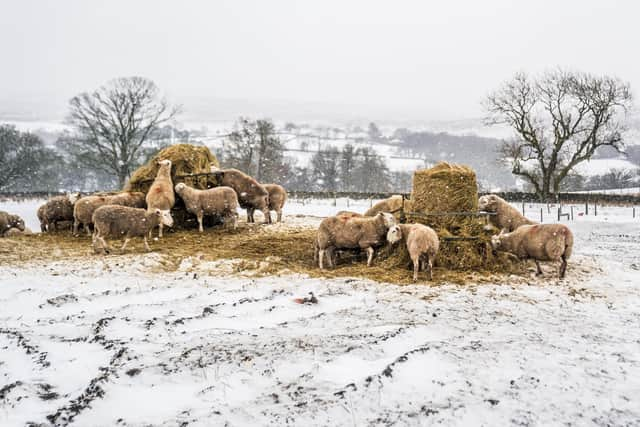

Sheep can also problem solve, use complex communication, and even self-medicate with carefully selected plants.
Despite all this, sheep are routinely abused for wool from the day they’re born. Lambs are subject to mutilations, including having their testicles crudely removed, usually without pain relief. While sheep can naturally live for about 12 years, those used for wool are slaughtered at half that age.
To date, PETA entities have shared exposés of 150 wool-industry operations around the world – including those in England – where workers have been documented kicking, punching, throwing, and slitting the throats of conscious, struggling sheep.
Just as cruelty has been humane-washed by wool industry propaganda, so too has wool been greenwashed. As ruminant animals, each sheep can produce about 30 litres of methane – a greenhouse gas with up to 80 times the global warming potential of CO2 – each day, and Britain is home to over 30 million of them. This, combined with the industry’s energy use, emissions from manure, the intensive land clearing undertaken to house sheep, and the use of chemicals to dip sheep and clean their wool, led the Made-By Environmental Benchmark for Fibres to rank sheep’s wool as a “Class E material” – the worst possible category.
Happily, wool needn’t come from animals. For centuries, carbon-capturing plants, from cotton to bamboo, have been spun into yarns, and now, innovative creators are also turning everything from citrus leftovers to beer waste into plant wool. Planet and animal-friendly, plant wool can improve the environment and support British farmers.
Already, Yorkshire is home to plant-wool farmers growing yarns that are revolutionising fashion, including flax, the plant behind linen, and the UK’s largest hemp farm. In stark contrast to the eco-destruction caused by sheep’s wool, hemp supports pollinators, uses little water, and carries a climate impact up to 42 times smaller than sheep’s wool, earning it a “Class A” material ranking (the best category) .
For now, Yorkshire is safe from stunt dr i v in g, and the abuse of sheep won’t be romanticised in steel. But across the UK, sheep are being mutilated, beaten, dunked into chemicals and violently slaughtered for wool. Sculptures and nursery rhymes won’t help, but sparing gentle, clever sheep from harm is as easy as A, B, C – Always Buy Compassionately. Plant Wools are abundant; let’s embrace them and leave animals in peace.
Y vonne Taylor is Vice President of Corporate Projects at PETA.