
Pantomime: Why the ultimate Christmas threatre experience is so loved
It wouldn’t be Christmas without panto. For many families, it’s an essential mark in the festive calendar.
It wouldn’t be Christmas without panto. For many families, it’s an essential mark in the festive calendar.
Yorkshire has been hosting some classics this year, including Cinderella at Theatre Royal in Wakefield, Beauty and the Beast at Harrogate Theatre, Dick Whittington at the Lawrence Batley Theatre in Huddersfield, Snow White at the Lyceum in Sheffield and Goldilocks and the Three Bears at Hull New Theatre.
“It is a lovely family tradition,” says Richard Kay, a York-based actor who has written and is directing the blended pantomime Sleeping Beauty and the Beast, with the three-actor show touring village halls in Yorkshire and beyond now.


"It's great fun, and we've got an eco theme to it as well. And I guess that's the beauty about panto – it's always evolving because it has to be relevant to to issues of the day, to the popular culture of the time but also relevant to the place it's performing in.”
While we now think of panto as quintessentially British, it was in 16th-century Italy where the form took shape. In the Italian tradition of commedia dell'arte - ‘comedy of the artists’ - they improvised performances in streets and marketplaces, using distinctive masks so that audiences could recognise characters immediately
These actors eventually started to take commedia across Europe and are known to have visited England on several occasions.
The late Professor Jane Moody, who was director of the Humanities Research Centre and in the Department of English and Related Literature at the University of York, wrote years ago of how a man called John Rich then played a key role in the emergence of pantomime. He was a dancer, acrobat and mime artist and during the 1720s managed a theatre at Lincoln's Inn Fields in London.
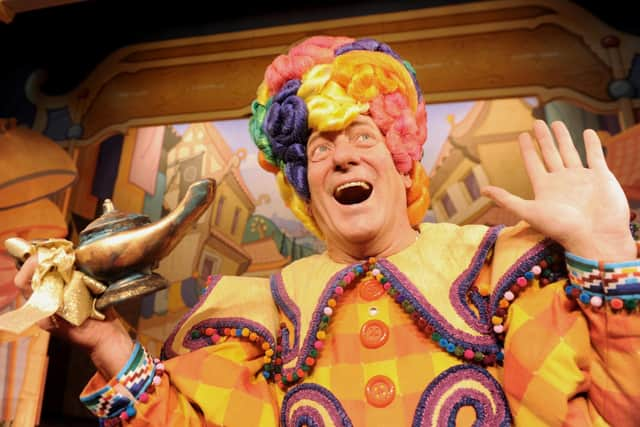
He created a new kind of entertainment combining a storyline from Ovid’s Metamorphoses and a harlequinade - an energetic chase featuring the adventures of Harlequin and Columbine, servants in the commedia tradition.
Rich’s pantomimes combined numerous performance forms but were attacked by critics. So, he decided to limit Drury Lane pantomimes to the Christmas time, meaning they became associated with the festive frivolity of the season instead of being resisted by drama’s establishment as unserious theatre.
Eventually, these traditions made their way into the theatres of Yorkshire.
And of course, the UK's longest-serving panto dame was Berwick Kaler, who had performed the role at York’s theatres since 1977 but confirmed in February this year that he was “bowing out gracefully after 47 years of getting away with complete nonsense”.
Richard, who worked with Kaler in 2005, says: "I think what people love about (panto) is the tradition and the fact that people know where they are - there's a familiarity with the character types, there's a familiarity with the with the routines. You've got to have some slapstick in there. You've got to have some audience participation. You've got to have the ‘Oh yes it is, oh no it isn’t’. You have to put that in because people would be upset if the comfort zone of the familiarity wasn't in there. It does always evolve, but you do have quite archetypal characters in panto and people like that - they know what they're getting.”