
Parties must ‘drop their pride and prejudice and get stuck in’ on triple lock issue: Sarah Coles
It’s a truth universally acknowledged that a single person in possession of political ambition must be in want of a commitment to the triple lock. Admittedly Pride and Prejudice might not have flown off the shelves if it was a treatise on pensions, but if it came close to addressing the problems facing the state pension right now, it would have its fans.
It’s easy to see why all the major parties have committed to keeping the triple lock. It has done an incredibly effective job of lifting pensioner incomes. Late last year, the Institute for Fiscal Studies (IFS) calculated that the full new state pension is 14% higher than it would have been if it had just been linked to wages since 2011. AJ Bell has done some research into how people feel about the triple lock, and it’s understandably popular. Two in five people think it should be made permanent – including almost 70% of Baby Boomers. By contrast, only 6% want to see it scrapped.
The problem is that it’s horribly expensive. The IFS says it has added about £12 billion a year to the cost of the state pension, so that every year state pensions pay out £150 billion. In order to maintain the commitment, spending is being cut elsewhere and taxes hiked. Because there’s no way of knowing what the rise will be linked to, or how big it will be, the cost of the triple lock is also incredibly difficult to forecast or plan for.
Not only that, but to keep a lid on the cost, the state pension age has been rising. It’s currently due to rise to age 67 by 2028 and 68 by 2046 - and the path to 68 could be accelerated. From there, it could go higher. The trouble is, that at the same time, healthy life expectancy has fallen by two years in a decade, and according to The Health Foundation, nine out of ten areas have a healthy life expectancy below the state pension age already. Continually hiking it would mean more people facing a horrible shortfall if ill health forced them to stop work before they qualified for their pension.
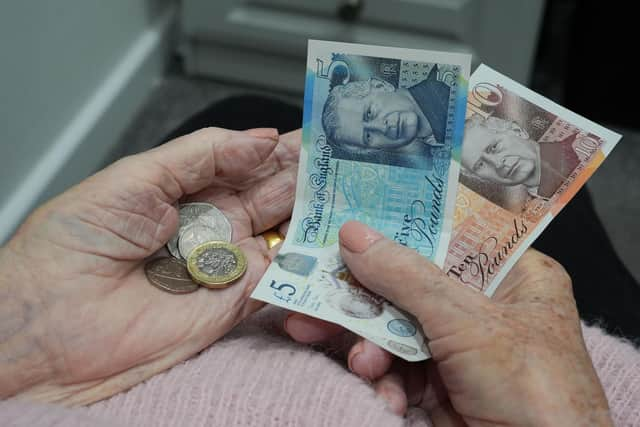

Even without these problems, logically, the triple lock would need to end eventually. Otherwise, the state pension payment would rise above average earnings, which would raise questions about how much workers would need to pay to offer pensioners a better standard of living than their own.
It means somebody, somewhere, eventually has to consider the best possible solution for the long term. And the sooner this happens, the better, because it will give people longer to plan for it.
The Tony Blair Institute had a bash last week, suggesting replacing the state pension entirely with a Lifespan Fund. The idea was that people could start drawing from it earlier, and accept a lower income in return, as long as they could prove they’d still be getting more than a set minimum income. They could even withdraw from this fund if there were particularly tough times during their working life, paying a higher level of National Insurance contributions to top it back up again afterwards. The income would also be ‘personalised’, providing a guaranteed income for life that reflects your age and health, a bit like an annuity does at the moment.
It does away with the triple lock and replaces it with a smoothed earnings link, which cuts the cost. It’s also cheaper because it effectively limits your entitlement. At the moment, everyone on the full new state pension gets the same income until death, so the longer you live, the more you get. This proposal would essentially try to give everyone the same total lifetime income: 20 years of income at today’s state pension level. It means someone who is expected to be retired for 30 years would get half the monthly income of someone who is expected to be retired for 15 years.
It’s highly unlikely to be implemented in full. This is partly because it’s incredibly complicated and would be fiendish to bring in. There’s also the fact that the state delving into your personal health records would be hugely controversial. Plus, there would be significant losers from the change, so people who have worked hard to live a healthy life might feel it’s unfair to be rewarded with a lower monthly income.
There are other, more straightforward, options. It may be that politicians need to wrestle with what the triple-lock is aiming to achieve. It’s a reasonable assumption that the aim was to gradually make the pension more generous until it reached a point at which it was fair. Once it decides what that fair level is, and how to get there, it could shift the ongoing promise to either a single or double-lock to earnings or inflation. It might also incorporate some way of smoothing rises out, so there weren’t unpredictable spikes. That could help people plan, and would help the government manage the cost more effectively.
The problem is that the whole notion of the triple lock has become incredibly difficult to challenge politically. It’s perfectly understandable from a political perspective. As I write this, the local elections are about to get underway. Anyone standing on the doorstep and fighting for an end to the triple lock would be unlikely to get a positive response from older people. And age matters in elections: in the 2024 General Election, 89% of people aged 66 and over said they had voted, compared to 65% of those aged 18-25.
There is room for change though, because while in our research, only 6% of people wanted to see an end to the triple lock, 24% supported it but thought it would have to end at some point, 17% said they didn't know, and 15% had no strong view. It should be possible for a cross-party discussion that starts from the premise that the state pension has to be fair, shouldn’t be less generous, and should rise with wages or inflation or both.
In a politically charged environment, it’s hard to see how this would happen though, because if any party called for it, everyone else would use it to brand them as anti-pensioner and double down on their commitment to the triple lock. This needs all political parties to drop their pride and prejudice and get stuck in.
House prices
Figures from Nationwide have revealed that house prices are up 3% in a year, to an average of £278,880. Momentum has been powering the property market through a particularly sticky period, and property prices were up 0.4% in April on a monthly basis, despite the toll the Iran war has taken on consumer confidence, the cost of living and mortgage rates.
Affordability has helped. House prices have been rising way behind wages for some time now, so the house price to earnings ratio is back around the 25-year average, after over a decade above it. This has made it easier for new buyers to raise a deposit, and for people to dream of owning their own home.
Unfortunately, higher mortgage rates could throw a spanner in the works. They have risen significantly since the onset of the Iran war. It hasn’t been a straight line up, but they remain higher. At a time when we’re expecting other everyday prices to start rising faster, more expensive mortgages could be the final straw for many property-buying dreams.