
Abel Selaocoe on the Bantu Ensemble: 'We are brothers in music and in life'

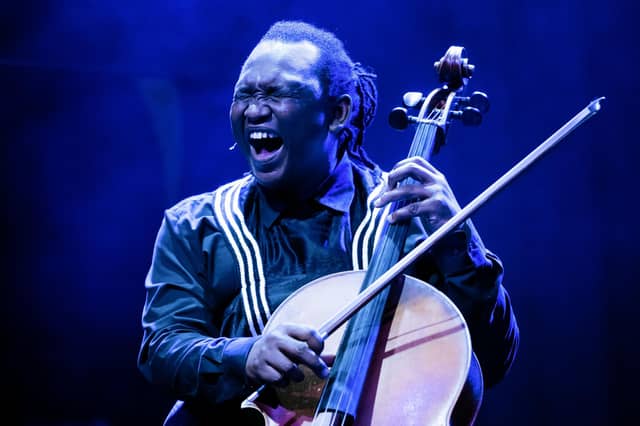

Since graduating from the Royal Northern College of Music in Manchester, Abel Selaocoe has become one of the most in-demand talents in classical music, with concerts all over the world.
When The Yorkshire Post catches up with him via video, the South African cellist is in Minnesota, working with the Saint Paul Chamber Orchestra, with whom he has an ongoing partnership.
“It’s been very much the land of experimentation with these musicians here – I think for people to get to know me and my style so that every time we meet we’re speaking the same language and that we’re willing to go into the unknown as a whole group,” he says of rehearsals with the orchestra for a concert programme that includes works by Claude Debussy, John Cage and Julius Eastman alongside the English composer Edmund Finnis.
Signed to Warner Classical, with whom he has released two albums, Selaocoe’s music continues to reach a wider audience across the globe – thanks largely to his busy touring schedule. Although he admits he “never thought that this would be the case” when he started, he says: “I think what people might be attracted to is the way we would tell the story, and how they have to trust in it – that they could be listening to some Debussy that they’ve never heard before and we’ll reach a place that has rhythm and dance and a different way of telling the story but it can be weaved in a very honest and endearing and truth-telling way. I believe in programming in that sense. I think that’s what people are attracted to in the end, they’re going to get these beautiful differences that they never knew about and with these collaborations, this idea of exchange is then with the audience again.”
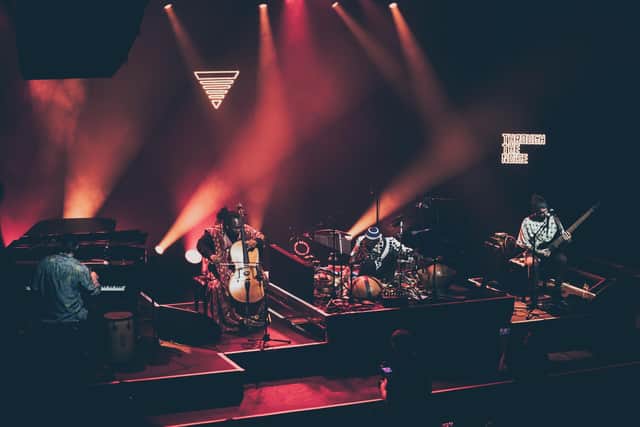
On Saturday Selaocoe will open Harrogate Music Festival with his Bantu Ensemble. The group, which also includes Alan Keary on bass, Fred Thomas on piano and Dudù Kouaté on African percussion, is a collective of “people who are capable of inhabiting different worlds and feel free doing that”. Thomas, he says, is “a wizard, he’s a great Baroque musician and a great jazz musician and everything in between, he plays so many different instruments”; Kouaté, meanwhile, “brings a wealth of the feeling of culture but also contemporary – he makes his own instruments and I call him an extremely cosmic musician because he can bring tradition to a very knowing place for the audience”; Keary is “an incredible improviser – and also the bottom of the music keeps us going”.
As Selaocoe’s “friends in music”, they help him “express the reason of why we gather in concerts and why we make music for people”, he says. “I feel like music has to have a certain discourse in this moment in time. It’s a very important part of life and if it doesn’t reflect society or doesn’t speak to society, I think there’s slightly a problem there. So I think these musicians help me gather those ideas and give them to the audience.”
He likes the fraternity of his band. “We are brothers in music and in life. It’s like this is not a job for us, I think it’s a bit of a spiritual vocation. Every time we meet we are finding out where we all are in the process of creating. Everybody’s always working on something, which is a very beautiful thing, and we are always sharing new things, even if these are things that we don’t actually play ourselves, and I think they are a beautiful compass for where my music needs to go and I really look up to them – and that’s a great feeling to lead a band where you look up to the players.”
The ensemble’s fondness for improvisation reintroduces an element that had fallen out of favour within within much of Western classical music in the last century. “It’s so full circle,” Selaocoe says. “Improvisation was very much a part of classical music 100 years ago, people used to compose music on the spot. This was always living, even in the Baroque world. These are not new ideas, they’ve been and now they’re here again.
“Classical music seems to weave into different worlds. A hundred years ago you’d have something in Vienna sounding extremely different from something in Italy and we still call it classical music. It’s a very wide net, that word, and so it gives me the sense of freedom that classical music can live amongst other cultures, amongst other styles, with authenticity and respct to the ideas of the people that wrote that music.”
In Harrogate, they will perform “a combination” of music. “We play a lot of South African music, very rhythmic music, influenced by the church in South Africa, influenced by our ancestors, the specific rhythms and full of voice as well. Then we connect this world of the voice to the world of Baroque – so that takes us to Bach, that takes us to Marin Marais, a French composer – and then we also have moments where we just fully improvise for quite a while.
“We see what happens in the moment because we always believe that if one person in the audience wasn’t there the music would be completely different. This is the idea about the influence of the audience, so we will never stop if they want to join us in making music as well. There’s all these facets...that are including of the audience, including of beautiful classical music, but also some original music from myself.”
Abel Selaocoe and Bantu Ensemble perform at Ashville College, Harrogate on Saturday June 6 at 7.30pm. https://harrogateinternationalfestivals.com/event/abel-selaocoe-and-bantu-ensemble/