
Antarctica to Harrogate: St Robert's priest Father Simon Bradbury's Navy days all part of the ministry
Father Simon Bradbury weaves maritime stories into his sermons at his Harrogate church, drawn from his adventures as a Royal Navy chaplain. John Blow reports.

The homely tea-and-cake picture of a parish priest was not the Very Reverend Simon Bradbury’s type of ministry. Certainly not some two decades ago, when he might have been found patrolling Antarctica.
“You'd be on the bridge with the wonderful Captain, who was the grandfather of the ship, really. He’d be sat in his chair, chatting away, and you’d just look out of the window and there were the most incredible shapes: icebergs, ice floats with penguins and seals, the whales going past.”
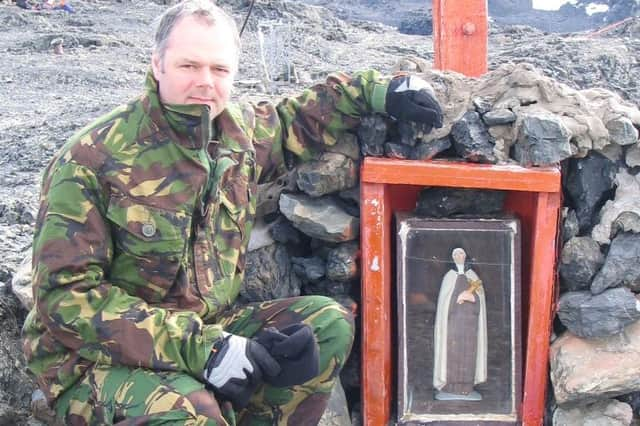
Father Simon is recalling the sights from aboard HMS Endurance, a since decommissioned Royal Navy ice patrol vessel known as ‘the Red Plum’ for the cover of her hull.

He remembers, too, the time when he had to “shoo some penguins off the veranda of the church to get inside” while at, he thinks – the lesser-travelled would probably know right away – a remote Argentine base.
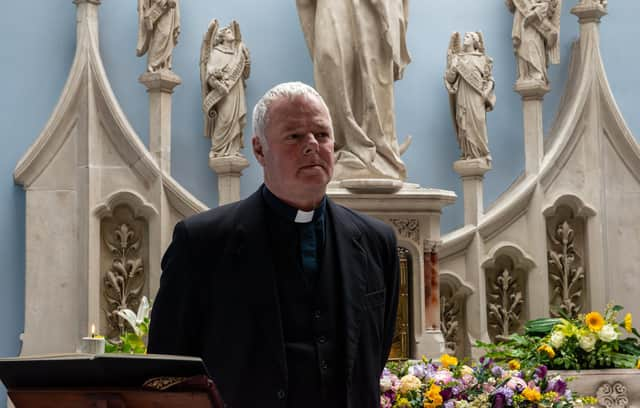
These days, he is the familiar face, along with his two Samoyed dogs, Molly and Luna, to congregants at St Robert’s Catholic Church in Harrogate.
After he came ashore 11 years ago, churchgoers began to benefit from the maritime stories in his sermons, drawn from his time as a Royal Navy chaplain to sailors in locations like the aforementioned Antarctica, Singapore and New York.
Fr Simon, 60, was born in Bradford and brought up Catholic but the priesthood was not his first career plan. At 16 he wanted to be a journalist, so applied for a junior reporter job at the city’s local newspaper.
“They whittled us down to three and I had a day in the Telegraph & Argus, in the newsroom. And then somebody else got the job, finally. I was semi-cross,” he says. But he went to seminary instead and was ordained in his mid-20s, spending three years working as a curate in Leeds and Bradford.
But a chance meeting with the principal chaplain in the Navy changed his course in 1996, when he was 30.
In order to become a chaplain himself, he had to go through the training of an officer at the Royal Naval College in Dartmouth.
Obviously, that meant intense physical exercise every day – with long stretches on Dartmoor – and included the Underwater Escape Training known as the ‘Dunker’, which simulates the aftermath of a helicopter crash in the sea.
Then he was sent to Faslane in Scotland, where he would spend a few days at a time on minesweepers with crews of about 40 to 50.
Later it was to HMS Collingwood training base in Hampshire for four years and then a few months in the Gulf on the frigate HMS Cumberland.
He says: "The Navy generally is very inclined towards church because it's part of its thing – through training, you go to church – but inevitably you would meet people who were quite hostile to faith. So it's a very secular environment and it just makes you pretty tough, I think, as a person.
"You're not preaching to the choir. You're often preaching to people who don't really want to know. But your job, then, is to help them to see that the faith can actually bring quality to their lives.”
He usually shared cabins but there was one particular privilege he enjoyed in terms of the ranking system.
"As a military chaplain, you wear uniform, you were commissioned by the Queen, in those days, so you were part of the ship – you're not like a visitor to the ship, you’re part of the ship's company – which is a really nice way to do ministry. And the great thing about being a naval chaplain compared to the Army and RAF and other countries, is that you do not have a rank – you assume the rank of the person you're talking to, and that's incredible for ministry. Years later, I worked with the Americans, I was in South Carolina for two years, and the US Navy chaplains couldn't get their head around it.”
Fr Simon later went back to work at Dartmouth but a highlight was his time at the training establishment HMS Raleigh in Cornwall.
“For at least four weeks, like I was at Dartmouth, they were undergoing serious training, physical and mental stuff. So they would go into the church and see us for sanctuary. And then their parents would come for their passing out parade and say, ‘I don't know why they got confirmed or received into the church or baptised, because we didn't bring them up as religious’. It was because they were in a fairly testing environment and faith came to the fore for them.”
The most adventurous or exotic trips came in 2005 when he was assigned to the hydrographic squadron.
"I would fly out to Cape Town to join HMS Echo and sail around the Cape to Durban and spend Easter in Durban with HMS Echo, and then she would sell off, and I’d fly back to London and down to the West Country, where I was based, and then fly down to the Falkland Islands and join HMS Endurance, and spend a couple of months on Endurance in Antarctica, which was incredible. I’ll never go back there – it was the chance of a lifetime.”
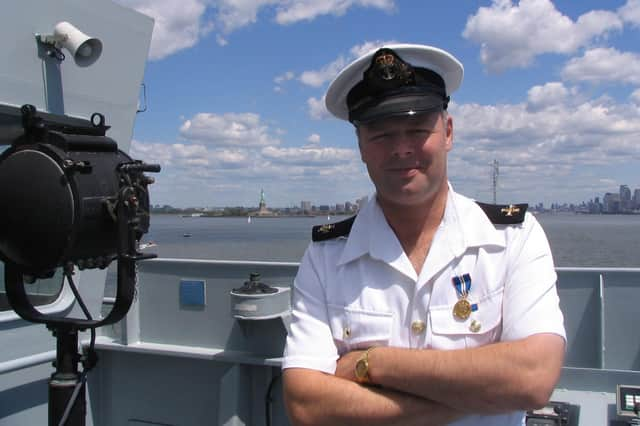
Then it would be out to Singapore to join HMS Enterprise, sailing to Vietnam. "I’d jump off in Ho Chi Minh City, have a couple of nights to see the sights, and then fly home again, and then fly out to America, to New York and join HMS Scott for Fleet Week in New York, where all the Navies of the world gather in May for a week.”
In 2007, Endurance hosted the Princess Royal, Anne, on board for a week.
"It was quite something, being so close to royalty in a working environment,” says Fr Simon.
“She took over the wardroom so we would get invited in for meals on occasion. I was sat next to her husband one night and she was just chatting, asking questions, and she had a lot of knowledge. She goes back a long way and she's been in the Navy a long time. Like a lot of people say, she really knows her stuff and works hard. And we had this church service. It was a bit daunting to preach in the church service to the Princess Royal but it was a privilege – all of this has been a privilege.”
For two years, between 2010 to 2012, he lived in Columbia, South Carolina, where he was assigned to Fort Jackson as part of an exchange programme with chaplains from the USA. During this time, he trained chaplains and would be sent to the Pentagon for a week every two or three months. Latterly, Fr Simon was posted to HMS Sultan in Gosport, before his final Navy job training at the former Armed Forces Chaplaincy Centre at Amport House near Andover.
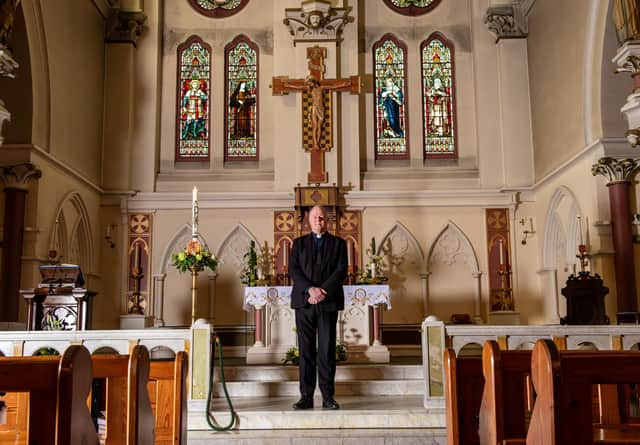
In 2015, his time as a chaplain came to an end and he became a priest in Wakefield for six years before moving to Harrogate where he serves a “buzzing parish”.
“I just loved it,” he says of his return to civilian life. “I wasn't sure whether I'd fit back in because it was a big difference after military life. But I got a dog, which I wasn't able to have in military life, and had six wonderful years in St Peter and St Paul’s (in Wakefield), just getting back into parish ministry. But I think bringing a fairly unique perspective, I suppose, because of my time in the military, which most priests clearly don't have.”
He adds: “I could have done longer but I'm a great believer that our life is a series of arcs and the important thing is not to jump off too soon, and not to jump off in the middle when the arc is at the top, but to know when the bottom of the arc is coming – when the right the time is right for you to jump off. You've done your bit, it's been great, but there are other things in store.”