
Beyond Bridgerton: The masquerade's history of extravagance and intrigue
A Yorkshire country house that once hosted Georgian masquerades will hold an event exploring the history of the masked entertainment. Laura Reid reports.

It was the focus of the opening episode of season four of Regency-era hit Bridgerton when it landed on Netflix earlier this year – a lavish masquerade ball where Benedict Bridgerton encountered the masked and mysterious Lady in Silver, a maid who had disguised herself as a member of high society.
“Behind the cover of a mask, we are free to be anyone we so choose,” notes Lady Whistledown, narrating the show. “And free to make the acquaintance of anyone we so desire.”
It’s how masquerades today are portrayed in popular culture. But it wasn’t quite the reality, says Dr Meghan Kobza, at least not in the 18th century, which she has researched extensively for her new book, The Masquerade: A History of Extravagance and Intrigue. “The masquerade in the 18th century – and today –exists in two forms really,” explains Dr Kobza, a historian of leisure culture, costume, and commercialisation in the eighteenth and nineteenth centuries.
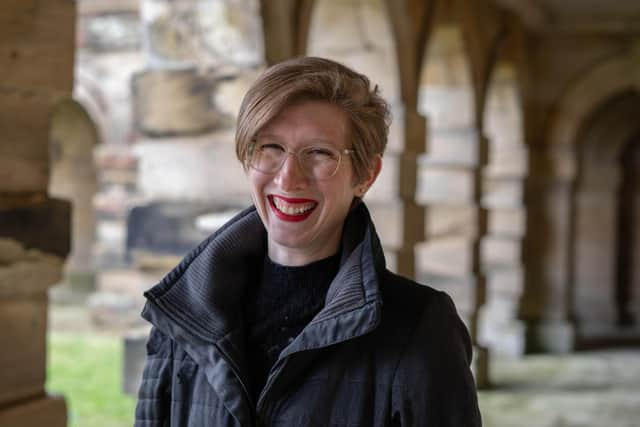

“There's the fictional form that you can read about with Fifty Shades of Grey and Bridgerton and it has the romance and the intrigue and the fantasy - this idea of going to the masquerade and you don't know who's who. It's captivating for our imaginations to think of the different possibilities, that you can escape, that you can be someone else.
“And that was true in the 18th century – that idea actually held a lot of cultural anxiety for certain groups of people who were terrified that this was going to upend the social hierarchy. (But) this is the idealised side of (the masquerade).
“The real side of it is that it’s a very expensive night out. You dress in something to show off who you are, to see and be seen…People want to present themselves in a certain way and because there’s a mask involved, there’s this (idea) of anonymity and disguise and concealing – and who you can become.
"At the 18th century masquerades, the reality is you could become someone else for a little bit. But the masks all came off and most people knew who everyone else was, because those who were going were all from the same social circles.”
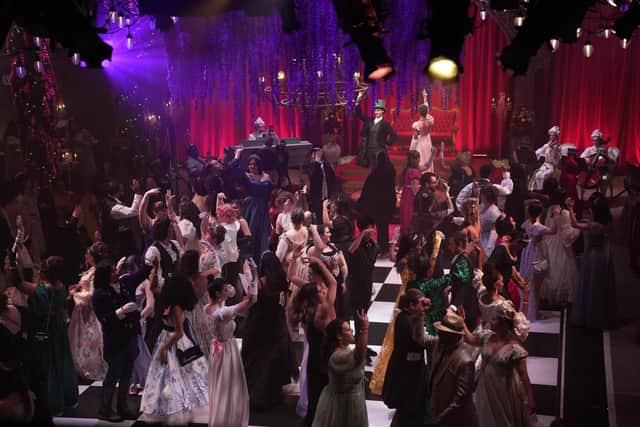
Dr Kobza’s book opens the door into Georgian masquerades and explores how they became a wider cultural obsession. She’ll be reflecting on this during a talk at Birdsall House, in Malton next month when the North Yorkshire venue hosts a “richly atmospheric afternoon of Georgian history”.
The event, in collaboration with Kemps Books, begins with a guided tour of Birdsall House led by Lady Cara Willoughby, which will be followed by Dr Kobza’s talk. Together, they aim to offer a glimpse into the family home and its history as a place for entertaining, with Birdsall itself having once hosted masquerade balls.
Newcastle-based Dr Kobza’s interest in them came during her PhD when she began looking at the masquerade as a space for anonymity and what people could do at the balls when it came to political and societal upheaval. She expected to find it was a transgressive space where people could experiment and push the boundaries – true she says, but only for the top one per cent of society who could afford tickets to the lavish and expensive affairs.
Organised by wealthy impresarios, the masquerades allowed the aristocracy to flaunt their status and enjoy themselves behind the closed doors of opulent ballrooms, theatres, and gardens, dressed in elaborate and extravagant costumes. For the rest of society, the masquerades were notorious for mischief and misbehaviour, and a focus for voracious gossip.
In her book, Chicago-born Dr Kobza tells the social history of the balls in the 18th century as a staple of the elite social calendar – the stories of those who hosted them and went to them but also of those who contributed by making costumes and crafting invitations.
“People who are going to the masquerades are wearing extremely expensive costumes that are covered in diamonds or other precious jewels,” she says. “They are going to show off to each other but then also to the society around them because you have to get to the masquerade too so it's this parade of wealth…To me at least, the showing off seems an integral part of the function of the masquerade in Georgian Britain.”
Masquerades grew in popularity after a visit to the country by French Duc d’Aumont Louis Marie Augustin in 1713, when he hosted several of the events, much to the enjoyment of the elite. Then the manager of what was the King’s Theatre opera house in London started holding ticketed masquerades as an opportunity to make some money to fund his operas. But still, the masquerade remained a form of entertainment for the elite, only shifting to become an event of more mass cultural enjoyment in the 19th century, Dr Kobza says.
“It was very fantastic entertainment and I would have loved to go to one,” she says. “For the top one per cent of society, the possibility of expression that they had (at these masquerades) exploded Georgian sensibilities of what hierarchies were…It gave people a space to be bold.
"But how transgressive is it if that’s only available to people of privilege? That's the question that I wrestle with – yes the masquerade is transgressive…but how transgressive can it truly be when it's only the super rich who get to do it?”
- The Masquerade: A History of Extravagance and Intrigue, published by Yale University Press, is out now.
- Beyond Bridgerton: The Georgian Masquerade takes place at Birdsall House on June 11. For tickets, visit https://birdsallestates.co.uk/events/beyond-bridgerton-the-georgian-masquerade.