
Fishlake flooding: 'I was forced to leave my home, now I've written a play about our community's trauma'
When the village of Fishlake flooded in 2019, Jeremy Fletcher was one resident forced to flee his home. Now, he has written a play about what happened when the water came. Laura Reid reports.
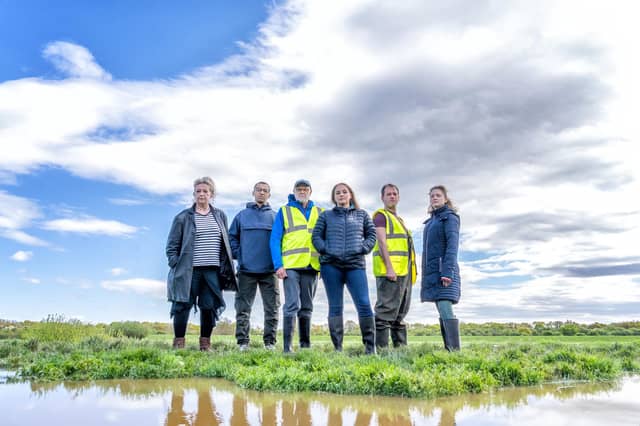


When heavy rain falls, when river levels rise, when flood alerts ping on phones, there’s a jitter in Fishlake, a quiet unease that wasn’t present just six years ago.
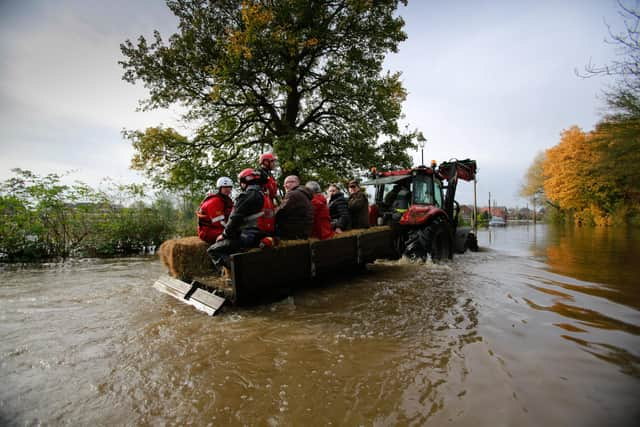
Many villagers, by their own admission, never thought that the water would come. But in November 2019, catastrophic floods engulfed 90 per cent of the South Yorkshire community overnight. Fields vanished, homes were lost and lives were uprooted for months on end.
When your safe space has previously been taken away, it’s hard to relax. With any sign of a deluge, the nerves set in. It’s why, in the small hours of one night last year, Jeremy Fletcher found himself on the banks of the River Don. He wasn’t there alone in assessing the water levels with bated breath, unable to sleep after receiving an alert to his phone.
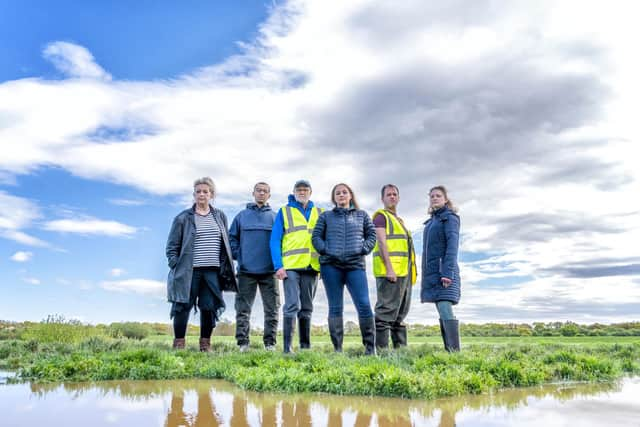
“I think I represent the majority in saying that it’s a complete shift of your mindset from being really chilled out before to actually I don’t want to go through this again and it would be complete and utter chaos and disruption,” he says.
Over five years ago, the river, swollen by unprecedented rainfall, flooded a huge swathe of land and Jeremy’s home was one of more than 170 houses and businesses to be affected by the devastation. He and his family, including two children then aged seven and ten, were forced out of their property and not able to return until nine months later.
Both of the family’s cars were written off from water damage- and furniture, possessions, heirlooms and precious memories were destroyed. “Anybody who thinks that a bit of washing up liquid, a bit of bleach, a couple of mops, and you’re back home, it’s not like that,” Jeremy says.
Since 2020, the now 50-year-old has been working to produce a play in which he captures the tale of a village underwater. Drawn from his own experience and the testimonies of his fellow villagers, Fishlake is a raw, heartfelt tribute to the resilience of a community tested by disaster. After five years in the making, it’s finally set for the stage, with the help of funding from Arts Council England.
“They say write what you know about and I’ve lived here all my life,” says playwright Jeremy, the artistic director of Sheepish Productions, formed in 2011. “It feels like it’s been a really, really long journey. From first having the idea in 2020…”
The first part of the process involved collecting accounts from people in the village. Those have then been used to shape the seven core characters in the play, which fuses verbatim storytelling with live music, movement and drama to bring the voices of Fishlake to life.
Christine Robinson is one of them. The now 79-year-old had shifted as many of her possessions upstairs as she could manage as water levels began to rise in the village. She fled her home, unable to return until 15 months later, as three feet of water had damaged carpets, curtains and furniture.
“I could not believe we’d be flooded,” admits Christine, who has lived in Fishlake since 1968. “I honestly and truly did not think we would. I’d seen the river high before but I couldn’t believe that the whole village would be flooded.” Now, when heavy rain falls and the river levels rise, “I’m very twitchy,” she says. “And I don’t think I’m on my own in thinking that.”
Fellow villager Dorothy Whitehead is wary too. “We never thought it would happen to us,” she says. “It was traumatic.” The 83-year-old describes how water from a nearby dyke flooded her back garden, whilst at the same time, water poured out of a manhole cover at the front.
“We could also hear this gurgling noise for a good while, a few hours, and we couldn’t understand what it was,” she says. “We found out it was our footings that were filling up, so eventually the water came up through the floor. We flooded virtually all the rooms in one go. As soon as it filled up in the footings, it came through and it was kicking the carpets away from the grippers. It was in every room.”
It was two o’clock in the morning when Dorothy, her late husband and their son had to leave the home. A visit days later as the water receded revealed a thick layer of sludge. “You looked around and everything had to go. I felt sick,” Dorothy says.
Like many affected, she was unable to return home for almost a year. Jeremy wanted to convey this scale of destruction in his play, how “violating” a flood is, he says, and how, for many residents, it stole so much quality of life, compounded then by the Covid-19 pandemic. “It takes months (to recover) and all these cherished items that you had in your house are all gone overnight,” Jeremy says. “The ground floor of most people’s houses, in 90 per cent of the village, was wiped out.”
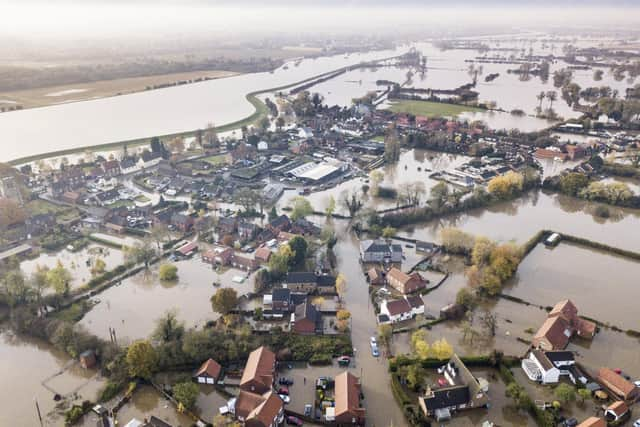
In the eye of the disaster, residents faced not only the rising waters but also the glare of national media, the arrival of politicians and the mobilisation of emergency services. “First of all, there’s an invasion of water, and then this massive invasion of people, different organisations,” Jeremy says. “Emergency services and rescue workers start turning up, paramedics, St. John’s ambulance, the Red Cross, they all move into the church. The church is about a thousand times more populated than it normally is. Donations start coming in…
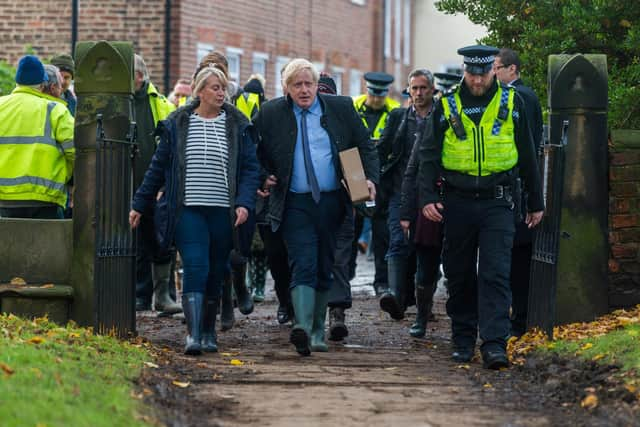
“Then the media move in and some of them are hanging around on a street corner at night. ‘Hello, can you give me an interview?’ while I’m going back to my wet-through damp, depressing home. It gets politicised and (then Prime Minister) Boris (Johnson) turns up, local MPs turn up from all over the place. The army moves in.
“Then we get rubberneckers and people skip diving and people trying to come into the village to have a nosy because it’s on the news all the time. And then the media moves out, everything goes quiet and there’s this sort of deserted feel to it where it’s builders in the day and then at night, it’s a ghost village.”
Jeremy wanted to convey this aftermath in the play, telling a story of devastation and loss, but also one of hope and resilience as a community came together. Performed by a professional cast alongside a local community choir, the production asks what do you take – and what does the flood take from you?
For children in particular, there was a loss of innocence, a realisation that a home is not always a safe place. Jeremy’s own still talk about that night. “The kids were just beside themselves because they were like we just want to go home,” he says. “Unluckily for us, we just moved the playroom downstairs about two months before the flood. So all the kids’ toys were just wiped out, everything. Even now, my 15-year-old’s like…I haven’t got anything left. I haven’t got my childhood stuff remaining. It’s all gone.”
Jeremy hopes the show continues to tell Fishlake’s story, shining a light on the community’s “fight” against flooding. Peter Trimingham hopes so too. As a flood warden at the time, he worked tirelessly to try to limit the devastation caused by the water - and his own home was also affected.
“The play brings (what happened) into the public domain in a quite different way which I think is brilliant,” Peter says. “Anything that raises the profile and puts people in a position of understanding better what went on and the challenges for the community.”
“It’s crucial that the authorities combine together to do some really effective planning for the future,” he adds. Jeremy agrees. “With the changing weather, the changing climate…measures need to be in place to protect the village. I suppose ultimately, the play is to remind people that we’re here and for the people who haven’t gone through this, it could be your village next time or your town. I do hope it gives a real feel of what it’s like to go through a group traumatic event.”
Fishlake is on at Cast Doncaster, Rotherham Civic Theatre and Theatre Royal Wakefield in October. For details and tickets, visit sheepprod.co.uk/fishlake