
Gravestone of forgotten Leeds railway pioneer is rediscovered

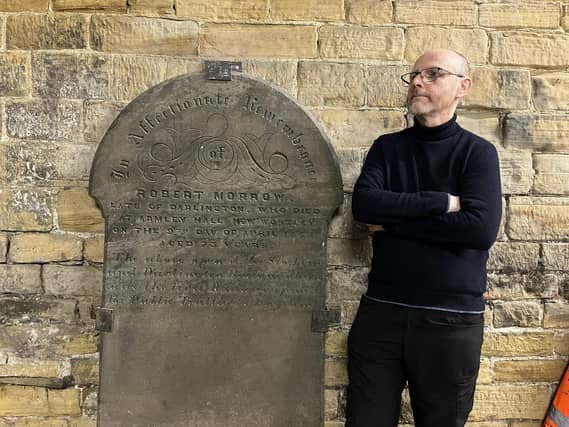

A Yorkshire rail pioneer whose contribution to the Industrial Revolution has been forgotten over the decades is to be remembered following a chance discovery at a museum.
During recent renovation work at Leeds Industrial Museum in Armley, curators happened upon the beautifully carved gravestone of Robert Morrow, more than 160 years after his death in nearby New Wortley.
With little information about who he was, or how his headstone came to be at the museum, the mysterious memorial sparked a fact-finding mission which has since revealed insights into one man’s key role in what became a global railway revolution.
According to the stone, Morrow “opened the Stockton and Darlington Railway” in 1825 - and researchers found that to be true - as one of the line’s drivers.
Delving further into records and archives, curators found that Mr Morrow, affectionately known as Auld Robert, was very much at the forefront of the line’s formative years, ranking among the first drivers of its early engines and taking charge of Hope, their Locomotive Number 2.
He was joined on those experimental locomotives by fellow driver James Stephenson, brother of the line’s chief engineer and world-famous designer George Stephenson.
The museum team is now working on ensuring Mr Morrow’s headstone has pride of place in the locomotive gallery, which is currently undergoing a major refurbishment project.
John McGoldrick, Leeds Museums and Galleries’ curator of industrial history, said: “We’ve been on a genuinely fascinating journey, discovering more about Robert Morrow’s life, legacy and links to Leeds.
“The railways have become such a huge part of the story of British industry, so much so that certain engines, lines and individuals have become household names which have echoed through the centuries.
“But lesser-known figures like Mr Morrow played their own key role in establishing the foundations of what was at the time a massive, exciting and innovative leap forward in the way people travelled.
“It seems fitting that we’re able to pay tribute to his legacy today and I’m sure ‘Auld Robert’ would feel very much at home resting among the engines at the museum.”