
Grieving dad who spends life campaigning for water safety urges youngsters to stay away
For while millions of young people across Yorkshire will enjoy whatever sunshine the long school holiday brings, he knows all too well that each hot day brings the potential of a heartrending tragedy.
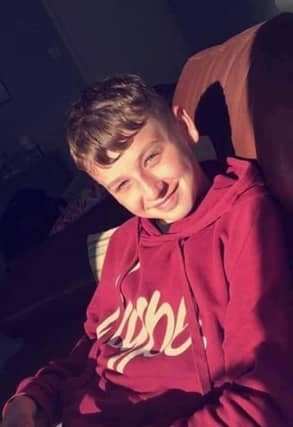


It was on such a hot day five years ago that his son, Sam, fresh out of his last day at school, lost his life while swimming at Ulley Reservoir near Rotherham.
The 16-year-old, described by his father as a “cheeky chappie” who was loyal to his friends and loved judo, was playing with friends at the reservoir when he decided to jump off a bridge into the cold water.
That split-second decision has left his family and many friends bereft with grief - but determined to stop other young people meeting the same fate.
It’s no wonder then that for Mr Haycock, who now campaigns full time for water safety awareness as part of Sam’s Army Mission 1 Life, the past fortnight has felt extremely difficult.
Four young people across Yorkshire have died since the beginning of a heatwave which saw temperatures soar to over 30 degrees.
Each of those young people: Reco Puttock, 13, Mackenzie Swift, 11, Muhammed Secker, 16, and Palwasha Akbar, 13, got into trouble in open water and were unable to be saved.
“It’s been heartbreaking, it really has,” said Mr Haycock. “I put my life to this - it’s all I do. And seeing this, it makes me feel like I’m failing. I know I’m not, I have to think about all the young people who have listened and stayed away.
“I’ve got to think positive like that, as if I didn’t, I would go mad.
“The number of people who have died is just unbelievable. This has been relentless.”
Mr Haycock’s work sees him travel to schools across the region to deliver his water safety message.
He has two talks, one tailored towards primary school children and the other to secondary school pupils.
“I talk to pupils about how to spot lifeguard flags, and I ask them on inland waterways which flags will be up.
“And of course, that’s a trick question - as there won’t be any.”
That, of course, is one of the key risks anyone takes when swimming in open water. Across the region, fully lifeguarded outdoor swimming spots are reduced to a small handful of lidos.
And while police and fire agencies across Yorkshire all acknowledge the scale of the issue and run awareness campaigns, there will be limited extra patrols by emergency services over the summer months in known hotspots.
“There’s always more that can be done,” says Mr Haycock. “I work closely with South Yorkshire Fire Brigade, the police and RNLI. I lean on them for advice to make sure I’m putting the right message out.
“But you have to understand that these agencies are understaffed and really stretched. It’s extremely difficult for them. We’ve done some work with MPs about law changes around water safety equipment, and we’re trying to encourage water companies to install life saving equipment and that’s going to be ongoing.”
Where Mr Haycock is clear the finger of blame should not be pointed is parents.
He said: “I’ve seen some horrendous comments on social media from people who think measures aren’t necessary and it’s down to parents to ensure their kids understand.
“You cannot have hold of your kids 24 hours a day. Peer pressure is such a powerful thing.
“Never in a million years would I have put Sam down to do something like that.
“Those sort of comments are not helpful, and they’re not respectful for parents who have gone through this.”
Paramount too is the need for children to learn swimming and life-saving skills, Mr Haycock said.
According to the National Curriculum, all primary schools must provide swimming lessons where children should be taught how to swim competently, as well as rescue skills.
But research from Swim England has found that only 70 per cent of children can swim competently by the time they reach secondary school.
Mr Haycock said: “One of the factors is, when we were kids we were taught to swim properly. Sadly, down to the lack of pools and lessons available, kids are only getting six weeks of lessons, and then it becomes down to the parents to afford private lessons.
“It’s a massive issue. We also had all the covid years where nobody had lessons.
“Swimming is a vital life skill that every one of us should be made to do. However, we do need to remember that swimming in a pool is one thing, swimming in open water is completely different.
“What are people providing to entertain young people? What are we expecting them to do? They’re going to find a way to entertain themselves.
“Maybe it’s down to local government to provide more activities to occupy kids.”
If Mr Haycock wants one thing, it’s for young people who have seen the news surrounding water deaths over the past few weeks to think ahead.
He said: “Ultimately the message comes down to this: please, please, please stay out of open water.
“There are so many different things that can get you into danger. Think about your family and friends.”
For now, he will spend the rest of the summer months hoping that his message, and that of other water safety campaigners, will resonate with those who need to hear it most.
“This week, the thing that has kept me going is I’ve had eight or nine really positive messages from children who have told their parents they won’t be swimming in the water after one of my talks.
“I can’t thank the parents sending me those messages enough, it’s kept me on a level.
“What’s happened is not going to deter me, it’s driving me to do more.
“But I’m sure for us parents who have been through this - we’re just praying for rain.”