
'I looked at the world of cleanfluencers and this is what I found about women and housework'
When the world was in the grips of the Covid-19 pandemic, it’s not surprising there was an intensification of concern around germs and hygiene. But Emma Casey noticed something else going on too, a social media trend perhaps best described as the rise of the ‘cleanfluencer’.

“I noticed (at the time) social media was being used in different ways, in new ways, especially by women,” says Dr Casey, a reader in sociology at the University of York. “On Instagram especially, I noticed this very prolific new trend for video reels of women frantically cleaning, tidying, and decluttering their homes, and sharing tips and advice with their followers...
“As a sociologist and somebody who's got a long-standing interest in feminism, I was really interested because the images of the happy housewife feel quite old-fashioned and conservative so I was interested to think about where all this has come from and how we can understand its popularity.”
Many will be familiar with some of the biggest names in the field – think Marie Kondo and Mrs Hinch – but they are only a drop in the ocean of the thousands of accounts online that specialise in sharing the likes of cleaning routines, housework hacks, product recommendations, and tips for maintaining a tidy home.
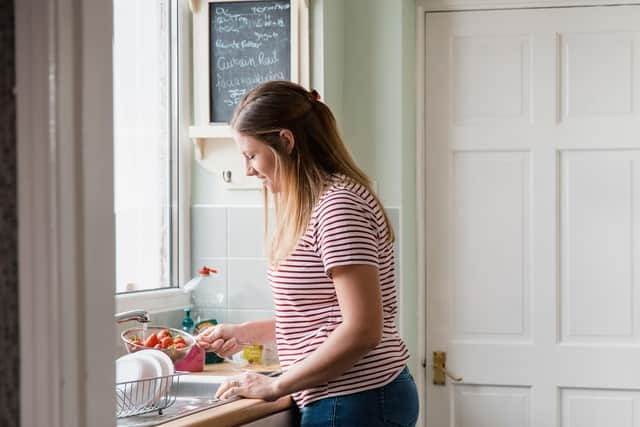

Avid followers are taken in by satisfying videos of decluttering, deep cleaning and organisation and many cleanfluencers have been able to monetise their platforms through sponsored posts, affiliate links, and brand collaborations.
In her book, The return of the housewife: Why women are still cleaning up, Dr Casey looks at this relatively new world of cleanfluencers and explores the side of social media that is flooded with images of ‘the perfect housewife’. The big message behind the accounts? That cleaning can make you happy, she says.
“One of the things that you see a lot of on cleanfluencing accounts is some sort of reproduction of the idea that housework makes you happy, that it's good for your mental health and that it's a form of self-care, that it's part of the positive thinking movement.”
Feminist writing, however, has typically said the opposite. “For a very long time feminists have talked about how housework is a flight from self, that it's suffocating, that it's thankless, that it's monotonous, that it's unpaid. So that contrast was interesting,” explains Dr Casey, speaking from her home in Tyneside.
"I spent quite a lot of time trying to find some sort of scientific evidence that there is a link between housework and good mental health, but I can’t find any peer reviewed research at all to support that idea.
"And yet it’s an idea that has been very vociferously accepted within the cleanfluencing movement and lots of people have bought into it, including cleaning product manufacturers.”
Perhaps that is because the most successful cleanfluencers are good at being relatable, often sharing personal details about themselves and their lives. “As a viewer you look at their content and it feels like the cleanfluencer is somebody who's a little bit like you,” Dr Casey muses. “That enhances a sense of trust and possibly makes you more likely to purchase the products as well because it feels like a recommendation from a friend rather than somebody trying to sell you stuff.”
What is being presented, in Dr Casey’s eyes, is a glamourised version of the reality of housework, often filmed and edited in a way that seems effortless and fun, with little hint of any mundanity or tedium coming through in the portrayal of the finished result.
“I wouldn't say that anybody who claims to gain pleasure from housework is not telling the truth,” she says. “But I do think quite often those pleasures are temporary…as soon as you mop the floor, somebody comes in with boots on or whatever.”
The cleanfluencer content also does little to challenge the idea that women are the most “naturally competent” home makers, says Dr Casey, who for much of her career has researched “hidden, overlooked and invisible” aspects of women’s lives.
It is well documented that housework remains one of the world's most unequal institutions, with study after study suggesting women often shoulder more domestic tasks and household chores. In her book, she explores why these inequalities in unpaid domestic labour matter and why they persist after a century of advancements in women’s rights.
"That idea that housework is the natural preserve of women is really quite heavily reproduced in cleanfluencing cultures,” she tells The Yorkshire Post. “Obviously we don't know yet what the kind of long-term impacts of all of this are going to be.
"But there is quite a lot of data available which looks at the division of household labour and one of the things that data has shown us is that during the Covid-19 pandemic those inequalities were intensified and they haven't recovered. So women continue to do the vast majority of unpaid domestic labour.”
Is there hope of dismantling those entrenched inequalities? Dr Casey isn’t convinced. “For women, housework is closely associated with ideas of feminine value and status in a way that it isn't for men.
"So I think until we decouple housework from feminine value and a way of expressing your love for your family etcetera, then probably those inequalities will still proliferate.”
The return of the housewife: Why women are still cleaning up by Emma Casey is out now, published by Manchester University Press.