
'I spent years helping people prepare for death – but nothing prepared me for the grief of losing my wife'
Four months ago, Richard Cyster's wife Margaret collapsed without warning from a catastrophic brain haemorrhage. He’s spent a decade supporting bereaved families as a volunteer grief counsellor, but Harrogate-based Richard says nothing prepared him for becoming a widower himself.

"For years I had supported bereaved people and believed I understood grief,” the 78-year-old says. “What I discovered is that understanding grief intellectually and experiencing it yourself are two completely different things. You can know all the theory in the world, but when it is your person, everything changes.”
Richard and Margaret met through a local book club in 2007 and married three years later. But their future as a couple disappeared without warning on the morning of February 7 this year.
Richard had taken a cup of tea back to bed when he heard a loud bang downstairs. He found Margaret collapsed in the hallway after suffering a major bleed on the brain. She was rushed first to Harrogate District Hospital and then transferred to Leeds for specialist neurological treatment but doctors quickly confirmed there was little they could do.
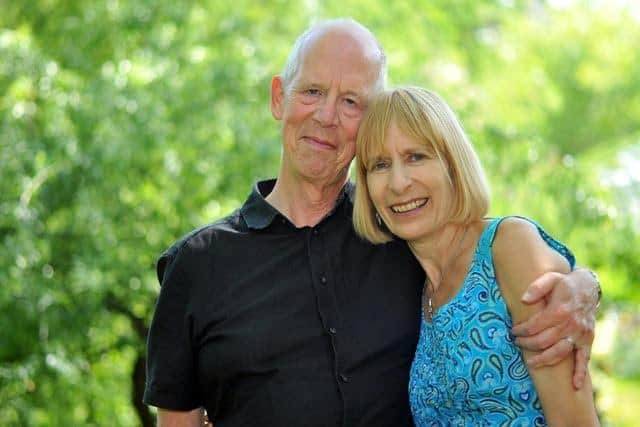

Richard says: “There was absolutely no warning...We were enjoying our retirement, spending time together and looking forward to the future. When something like that happens completely out of the blue, your entire world changes in a matter of moments.”
Over the following six days, Margaret's children, grandchildren and wider family gathered around her bedside. Although she briefly regained consciousness at points, she never fully recovered.
“At one point she opened her eyes and asked whether she had remembered to put petrol in the car,” Richard recalls. “I don't think she knew where she was or what was happening, but hearing her voice meant the world to us.
"We knew our time was limited, so I suggested we have a little party in Margaret's honour while she was still with us. All the family gathered around her bedside, we played music she loved, shared stories and memories, and celebrated the wonderful life she had lived.
“Instead of moistening her lips with water, I dipped the swab in wine so she could have one final taste of her favourite tipple. It sounds unusual, but it felt right for Margaret. We wanted those final days to be filled with love, laughter and family rather than simply focusing on the fact she was dying.”
Margaret was 76 when she passed away. Just hours afterwards, Richard delivered a course, which he’d set up through his local U3A group, helping people to prepare for death, considering wills, powers of attorney, funerals and end-of-life decisions. “Looking back, I don't know how I managed it,” he says.
Richard is sharing his story as part of The Widowed Collective's #WidowedAndForgotten campaign, launched to mark International Widows Day today. The campaign shines a light on the loneliness and isolation many widows and widowers experience as they adjust to life after losing a partner.
Richard says: “It feels as though somebody took the completed jigsaw of my life and threw it into the air. I am now trying to put the pieces back together, but there is one piece missing right in the middle.
“The Widowed Collective has been incredibly helpful because it connects you with people who understand exactly what that feels like. They understand there is no timetable for grief and that widowhood changes your life forever.”