
‘I wanted to die’: Christa Ackroyd explains what really happened at the BBC for the first time in the Mrs Yorkshire podcast
Christa Ackroyd shares in depth for the first time what really happened at the BBC when she was sacked and branded a “tax cheat.”

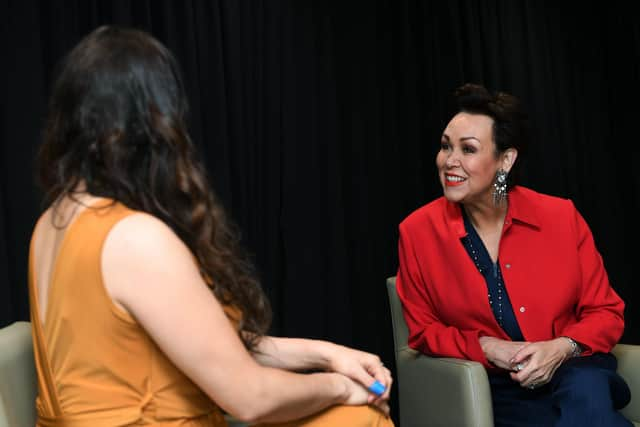
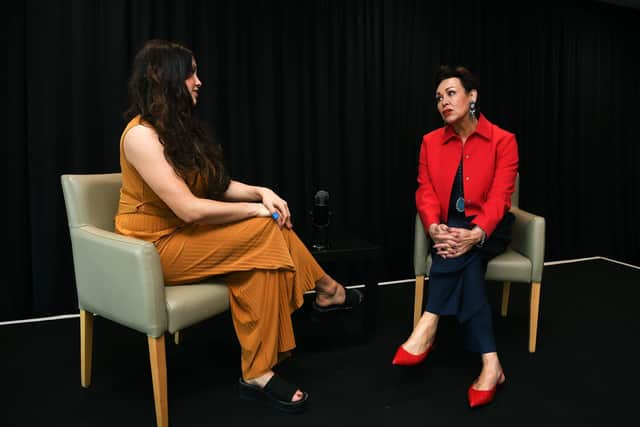
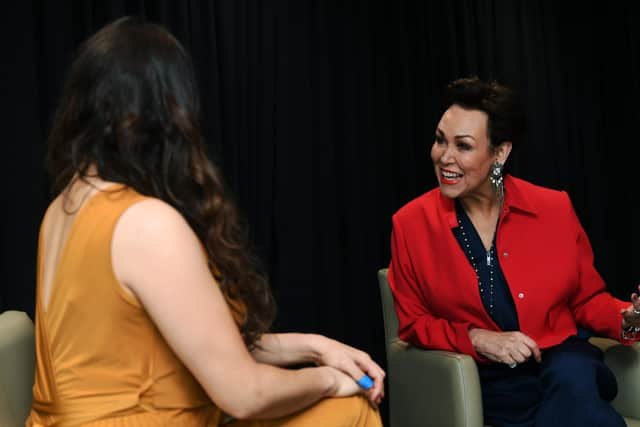
In the latest episode of the Mrs Yorkshire podcast, Christa shares with podcast host Sophie Mei Lan her incredible media career - from presenting Calendar with Richard Whiteley and BBC Look North with Harry Gration before having her contract terminated by the BBC, which saw her being personally and professionally “cancelled.”
Aged 24, Christa became the first and the youngest female news editor, and later programme controller, of Radio Aire, although she pretended she was 27 at the time.
Christa said: “I always wanted to be a journalist.

“You can strive for what you want in life.
“I didn’t particularly want to be a journalist on television.
“In fact, TV often holds you back because it's how you look.
“I’m fortunate that I was 30-odd when I went on TV. So I already knew who I was. I think if I had been 24 and a size 14 and with short dark hair when everybody was all flicked and blonde and a size eight, I think I would have had a nervous breakdown.
“But I was always secure in why I was doing it, and that’s to tell other people’s stories, and the TV, simply, became a vehicle.”
Christa became renowned for asking the questions nobody else dared to ask.
She had covered and investigated some of the region’s biggest stories over three decades before she hit the headlines.
In 2013, Christa became unemployed, with a tax bill of over £400k, which was later reduced due to the tax she had already paid.
Christa said: “They didn't take into account what I had already paid in tax until a tribunal. I ended up paying around half for the seven-year period.”
She describes it as being one of “the lowest points” in her life.
“Christa sacked by BBC over alleged contract breach,” read the headlines at the time.
She said: “I'd spent my entire career searching for the truth, and now my integrity was being questioned.”
Christa said she was told by the BBC she had to use her own company Christa Ackroyd Media Ltd to be paid as a freelancer for them.
That was the only way they would engage her services after that. There was no alternative.
Christa said: “The BBC had tried to poach me two years before I left Calendar.
“One of the stipulations when I joined the BBC was that I could continue my Sunday Express column.”
When Christa’s first five-year contract came to an end the BBC issued her with a seven-year contract, where she said they had removed the part about her column.
She said: “Eventually, in the second contract, they forced me to quit my column.”
It was this BBC contract that led to Christa being investigated by HMRC over her tax affairs. At the time many TV presenters on similar contracts were also investigated.
She said: “I couldn't believe that as a freelancer, they (BBC) could somehow blame me when it was their contract.”
Christa said that before a “routine” investigation into her tax affairs, her bosses had already spoken to her about “succession plans.”
Within weeks of HMRC launching their investigation, Christa was suspended for “breach of contract.”
Christa said she couldn't believe she was being blamed for not paying the right amount of tax, when it was the BBC themselves who issued “not one but two contracts” from their own legal department.
She said: “They had told me this was the way they engaged presenters.”
Later, the corporation terminated Christa’s contract before a tax tribunal.
She said: “I lost everything. It was one of the worst times in my life. I can’t label it a tragedy because I’ve interviewed people who’ve experienced genuine tragedies, from survivors of the Hillsborough disaster to losing relatives in combat during the Afghanistan war and the victims of Peter Sutcliffe.”
“BBC Look North was struggling in the ratings before I joined. There had already been echoes that I was too expensive, but I had proved my worth with the viewing figures.”
Christa, one of the highest-paid presenters in regional news, found herself suddenly shunned.
She said: “I was essentially cancelled by clients, colleagues, and some friends.
“I still keep a text on my phone from one of the managers at the BBC offering to help, but they chose to abandon me in the end.”
Not only was Christa battling the BBC, but she had the personal turmoil of caring for her mother, who had been diagnosed with vascular dementia.
She said: “Sometimes I cried in the toilets, but never let anybody see. Sometimes I thought, can I do this?
“The truth is, the truth will out, but at times I wanted to die,” she recalls.
Reflecting, Christa said in the thick of the scandal, she thought things couldn’t get worse until her mother, who had dementia, was diagnosed with Alzheimer's.
Christa said: “Whatever you believe in, in some ways it felt like the universe was giving me time to spend with mum, which I wouldn’t have had had I still been at the BBC.”
Christa’s mother and late father’s lessons fuelled her tenacity to fight her case.
She said: “My mum used to write in a journal every year and she would write the same phrase at the start, “I can and I will.”
Her mother was raised in a quiet North Yorkshire farming community where she inherited this quietly determined attitude.
Christa said: “It wasn't about the money, it was my integrity. I would have spent every penny I had to fight for that.”
Following a long legal battle, in which Christa was forced to sell her house, she said she felt vindicated by a judge.
Christa said: “My mum died without knowing that a judge found me to be and I quote ‘honest’ and ‘not a tax cheat.’
“He questioned why I was given the contract that I was given, but my mum never heard that judgment.”
She said she lost the case, but the main thing was that her integrity was restored.
Christa said: “I lost the tribunal because the initial implication was quite right. It (the contract) should never have been offered to me, and I should have been an employee.
“I had to pay it as well as huge legal and accountancy fees. I couldn't even take them to an industrial tribunal because I wasn't an employee.”
“It nearly broke me, I say nearly, because I loved my job. I still love the BBC. I just don't think they're very good at crisis management.”
Christa said following her exit, the 200 other BBC people who were investigated were made staff.
She said: “The judge decided that actually I should have been employed, but what he said in the judgment was he first of all questioned in court why the BBC weren't here to explain the contract.
“His judgment could have been one line. It was page after page. He wished to stress I wasn't a tax cheat.
“He wished to stress that he thought I was a good journalist by the way I'd conducted myself in court.
“And that it wasn't tax evasion. It was a relook at a contract, which lots of people were doing under something called IR35.”
Since Christa left the BBC, a new management team has been put in place at BBC Yorkshire. When contacted for a statement, the corporation said it doesn't comment on individual cases.
What is IR35?
IR35 is off-payroll working, where a worker is often paid through their own intermediary company.
Christa said: “Doctors were doing it. They are self-employed in many cases.”
Christa claims the barrister on behalf of HMRC was self-employed in the same scheme as she had been.
She said the BBC eventually paid her a “considerable amount of compensation" and accepted that the contracts which affected two hundred people had been flawed.
Christa said: “All I wanted was a recognition that they were wrong.”:
One unanswered question that echoes in Christa’s mind is: “What did they mean about ‘breach of contract?’ It was their contract.”
Full circles in life
When Christa's mother died, she left her a “million memories,” including all of Christa’s newspaper clippings, which she had saved inside old tomato boxes.
Christa said: “I was going through her things and she'd kept every single newspaper column I had ever written in the press and the Sunday Express. Every single one. It was box after box after box after box.”
The last clipping her mother had kept was an article about Christa getting sacked from the BBC in The Yorkshire Post.
Christa added: “My mum never got to know that I'd been vindicated, and one of the cuttings was about me being sacked by the BBC.
“I was crying because the last cutting in her collection that she'd saved was not the ten years of writing for the Express, it was this cutting from the Yorkshire Post. I felt so angry.”
Christa was on her way to the funeral directors to sort arrangements for her mother’s funeral when the phone rang.
Christa said: “This voice said hello. I'm ringing from the Yorkshire Post. They wanted to know if I'd write a column.
“I said yes, but then they explained the problem was that they needed it by tomorrow. The first one.”
Christa wrote her first column dedicated to her mother.
She said: “It was emotional, but the call was also really weird timing that I was at my lowest.”
Two days later, the column was published, and Christa placed her column inside her mother’s box to be buried with her.
Christa’s comeback came 18 months later when Netflix scouted her to appear in The Ripper documentary.
Christa said it made her feel like life had come full circle again.
She added: “I gave a young man a job when I was at Radio Aire, who was desperate to be in radio.
“Years later, he restored that faith in me. Not only did he speak up for me at the tribunal, but he gave me some work back.
“That's why I'm about to go and record some more for Channel 5 by Daisybeck Studios, where I can wander and tell stories of Yorkshire.
“I’ve had thirty-five years on TV. I always wanted to be the woman who was still relevant despite her age, despite her accent, and despite her background. And that meant that I still wanted to be on television at seventy.
“So I've got two years and two months. And by hook or by crook, it will happen.”
Now Christa is on a mission to remain a familiar face on TV, not to talk about age but to shine regardless of age.
Alongside her appearance on Our Great Yorkshire Life, Christa appears regularly on TV and continues to write her column for The Yorkshire Post.
She has spearheaded the Bronte Birthplace Campaign and volunteers for the Homeless Street Angels.
Despite all that has happened, Christa remains a strong supporter of the BBC and their licence fee.
Listen to Christa Ackroyd speak to Sophie Mei Lan on the Mrs Yorkshire podcast sponsored by Whitby Seafoods, the home of scampi, here.