
Lycurgus Cup: The University of Sheffield recreates Ancient Roman artefact
University of Sheffield experts have reproduced the colour-changing “dichroic” glass of the 1,600-year-old Lycurgus Cup.

Currently exhibited in the British Museum, the Lycurgus Cup is listed among the Seven Glass Wonders of the World. When light is shone from above, the cup appears jade, and when shone from behind, it glows red.
The colour-changing effect behind this extraordinary Roman artefact has fascinated scientists for centuries, but until now, has not been reliably replicated.
Project manager Christina Metcalfe originally tasked University of Sheffield scientists to recreate the glass for its LightFest in 2025.
Two days before the deadline, lead researcher Lisa Hollands had a breakthrough.
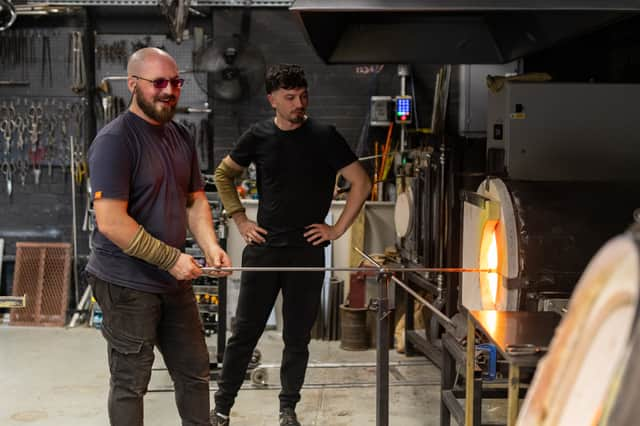

“I took the glass and I ran around the building showing anybody who stopped,” said Lisa, who had taken a gamble by adding sugar to one of the batches.
“I suspect the Romans didn't use sugar by the way,” she added, “but I had to do something that helped to get the atmosphere closer to a wood-fired furnace.”
Lisa credits her success to replicating Roman materials as closely as possible. “I've looked at the starting materials that I have available and tried to put them together in a way that would make them similar to what the Romans would have had available to them,” she said.
“They didn't have chemicals in pots from the local chemical store or anything like that,” Lisa said, “They had minerals.”
“We started off with an electric furnace and weren't getting anywhere with that, so I moved on to using a gas furnace.”
According to Lisa, the science behind the colour-changing works “a bit like a filter.”
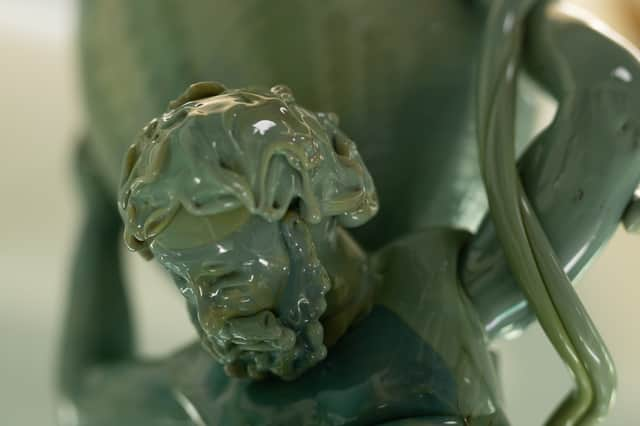
The recipe involves adding tiny amounts of gold, silver and copper to glass. As the molten glass cools, the metals crystallise, forming nanoparticles of just 50-80 nanometres in size.
When light passes through the glass, it interacts with the outer shell electrons of these nanoparticles. In a phenomenon known as ‘surface plasmon resonance,’ some colours are absorbed more than others, which blocks certain colours from passing through.
“We get the red because these particles stop the green and the blue in the spectrum and they allow the reds and the oranges to pass through,” Lisa said.
After its success at LightFest, the University of Sheffield decided to perfect the glass even further.
“My inquiring mind wouldn't let me put it down,” Lisa said, while Christina agreed: “Out of all the exhibits, it felt a bit like Christmas had come.”
Partnering with renowned glass artist Elliot Walker, the University of Sheffield has since created a contemporary replica of the original Lycurgus Cup.
From November 6-15, visitors are invited to see the piece in its first public debut at the University of Sheffield’s ‘Festival of the Mind.’ Entrance is free.