
Marquess of Zetland obituary: The innovative landowner synonymous with horseracing
Lawrence Mark Dundas, the 4th Marquess of Zetland, who has died aged 88, was a North Yorkshire landowner who served as a Jockey Club steward, chairman of Redcar racecourse and a founding director of the British Horseracing Board.

Known by his middle name, Lord Zetland took over from his father, Lawrie, as chairman and managing director at Redcar in 1981 and became known for his commitment and innovation.
He was carrying on a long family tradition: the name Zetland had been synonymous with the seaside racecourse from when races were first held on the beach more than 150 years ago.
The Zetland Gold Cup, first run in 1950, continues to be one of Redcar’s most prestigious races.

However, Mark, whose family home was Aske Hall near Richmond, is best remembered for introducing Redcar’s richest race, the Two Year Old Trophy, in 1989.
Other notable achievements included overseeing a major redevelopment programme funded by selling off a piece of land at the north end of the racecourse to Safeway Supermarkets in 1988.
His natural charm attracted many stars to the racecourse, not least Sir Bruce Forsyth, Paul Daniels, and Coronation Street’s Elsie Tanner, the actress Pat Phoenix.
Lord Zetland stepped down as chairman at the end of the 2018 season.
Four years later, in an interview marking the 150th anniversary of the course, he said: “I had no real interest in racing, but I wanted to do my best to maintain the family tradition, so I learned quickly. Over time, I developed a love of horse racing.”
A graduate of Christ’s College, Cambridge, Lord Zetland played a national role on the British Horseracing Board and was a former chairman of the Thoroughbred Breeders Association council.
He was also a successful racehorse owner, winning the Scottish Borders National at Kelso with a horse called Malek in 2005.
His great great grandfather had owned the legendary 19th century Derby and St Leger winner, Voltigeur.
Off the track, his life was centered on the Georgian country house in North Yorkshire which had been the home of the Dundas family, Marquesses of Zetland, since 1763.
Aske Hall was mentioned in the Domesday Book, but it wasn’t until the 16th century that a significant manor house was built on the site.
In 1727 the then owner Sir Conyers Darcy commissioned the architect who had designed Duncombe Park in Helmsley to transform Aske.
When Sir Lawrence, first of the Dundas baronets, took ownership of the estate in 1763, he sought to make Aske one of the finest houses in the North. The project saw the building of new offices, a bakehouse, family rooms and a staircase.
When Thomas Dundas, 2nd Earl of Zetland, was living in the hall, he funded further renovations, hiring Ignatius Bonomi, the architect who had worked on Durham Cathedral and St Nicholas House in Richmond.
A Jacobean frontage was added, and two balconies. The tower on the west front was remodelled.
In the 1960s, the 3rd Marquess decided to reduce the size of the house and remove the ballroom.
Aske remains an impressive pile today, home to a collection of 18th century furniture, paintings and porcelain.
The grounds are thought to have been landscaped by Capability Brown and include terraced lawns, a walled garden, a gothic folly and a lake with a Roman-style temple.
Lord Zetland, known as the Earl of Ronaldshay until he succeeded to the rank of Marquess in 1989, was born in December 1937, the eldest son of the 3rd Marquess of Zetland, who as Lawrie Ronaldshay competed at Wimbledon in the 1940s. His mother Penelope was the daughter of Col Ebenezer Pike.
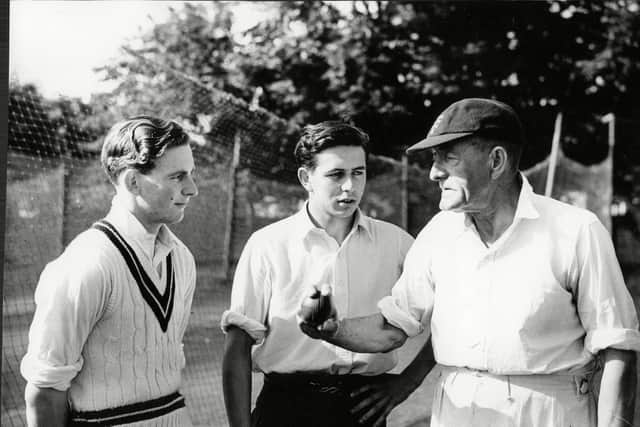
The young Mark was educated at Harrow, where he excelled in tennis and cricket.
After National Service in the Grenadier Guards, he worked for a firm of wine merchants and ran a small chain of toy shops on the south coast.
In 1976 he opened a shop on London’s Kensington High Street, trying unsuccessfully to harness the brief fame of his younger brother, the pop singer David Dundas, to attract crowds.
Shortly after that he moved to Ripon, not far from Aske, and to the North Yorkshire acres that would remain his home.
He married Susan Chamberlin in 1964 and she survives him, together with their two sons and two daughters. Their elder son, Robin Lawrence Dundas, succeeds him as Marquess.