
Mrs Yorkshire Podcast: Why Whitby has been dubbed the ‘Côte d’Azur’ of the UK
Climbing 199 steps from the town centre to Whitby Abbey, you’re met with staggering views of the harbour.

At first glance the windy clifftop may seem a world away from the scorching hot coastal paths of Côte d'Azur in Southern France.
Whitby has, however, been dubbed the UK's Côte d'Azur by the national press; it seems the French Riviera is much more similar to the North Yorkshire coastline than you may think.
In the latest Mrs Yorkshire podcast, sponsored by Whitby Seafoods – the home of scampi, Sophie Mei Lan heads to Whitby to discover why people, including Most Haunted’s Yvette Fielding, aspire to holiday and retire here.
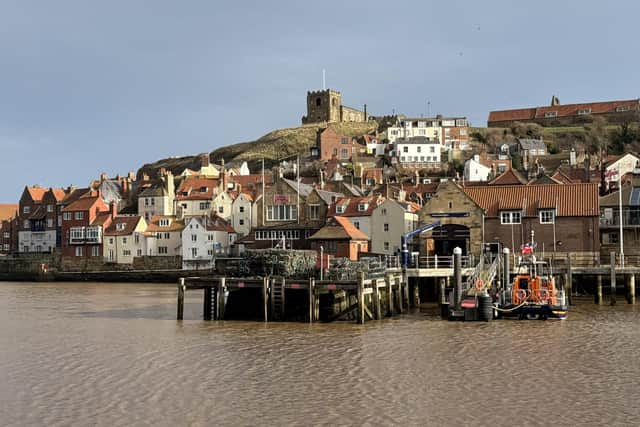

Bram Stoker came to Whitby to write Dracula - the most filmed novel of all time. Captain Cook came to Whitby to become an apprentice seaman. Yvette Fielding came to Whitby four times in one year, which inspired her latest children's novel.
Yvette said: “It is called The Vampire of Whitby. It's obviously based in Whitby, and the Ghost of Vlad the Impaler rises up, has an army and takes over the town of Whitby.
“Our three heroes in it do their very best with the help of the Society of Paranormal Investigations, the SPI.
“They do what they can to quell the power of Vlad the Impaler.
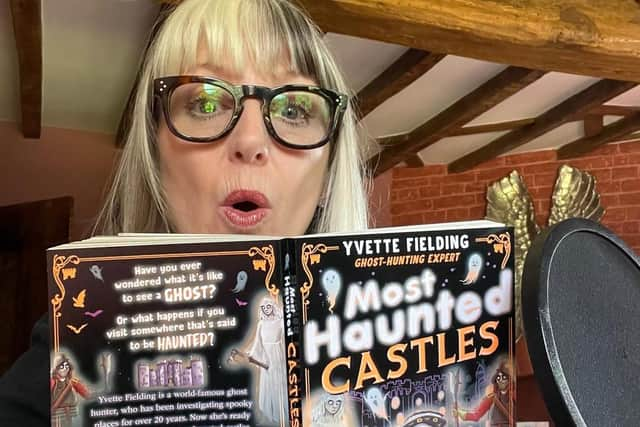
“So, Whitby, here we come. Me and (husband) Karl absolutely adore Whitby.”
Whitby has historically been a source of literary inspiration.
Lewis Carroll was inspired by Whitby after coming on a student trip here, where it’s believed he began experimenting with storytelling. Charles Dickens and Elizabeth Gaskell also featured Whitby in their novels.
Dracula, however, is the most iconic of the novels set in Whitby. Author Bram Stoker stayed at Mrs Veazey's guesthouse at 6 Royal Crescent for a month when he wrote Dracula. It’s said he regularly used the reading room inside the Royal Hotel.
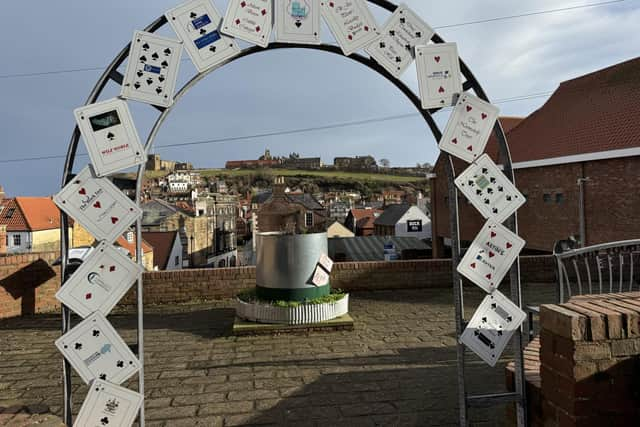
Whether wandering past the waves of the North Sea or walking up one of the coastal paths on the Côte d'Azur, writers are often inspired by their walking routes, embracing the landscape.
The Nietzsche Trail on Côte d’Azur, named after German Philosopher Friedrich Nietzsche, is a steep ascent from the seaside up to the medieval village of Eze.
Nietzsche wrote one of his books here.
For Yvette, Whitby has it all.
She said: “I love its history. I love its connection. It has so many layers of history.
“You've got the Vikings, you've got the pirates, you've got all sorts of stories.”
Legend has it that a witch dubbed ‘Mad Maggie’ lived on the church steps.
Yvette said: “Mad Maggie allegedly cursed the town of Whitby. And her curse was that all the sailors would drown in a big storm. “She said, upon my death, there will be a huge storm and all the sailors will die.”
Mad Maggie is also said to have capitalised on the fact that people feared her by making a lucrative business of selling ‘protection’ gifts.
Whitby is a breeding ground for stories thanks to its history and vast landscape.
On the cusp of the North Yorkshire Moors, and the North Sea, Whitby is also renowned for its goth culture, fossils, jet jewellery and seafood.
Not only has it been dubbed the UK’s "Côte d'Azur", but it is the ‘goth capital’ of the UK, with the Whitby Goth Weekend proving popular. It's a biannual event celebrating this subculture through music, entertainment, and a Bizarre Bazaar Alternative Market.
While Yvette loves the event she tends to stay away during Whitby Goth Weekend because she gets so much attention from fans that it’s hard to sit and take in the place and people.
She said: “It’s always, ‘oh my gosh, you're the ghost lady.’
“I do love seeing all the steampunk outfits, though, it's fantastic.”
">