
Myofascial Release Therapy: I met the Yorkshire “miracle maker” to see if he could ease my back pain - it looked like a scene out of the exorcism

Elite sports stars, footballers and people living with chronic pain are just some of the clients of a Yorkshire myofascial release therapist. But what is myofascial release therapy? And why do they call this Yorkshire therapist a miracle maker? Our reporter Sophie Mei Lan Malin went to find out.
My friend swears by it.
Myofascial release is a type of therapy that is used to treat chronic pain and injury.
It is a form of soft tissue manipulation that works to reduce tension in the body’s muscles and connective tissues, helping to reduce pain, improve range of motion, and promote healing.
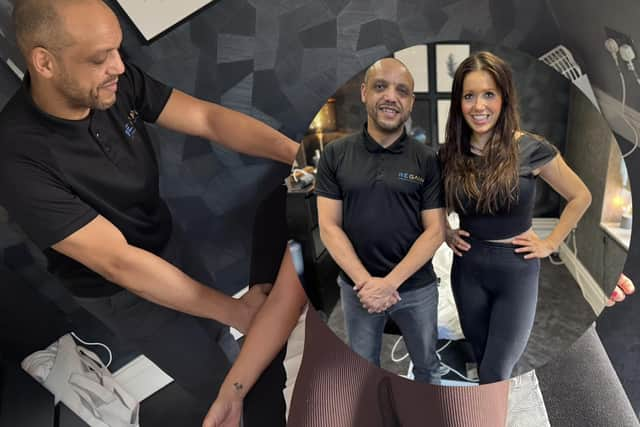

I wanted to try it out for myself. Regain Pain Management is based at Manor Health in Rodley, Leeds. Off a busy high street lies a luxurious hidden gem.
Upstairs I met Mathew Jerome, who had been a semi pro footballer before getting injured.
It was then he studied this relatively new form of physiotherapy which manipulates your soft tissue. Over the past decade he has treated everyone from football players to people who have been bed bound.
My friend, who had recommended Mr Jerome to me, piqued my intrigue - and concerns - before I lay down on the treatment bed.
She said: “You'll look like the girl from the exorcism but it works.”
I’ve been living with sciatica and fibromyalgia for many years so I am always open to trying new things.
With trepidation I lay on my front. I could smell the essential oils being diffused around the room with some relaxing music playing in the background.
This felt like the firm pressure of a sports massage but it was slow and into the connective tissue between the muscles.
Now for the exorcism scene.
Mr Jerome puts pressure on certain points enabling your body to almost “uncoil” itself, relieving any tension you hold.
I kept looking up to check he wasn’t moving my arm which was going up and down. Mr Jerome reassured me to allow my body to move how it wants to.
I’m quite flexible anyway but in my out of body experience I could see myself looking like a spaced out contortionist.
Each session lasts between one to two hours. I just had a half hour trial but I wish it had been longer.
Standing up has definitely eased my sciatica pain but I think I need a few sessions to feel the benefits long-term.
My friend goes weekly and swears by it for her frozen shoulder and fibromyalgia. She goes from being unable to move her arm to lifting weights over her head.
When you’re living in pain and you find the right treatment for you, it certainly can feel miraculous.