
Nicola Sturgeon: 'There'll always be an imposter syndrome voice in my head'
The former First Minister of Scotland Nicola Sturgeon speaks to Hannah Stephenson about misogyny, miscarriage, menopause – and moving on.
Nicola Sturgeon is no stranger to hitting the headlines, from political fall-outs to personal slurs, questions about her sexuality and a highly publicised police investigation into party finances, from which she was exonerated after nearly two years.
Now, the former First Minister of Scotland and SNP leader has detailed all the issues which have affected her both in and out of the spotlight in her hefty memoir, Frankly. She charts the ups and downs of her journey, the misogyny, the election wins and losses, the famous fall-out with her predecessor Alex Salmond, ‘rumours’ she was having a torrid lesbian affair with a former French ambassador to the UK, and the police investigation into party finances, from which she was exonerated in March after nearly two years.
Despite all the turbulent times and the resilience she has shown, Sturgeon, who is appearing at Raworths Harrogate Literature Festival in October, says she is still the shy, unconfident person she was growing up, suffering imposter syndrome from her early university days and through her career. “I’m still all these things,” she chuckles. “I think there always will be that little voice in my head, that kind of imposter syndrome voice, questioning whether I’m up to all the things I’m doing. I’ve come to the conclusion over my years in politics, that that’s got the capability of holding you back. But if you use it properly it’s also your superpower because it makes you work harder and strive harder and double down on proving yourself.”
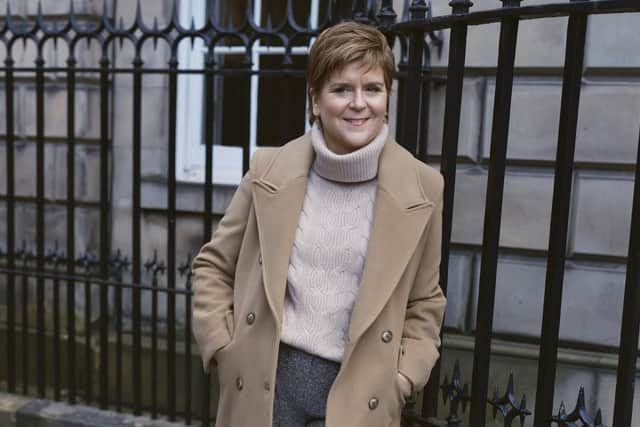

The shyness was overshadowed by a burning ambition, from growing up in a working-class family in a former mining village in Ayrshire, the daughter of an electrician and a dental nurse, to becoming First Minister of Scotland.
There seemed to be little awareness of work/life balance and she talks about the conflict she felt when she became pregnant at 40 and the miscarriage that followed. She had never possessed an overwhelming maternal instinct to have a child and felt guilty at not being as excited about the pregnancy as her husband Peter Murrell, then SNP chief executive.
“Had the pregnancy continued, I would have been six months’ pregnant during an election campaign in 2011. We might go, ‘So what?’ now, but back then I don’t think there had been a senior woman in government that had had a baby in office. It wasn’t obvious what the public reaction would have been. Election campaigns are pretty gruelling physically and I was worried if I could cope...I know there were days when I was so anxious that I found myself thinking, I just wish I wasn’t pregnant, and then when I had the miscarriage I felt – and a little part of me still feels that today – that that was my punishment for being so conflicted.”
Today, Sturgeon, 55, reflects: “If I could turn the clock back and have a child, I would absolutely choose to do that, but on the condition that I could still do everything else I’ve done. If somebody said to me, ‘You can have a child but you wouldn’t become First Minister, I’d go, ‘Nah, don’t want to do that’.”
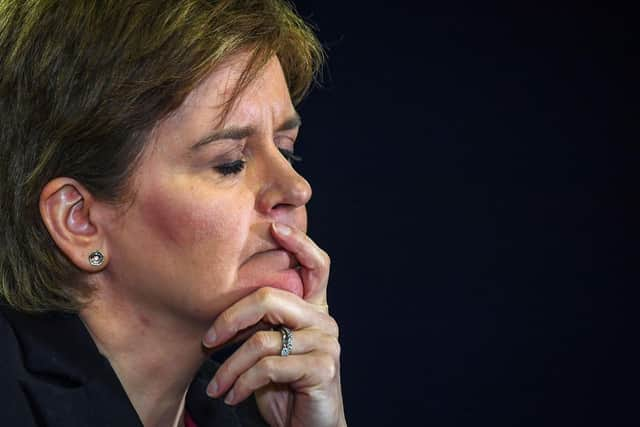
Fast forward 13 years and she found herself going through the menopause, and becoming anxious that she would forget her words in the Chamber during First Minister’s Questions. “The menopause was not a reason for stepping down but I think it’s really important for younger women to hear people who’ve done high-profile jobs talk about going through it...I guess that it was making me think about the stage of life I was at, how long I’ve been in politics and what I wanted to do (next).”
In her early years in politics, Sturgeon faced misogyny and sexism so endemic, she didn’t always recognise it as such. “The misogyny and the sexism that I would have encountered was so ingrained and so embedded...I just assumed it was part and parcel of politics and what you had to deal with.” Some things have got better for women in politics, she stresses, for instance, there are more women in senior positions, but in other ways things have got worse. “I didn’t have social media when I was a young politician and I think that the environment women operate in in public life is much more hostile and challenging than it used to be. That worries me about the future and the ability to attract women into politics.”
It’s clear the police investigation after her resignation as First Minister in 2023 created massive personal challenges. She announced the end of her marriage in January this year. “The pressure of the last couple of years on any marriage would have been very intense. Maybe without that, moving into different phases of life we might have grown apart anyway. I don’t know. But the stress and strain of the last couple of years made it almost impossible.”
Her estranged husband has appeared in court charged with embezzlement. “It was tough and it challenged me mentally more in my personal life than anything else has ever done,” she says of the investigation. “There were some low points over the course of those two years...I didn’t hide away. I was determined not to do that. I just got on with my life. Some days that was easier than others but having come out the other end, I feel that I’m a stronger person because of it, and a happier person.”
Now, she wants to spend more time with friends, maybe try her hand at writing fiction, and is trying to do more exercise. She’ll step down as an MSP next year but is always looking for causes to support. “I’ve learned much more than I was ever capable of doing before, to live in the moment and to find things to make you happy, even when you know all of those dark clouds are swirling above your head.”
Frankly, published by Macmillan, is out now.