
Plans for 20 metre high phone mast refused by council
A telecoms giant will once again have to go back to the drawing board after it’s latest bid to upgrade a town centre phone network was refused.
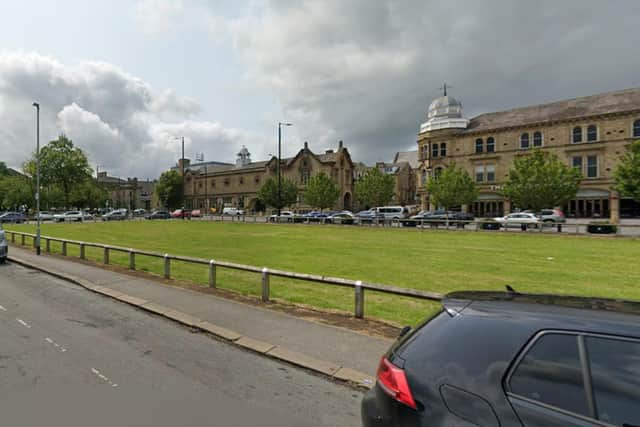
Plans to build a 20 metre high phone mast on land on Lord Street in Keighley Town Centre have been refused by Bradford Council.
Officers said the mast, and the bulky, street level equipment that would accompany it, would damage the town centre Conservation Area.
It is the second time this year that applicants MBNL (EE (UK) Ltd. & H3G (UK) Ltd.) have seen plans for a town centre mast refused.

The company is looking to replace a phone array at the top of Devonshire House in the town centre.
A new location for is needed due to planned works to the roof of that office building.
Earlier this year an application to install the array on the roof of the former Gala Bingo building – just off Lord Street, was refused by planners.
They said the work would “cause harm to a key unlisted building in the Conservation Area.”
A few months later the company submitted this latest application to install the equipment – a 20m monopole mast, two dishes, 12 Antenna apertures and five street cabinets, on Lord Street.
It would be located on the edge of the former Keighley College site – currently empty but earmarked for a multimillion pound new health hub for the town.
The application argued that it was a suitable site, and a central location was needed to ensure the town centre had a good 5G signal.
But Conservation officers raised concerns about the location – which lies within the Keighley Conservation Area.
Developments in Conservation Areas are given an increased layer of scrutiny, with modern features discouraged.
Refusing the mast, planning officers at Bradford Council said: “A substantial amount of apparatus is proposed, which by its nature will have a modern, stark, utilitarian appearance, and the height of the monopole would also result in a visually prominent and intrusive feature within the conservation area.
“The apparatus would be obvious from one of the principal thoroughfares in the conservation area.
“With no built form remaining on the site, there is no opportunity for screening and no mitigation measures have been proposed. The structures would be clearly visible from one of the principal routes through the conservation area and would appear incongruous within the wider setting.”