
Pope Francis dies aged 88: What happens after the pope dies and how is a new pope decided?

Pope Francis has died at the age of 88 - here is the process of events following the death of a pope and how a new pope is decided.
Pope Francis, born Jorge Mario Bergoglio, was the head of the Catholic Church and sovereign of the Vatican City State from March 2013 until his death in 2025.
He was the first pope from the Society of Jesus (Jesuit pope) which was a significant milestone due to the occasional tense relationship between the Society of Jesus and the Holy See.
The pope was also the first to have been born or raised outside of Europe since the 8th century Syrian pope Gregory III, having been from Buenos Aires, Argentina. While he was not born in Europe, he was ethnically European as his father and maternal grandparents were from northern Italy. His father’s, an accountant, family left Italy in 1929 to escape the fascist rule of Benito Mussolini.
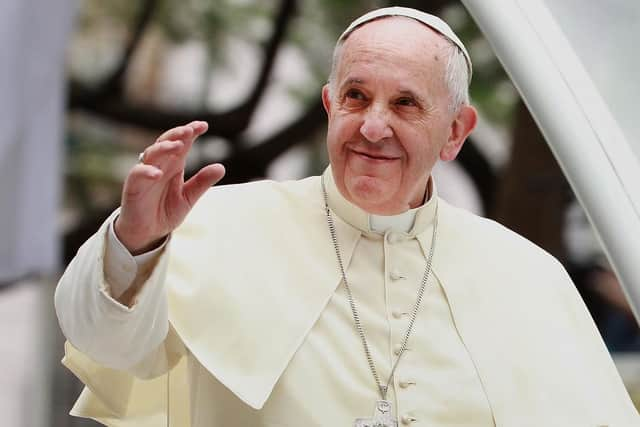

Pope Francis spoke fluent Spanish, Italian and German and was also conversant in Latin, French, Portuguese, and English.
In the early hours of April 21, 2025, Easter Monday, Pope Francis died at the age of 88. Whilst a cause of death has not been confirmed,he had been treated for chronic lung disease in the weeks prior to his death, including a respiratory crisis and pneumonia.
With the passing of the current pope, what happens next? Here’s everything you need to know.
What happens after a pope dies?
The process after the death of a pope was revised by the Vatican in February 1996 in a document which replaced the previous instruction of 1975 from Pope Paul VI. The norms were amended slightly by Benedict XVI’s final Motu Proprio Normas nonnullas in February 2013.
The Chamberlain (Camerlengo) of the Holy Roman Church confirms the Pope’s death in the presence of the Papal Master of Ceremonies and many other members of the Papal Household.
He informs the Cardinal Vicar for Rome who then alerts the people of Rome and the Chamberlain seals the Pope’s apartments and starts to make necessary preparations for the burial.
The Dean is responsible for informing all the cardinals, the Diplomatic Corps and heads of state.
Whether on his sickbed or following his death, photographs or film of the Pope are not allowed.
If the deceased Pope has made a will and has named an executor, that executor will only give an account of his activities to the new Pope appointed.
The burial takes place between the fourth and sixth day after the Pope’s death and before that (barring special reasons), nine days of official mourning are declared.
Popes are usually buried in St Peter’s Basilica, where the body will have a Lying-in-State for people to pay their respects.
A two-thirds supermajority vote is required to elect a new pope. The most recent papal conclave took place in 2013, when Jorge Mario Bergoglio was elected as Pope Francis, succeeding the retiring Benedict XVI.