
Snowdrops: The beautiful signals that winter might soon be behind us
It is a signal to gardeners that the shivers of winter might soon be behind us.

As the days gradually lengthen, the snowdrop begins to put in a welcome appearance.
They are among the first bulbs to bloom in spring and can form impressive carpets of white in areas where they are native or have been naturalised.
Such is the excitement that the Burnby Hall Gardens in Pocklington has declared February as snowdrop month.
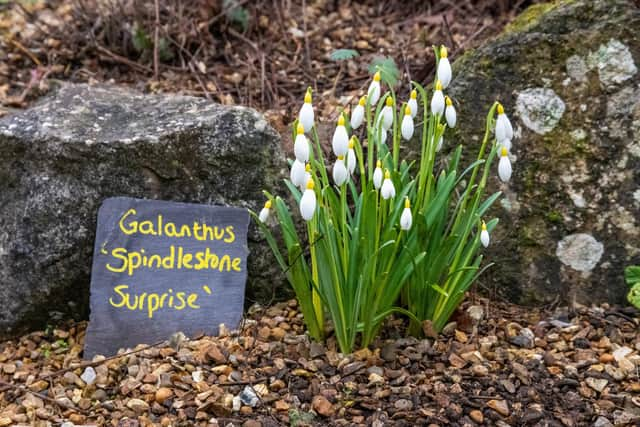

A spokesman said: “During February, we are inviting visitors to focus on our new collection of around 100 individual varieties of snowdrops planted over the last couple of years.
“Head Gardener, Jill Ward has sourced and planted examples of Galanthus (snowdrops), primarily in the Rock Garden, Walled Garden and Birch Walk.
"Each is subtly different and is labelled accordingly.
“Our event is a bit different in that we’re not offering huge coverings of snowdrops. Instead, our focus is on the individual plants in the collection which have been planted and labelled by Jill and her team, and we hope that anyone visiting the Gardens over this period will be able to learn a little more about these fascinating flowers.”
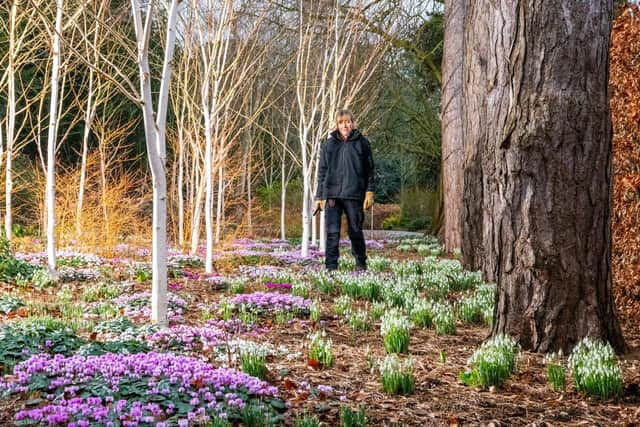
Recently there were short talks presented on the snowdrops by Ms Ward and Peter Williams, Gardens trustee and horticulturalist.
It comes as horticulturalists showcasing a newly bequeathed collection of snowdrops say the arrival of the flowers is providing a glimpse of spring in a drab and rainy February.
Visitors to the Royal Horticultural Society’s (RHS) Harlow Carr garden in Harrogate are being treated to a “river of snowdrops”, featuring plants bequeathed by Yorkshireman John Gibson – a renowned grower and breeder who died two years ago.
Alpine horticultural specialist at the garden, Lauren Fear, said: “People always like to see the snowdrops at this time of year.
“It’s that reminder that winter’s over and that spring is coming.
“And this is the biggest collection that we’ve had at Harlow Carr ever.”
There are more than 2,500 cultivated varieties and species of snowdrop, with around 20 pure species of snowdrop found in the wild.
They are grown by the RHS using a technique called plunging, which dates to Victorian times, and involves submerging potted alpine plants to their rims in a sand bed.
Fountains Abbey and Studley Royal Water Garden in North Yorkshire show spectacular drifts of snowdrops at this World Heritage Site which are a legacy of Earl de Grey, who planted the flowers along the banks of the River Skell when he owned the estate during the 19th century.
Hardwick Hall in Derbyshire als shows snowdrops which emerge early, clustered under the boughs of the yew and lime trees in the east and west corners of the South Court.