
SS Rosa: The mysterious Flamborough shipwreck that only appears at low tide
Beneath the chalk-white cliffs near North Landing, low tide reveals the ghostly boiler of the SS Rosa, roughly the size of a small car.

On the evening of April 27, 1930, the Admiralty oiling vessel ran aground during foggy conditions along the Yorkshire coast. Miraculously, a Flamborough lifeboat rescued all sixteen crew members, but SS Rosa was smashed up on the cliffs.
Shipwreck expert Richard M Jones, 45, has written 31 books and erected 20 memorial plaques to commemorate forgotten history. He was introduced to SS Rosa in 1995, when as a “young lad” fascinated by shipwreck books, he was given original photos.
“In 2002, I went down to the wreck of the Rosa myself because I knew that there was a boiler still there,” says Richard, adding: “There are still bits of the wreckage dotted along the cliffs.”
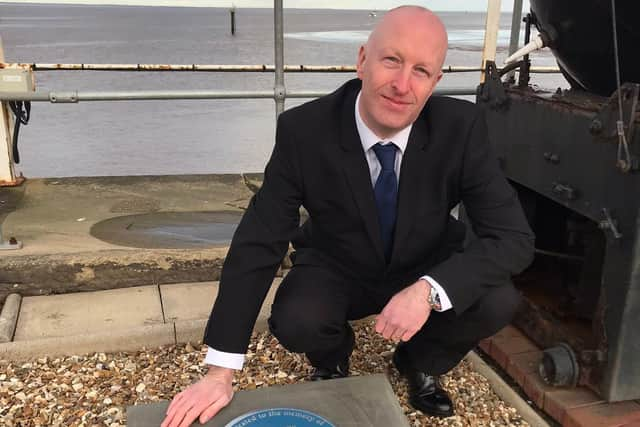

According to Royal National Lifeboat Institution archives, SS Rosa “was totally wrecked to the north of Flamborough Head in a heavy ground sea, with a dense fog and strong N.E. breeze.”
It was far from an isolated incident, and over 1,300 wrecks are documented along the Yorkshire coastline.
“In the 1920s and 1930s, when the steam ships first came about off the Yorkshire coast, they were running aground left, right, and centre,” says Richard.
“The Yorkshire coast is littered with wrecks,” he says, explaining that once the cliffs “got hold of the wrecks,” it was extremely rare for them to be salvaged.
Today, shipwrecks are a valuable opportunity to come face-to-face with maritime history.
“The seabed is an absolute time capsule when it comes to preserving our history,” explains Richard. “What we can learn from these wrecks not only saves lives in the future, but helps us study the people onboard.”
To spot the remains of SS Rosa, adventurous beachgoers scramble across exposed rocks at the northern end of North Landing, where the 20th-century boiler is wedged into the coastline.
“There are a lot of slippery rocks,” Richard adds, “so it’s not advisable to go down if you’re a bit nervous”