
The legendary names we lost in 2025 - from Yorkshire and beyond
In this end-of-year appreciation, we remember some of the inspirational names to have left us in 2025, and reflect on the achievements and standout moments of these remarkable people. David Behrens reports.

Dickie Bird achieved only moderate success in his first cricketing career, but from the moment he traded his bat for an umpire’s cap he was well on the way to becoming a towering figure in the sport’s history.
It is often said that a good umpire is one that goes unnoticed, but one need never look beyond Harold ‘Dickie’ Bird for an exception to that rule.
Bird, whose death at 92 was announced in September, was at once an outstanding umpire and impossible to ignore.
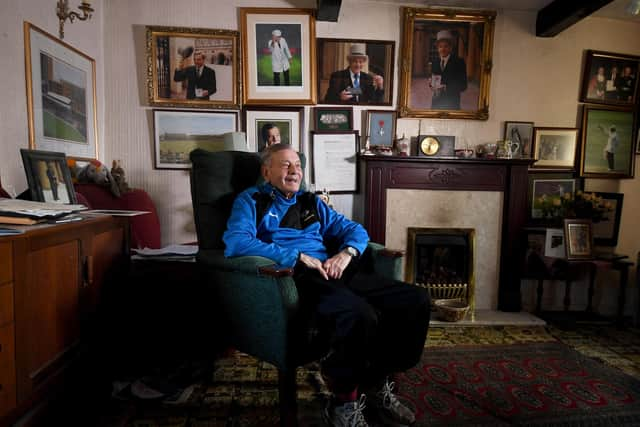

Although the quintessential Yorkshire cricket man, his good nature, vivid character and magnetic attraction to unlikely or amusing circumstances saw his legend outgrow geographical and sporting borders.
He shared the field with some of the game’s biggest stars and brightest talents but, more often than not, a line of autograph-hunters formed to meet the man in the middle at the end of a day’s play. He signed every time.
Bird’s popularity ultimately transcended umpiring too. His autobiography chalked up more than a million sales, becoming the nation’s biggest selling sports book ever, and he entertained the public for years as a TV personality and travelling raconteur.
In a favoured anecdote he claimed his one-man show drew a bigger audience in Leeds than Shirley Bassey.
When he ascended to the role of Yorkshire president in 2014, he took even greater joy in the team’s county championship triumph in his first season and even forked out £125,000 to fund a new players’ balcony at Headingley.
Born on April 19, 1933 in Barnsley, he was named Harold Dennis, having not yet adopted his schoolboy nickname. His father, James Bird, was a miner at Monk Bretton Colliery, man and boy, and wanted better for his son, for whom sport was an early and obvious passion.
His future might easily have been in football, having captained the Raley School team and earned a youth contract as an inside forward with Barnsley. Instead he suffered a knee injury at 15 and never played properly again.
The boxer Ricky Hatton was a similarly inspirational figure. From the social club of the Cheshire chemical works where he first laced on the gloves, to the swirling glamour of the Las Vegas Strip, he took his journey to the top of the boxing world in his stride.
With thousands of boisterous supporters trailing in his wake, Hatton, who died at 46, one week before Dickie Bird, called out and took on the greatest fighters of his generation, earning global acclaim for his all-action style and down-to-earth demeanour.
Barring a few deviations for pints of Guinness, his rise was as straightforward as it was enthralling – just a kid who fulfilled his dream of conquering the world while resolutely refusing to stray too far from home.
He sold out the then MEN Arena on a series of unforgettable nights that culminated in his breakthrough IBF light-welterweight title win over defending champion Kostya Tszyu, the great Australian who had won all 39 of his previous professional fights but ended the evening retiring on his stool.
His irresistible rise continued in the United States, where he crunched in a trademark body shot that buckled Mexican great Jose Luis Castillo to his knees at the Thomas and Mack Centre in 2007, a blow that reverberated around the boxing world and set up his subsequent super-fight against Floyd Mayweather.
George Foreman and Joe Bugner were boxing stars of an earlier generation. Foreman, who died in March aged 76, spent a long time waiting for redemption and when it finally arrived he grabbed it with both fists.
He had reigned as world heavyweight champion during his division’s greatest era, but for years was forced to act as an antidote to the more popular successes of his main rivals, Muhammad Ali and Joe Frazier.
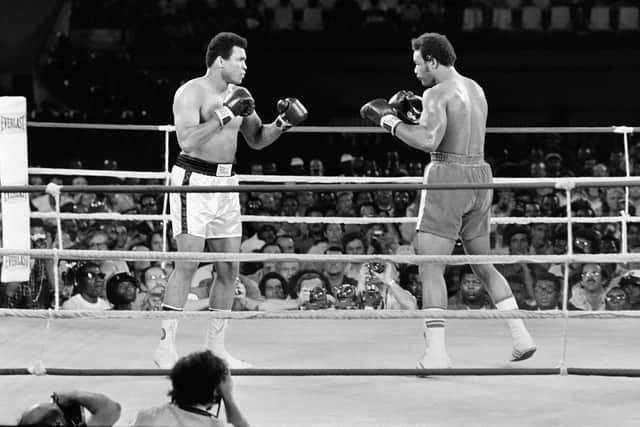
In the build-up to the ‘Rumble in the Jungle’ in what was then Zaire in 1974, Foreman was characterised as a humourless ogre in stark comparison to Ali’s ebullient charm: a persona Foreman did little publicly to try to change.
But in later years, beginning with his Herculean triumph over Michael Moorer in 1994 to become the oldest heavyweight champion at the age of 45, Foreman would fashion a remarkable change in his public perception, which ultimately made him one of the most enduringly popular American sportsmen.
Joe Bugner was tough enough to take both Muhammad Ali and Joe Frazier the distance, and earned grudging admiration for his abilities but was starved of the adoration a British heavyweight typically commands.
His Hungarian roots and a safety-first style might have contributed to the apathy but UK fans and media never got over his close and controversial win over national treasure Henry Cooper, when Bugner was 21.
Bugner, who died in September aged 75, claimed Cooper’s British, Commonwealth and European crowns but four years later in 1975, his only attempt at the world heavyweight title ended with a wide points defeat to Ali.
It was Bugner’s second shot at Ali, having fallen short in 1973, the year in which he also took on Frazier. Ali and Frazier shared 10 opponents and Bugner is the only fighter neither could finish.
Bugner always welcomed a challenge in a career that spanned four decades and encompassed 69 wins, 13 defeats and one draw, once remarking: “Get me Jesus Christ and I’ll fight him tomorrow.”
The entertainment world lost a number of high-profile figures in 2025, among them two stars of the seminal English class system drama of the 1970s, Upstairs Downstairs.
Jean Marsh, who died at 90, co-created the series with Eileen Etlins and played the no-nonsense parlour maid, Rose Buck. Pauline Collins,
She was one of the creators of the series, which chronicled the lives of a rich family in London and their servants through various historical events between 1903 and 1930.
It became a firm favourite when it aired on ITV between 1971 and 1975 and in 2010 it spawned a BBC revival.
Jean and her friend and fellow actress Eileen Atkins hatched the idea in 1969.
“I clearly remember sitting in Eileen’s kitchen discussing an idea for a series showing the contrast between upstairs and downstairs,” she remembered. “We were sharing stories about her father and my mother, both of whom had been in service.”
Years later Upstairs, Downstairs, set in the large townhouse of 165 Eaton Place, won Ms Marsh an Emmy for outstanding lead actress in a limited series for her role as hard-bitten but ultimately kind-hearted maid Rose Buck.
Pauline Collins, who died in November aged 85, was the housemaid Sarah Moffat, who had a scandalous affair with one of the residents ‘above stairs’ but was even better known as the star of Willy Russell’s acclaimed play and film about a bored Liverpool housewife, Shirley Valentine.
Prunella Scales, who died at 93, was one of the most successful and popular comedy actresses of her generation, achieving worldwide fame and recognition as Sybil, the long-suffering wife of Basil Fawlty in the memorable TV series Fawlty Towers.
But although she was regularly cast in comic roles, her abilities ranged far more widely than that – she appeared in opera and played both Queen Elizabeth II and Queen Victoria.
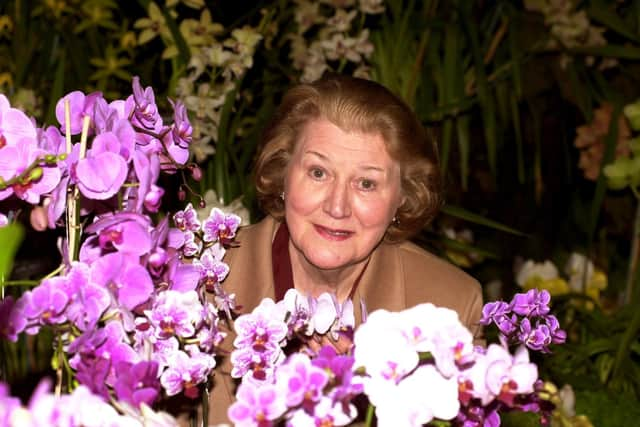
Dame Patricia Routledge, who died at 96, was similarly versatile, though it was a word she did not relish because it implied, she said, “not being very good at anything”.
She became a household name as the unspeakably snobbish Hyacinth Bucket in the BBC sitcom Keeping Up Appearances and at the age of 66 played a pensioner-turned-detective, Hetty Wainthropp, in a £3 million six-part BBC crime series.
Another theatrical Dame saw her already glittering stage career reach even greater heights after the death of her husband, Laurence Olivier.
Joan Plowright, who died in January aged 95, wasted no time in following his advice to make herself “more international” and within weeks, Hollywood was crying out for her.
Such was her success that, relatively late in her career, she won the annual Crystal Award, and two Golden Globes.
Joan Ann Plowright was born in Scunthorpe, where her father was editor of the local newspaper.
As a child she wrote a fan letter to Laurence Olivier, after being enthralled by his title performance in the film of Henry V. She was astonished that he actually replied, neither of them knowing what the future held for them.
The actress Diane Keaton, who died at 79, shot to fame in the 1970s as Kay Adams in The Godfather trilogy and in her many collaborations with her then partner, Woody Allen. She was immortalised as the title role in his Oscar-winning classic, Annie Hall and became associated with the character’s menswear-centric wardrobe.
Her other hits included The First Wives Club, Father Of The Bride, The Family Stone and the Book Club movies.
The actor Terence Stamp, who died in August aged 87, was one of the defining faces of the Swinging Sixties, a standard bearer for the new British cinema who developed in later years into a bankable international star, not least in the early Superman films.
The son of a tugmaster on the Thames, Stamp was one of the original working-class heroes on screen and off, and he embraced the new age with abandon.
Seen in only the most fashionable places and always with a celebrity girlfriend on his arm – his year-long romance with the actress Julie Christie was fictionalised by The Kinks as Terry and Julie in Waterloo Sunset – his good looks and hypnotic screen presence were irresistible to audiences and photographers alike.
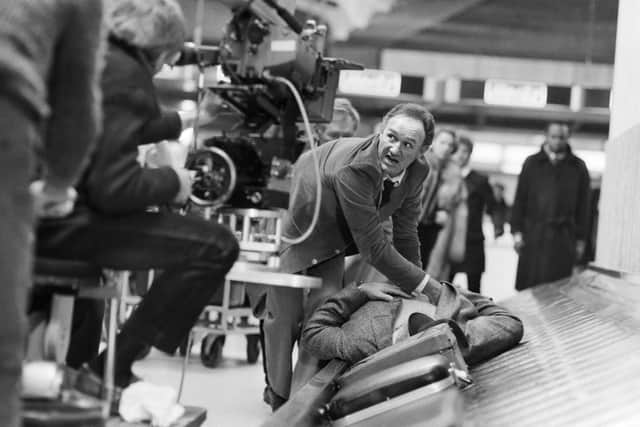
Gene Hackman, who died at 95, was a Hollywood giant known for The French Connection, Mississippi Burning and The Poseidon Adventure.
But beyond the blockbusters he was a gifted character actor who often played tough guys before finding his comedic stride in films like The Royal Tenenbaums and Superman.
Born in San Bernardino, California, his parents divorced early and he later lived with his British-born grandmother Beatrice Gray in Illinois.
He would join the United States Marine Corps as a teenager, where he spent four-and-a-half years as a field radio operator, before coming back to California where he met and studied with Dustin Hoffman. The two would enter the stage and compete for roles in New York along with Robert Duvall.
Hackman had small early roles in Lilith opposite Warren Beatty, and the period drama Hawaii with Richard Harris, before getting his big break in the 1967 true crime film Bonnie And Clyde as Barrow Gang member Buck Barrow, opposite Beatty and Faye Dunaway as the outlaw lovers.
Among the other film greats to have taken a final bow in 2025 was the 89-year-old Robert Redford, the Hollywood golden boy who became an Oscar-winning director, liberal activist and godfather for independent cinema under the name of Sundance, one of his best-loved characters.
The world of music saw the loss of Brian Wilson, aged 82, one of the defining voices of the 1960s, the creative force behind The Beach Boys whose genius for composition, arrangement and production made him possibly the world’s most influential recording artist after The Beatles.
Wilson was the eldest and last surviving of the three brothers who formed the band in 1961, alongside their cousin Mike Love and schoolfriend Al Jardine.
Another musician whose voice was inextricably linked with a moment in time was Tom Lehrer, the 97-year-old musical satirist who gained a worldwide following in the 1950s and 60s singing about politics, racism and the Cold War but then largely abandoned his music career to return to teaching maths at Harvard.
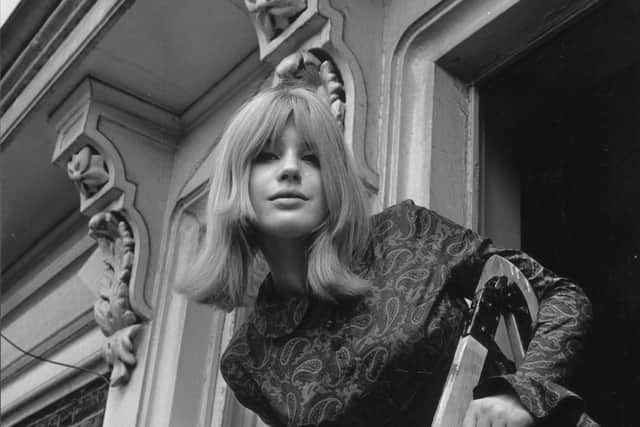
Marianne Faithfull’s career embraced solo success with As Tears Go By and film stardom in The Girl On A Motorcycle, and her unconventional shape-shifting approach to music and film made her one of the most recognisable figures of the 1960s, as well as muse to her boyfriend, Mick Jagger. She died in January aged 78.
Dame Cleo Laine, who was 97, was known as Britain’s First Lady of Jazz. A Grammy award-winning, leading figure of the music scene along with her late husband, saxophonist Sir John Dankworth, she worked with the likes of Ray Charles and Frank Sinatra.
But before her musical career took off, she was confined to the life of a hairdresser’s assistant. She never gave up, entering talent contests and she sang on a semi-professional basis before finally auditioning for the Johnny Dankworth Seven. After that, she never looked back.
In many ways, her journey was the reverse of that of the Duchess of Kent, who forsook royal life for a music teaching role as plain Katharine Kent in the classes and staff rooms of Wansbeck Primary in Hull.
It was a startling transformation for a figure renowned in the 1960s as one of the world’s best-dressed women, yet one plagued by natural shyness and self-confessed lack of confidence.
The Duchess, who died in September aged 92, was married to the Queen’s cousin, the Duke of Kent, but withdrew from Royal life and preferred to stay out of the spotlight.
A devout follower of the Roman Catholic faith, she became the first member of the royal family to convert to Catholicism for more than 300 years.
She suffered the emotional turmoil of baby loss including a stillbirth and later suffered from depression.
Katharine Lucy Mary Worsley was born on February 22 1933, the only daughter of the baronet and landowner Colonel Sir William Worsley and Lady Worsley of Hovingham Hall, near York.
She was brought up on her family’s 4,000-acre Yorkshire estate with her three older brothers and educated at home until 1943, when she became a day pupil at Queen Margaret’s School, York.
She later attended Runton Hill School in Norfolk.
An accomplished musician, she missed out on gaining a place at the Royal Academy of Music but went to an Oxford finishing school to learn the piano and organ, and to study French, and hoped to make a career out of music.
April saw the death, at 88, of Pope Francis, 266th leader of the Catholic church.
In 2013, two weeks after his surprise election as pontiff, he had carried out the Maundy Thursday ritual of washing and kissing the feet of 12 people, replicating Christ’s gesture of humility to his disciples on the eve of his crucifixion.
But in a notable break with tradition, the ceremony took place not in one of Rome’s basilicas but a youth detention centre on the outskirts of the city.
Not only that, two of the detainees were not Catholics but Muslims and – even more shockingly for some traditionalists – two (including one of the Muslims) were young women: females were previously excluded as the disciples had all been men.
It was a deliberate act which was to set the tone for a papacy in which he urged the church to look outwards rather than engage in endless soul-searching.
With his obvious humility and compassion for the poor and disadvantaged, he captured the imagination of millions around the globe – both Catholics and non-Catholics alike.
But his calls for greater acceptance for divorcees and gay people brought him into sharp conflict with some on the more conservative wing of the church.
In one of his first public pronouncements as pontiff, he declared: “Who am I to judge?” in response to a question about homosexuality.
But after he suggested divorced and remarried Catholics could, under certain circumstances, receive holy communion the backlash was such that he was described in the Guardian as “one of the most hated men in the world today”.
A more outrageous champion of sexual liberation was the author Dame Jilly Cooper, who died in October aged 88. Best known for her steamy fiction, her specialism was scandal and adultery in upper class society, and the recipe sold more than 11 million books in the UK alone.
The first novel in her Rutshire Chronicles, Riders, published in 1985, made the BBC list of 100 important English language novels in the love, sex and romance selection alongside Jane Austen’s Pride And Prejudice.
Born in Hornchurch, Essex, Cooper grew up partly in Ilkley and came to prominence in 1968 when she met Godfrey Smith, the editor of the Sunday Times Colour Section, who commissioned her to write a regular column about sex, marriage and housework.
The writer and translator Tony Harrison was anoher loss to the literary world. An acclaimed and erudite poet who brought the authentic, left-wing voice of working-class Yorkshire to the theatre, film and TV, he died in September, aged 88.
Long at the forefront of the national debate on social division, he elevated the dialogue into an art form when in 1987 his seminal work about the desecration by football hooligans of the Leeds cemetery where his parents are buried was broadcast as part of a Richard Eyre film on Channel 4.
Harrison’s poem, V, was an uncompromising and angry piece written during the miners’ strike, which identified the opposing forces within individuals.
It also employed a number of uncompromising expletives which caused outrage in some quarters.
Tony Harrison was born to a working class family in the Leeds suburb of Beeston in 1937. His father, Harry Harrison, was a baker.
Tony won a scholarship to Leeds Grammar and went on to enrol at the city’s University in the late 1950s.
Class, and the sense of estrangement from his roots that came as a result of his education, was a theme that he would return to throughout his career.