
'When I dive off the coast of Yorkshire I get a privileged look into world most never see’
For most people it’s their idea of hell.

But going down a rope, laden with lead and an air cylinder into the depths of North Sea has been my idea of adventure for decades – you never know what you will find at the bottom.
Asked if they’d like to have a go, people shudder at the mere thought, sometimes recollecting a childhood trauma which has left a lifelong aversion to being in water, let alone underwater.
Isn’t it dark, isn’t it freezing cold, they ask?
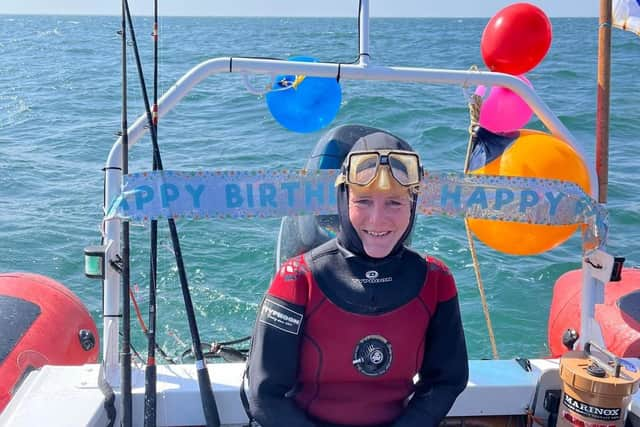

While the North Sea doesn’t have the crystal clarity of the Red Sea, when the conditions are right, there may be visibility extending up to six, seven metres, or more, which gives a diver an amazing, privileged look into a world most will never see.
And it can be incredibly beautiful with some wrecks hosting an abundance of unexpected underwater flora and fauna.
When launching from a town like Hornsea, Withernsea or Bridlington, most divers will be making one of the many hundreds of shipwrecks the focus of their day out.
Wrecks stand out like an oasis on a featureless plain.
They act as artificial reefs, providing a solid foundation for corals and other organisms to grow on, creating a complex habitat with shelter and feeding opportunities for fish and other animals.
Typically there’ll be a few lobsters scuttling in and out of the metal plates, cod, haddock, ling, and sea bass maybe.
Often there are dense clouds of fish, which don’t seem bothered by the strange beings floating among them, exhaling loud bursts of air.
Most wrecks are casualties of the two World Wars. In the First World War the shallow seas off the East Coast were a primary theatre for naval conflict, and German U-boats and mines caused significant losses for both naval and merchant vessels.
During the Second World War , shipping off Yorkshire was frequently targeted by German aircraft and U-boats, with attacks including bombing and machine-gunning of convoys.
They are time capsules, and it is amazing what can still be found.
Like Titanic, they are all slowly rotting away as microbes eat away at their hulls, corroded by salt-water and battered by currents and storms.
Even in my relatively short experience you can see their inexorable decline.
Take the fascinating wreck of the UC-39, a minelaying submarine, which was accidentally run down and sunk by a British steamer when it was about to attack a convoy off Hornsea in May 1918.
It is an impressive sight, if you like history: you can still see its six minelaying chutes and bow and stern torpedo tubes.
When we were first diving it back in the 90s it was a solid tube, but now at over a century-old, it is beginning to break up, particularly around the stern.
You wonder how much there will be left off these wrecks as they weaken and fall apart for future divers to see.
But at least for wildlife they will provide a home for years to come.