
William Plommer: Sheffielders commemorate folk hero boxer and First World War veteran 100 years on from his murder
Relatives and locals will gather to commemorate the death of Sheffield ‘folk hero’ William Plommer this weekend. John Blow hears about why his name endures in the Steel City.

William Plommer is a Sheffield folk hero but his story is a tragic one. In 1925, gangsters murdered the First World War veteran, boxer and father, a respected figure in the city whose funeral brought out thousands of people to the streets.
On Saturday this week, some of Mr Plommer’s descendants will return to Sheffield to attend an event commemorating the centenary of his death on Princess Street.
Local historian and author John Stocks explains how a century ago, Steel City mobsters warred in the style of their more famous counterparts in Chicago, USA. “In 1925, Sheffield was headline news across the whole of the British Empire because there was a fratricidal gang dispute between people that had been friends since they were young men,” says John. “There was a split in a gang called the Mooney Gang, and the renegade group, the Park Brigade.”
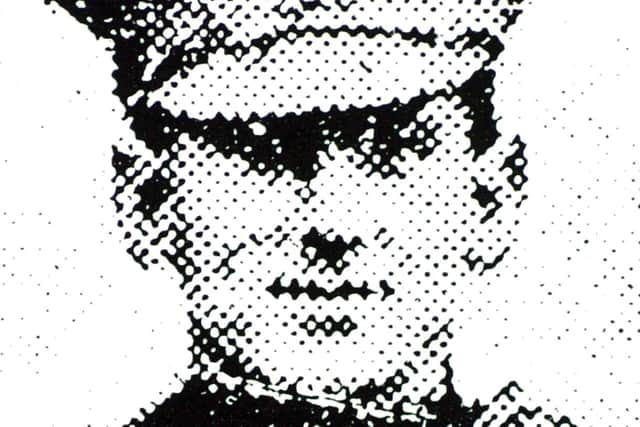

The former was led by George Mooney and the latter – operating in the slums which predated the city’s Park Hill flats – headed by Sam Garvin.
It was this second group that targeted Mr Plommer, who – as one story goes - had taken exception to a Park Brigade members’ mistreatment of a barmaid and gave him a good hiding. Days later, he was ambushed by a couple of gang members but fought them off.
On April 27, 1925, around a dozen members of the gang and their supporters turned up outside his home on Princess Street near Norfolk Bridge. After stepping out to face them, reportedly saying ‘I shall take you on one at a time’, they murdered him using various weapons.
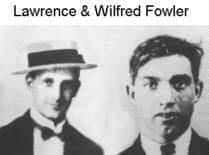
Theories persist about who was really responsible – with Garvin himself rumoured – but, ultimately, brothers Wilfred and Lawrence Fowler were found guilty of murder and hanged. Three other members of the gang were sentenced to between seven and 10 years in prison for the killing.
Some 10,000 and 20,000 people marched to Burngreave Cemetery for Mr Plommer’s funeral, says John.
While the upcoming centenary of his death might place what happened in a bygone era, the murder had lasting consequences for his surviving family – and still does.
Betty Lambie, 82, is Mr Plommer’s granddaughter and, aged 14, found out about the horrific circumstances when she discovered a newspaper cutting in a drawer. Her father Alec could not discuss the matter without becoming very upset.
“The reality is that there is no question that the tragedy created a black cloud over the immediate family that never went away,” says Betty, from Scotland, where Mr Plommer’s widow, Elizabeth, fled after his killing.

“Families lose loved ones at a young age and deal with it but in this case it was so horrific the cloud could never be shifted. My memories of reading that news report gave me nightmares that I couldn’t even discuss and even now I shudder when I remember the graphic list of the weapons that were used to murder him.”
She adds: “I don't think anybody felt very good about two men being hanged either. I feel for their mother. And then the worry that in fact, although they were involved, they weren’t possibly the ones that should’ve been hanged or were totally responsible - there was always that wee doubt, as well.”
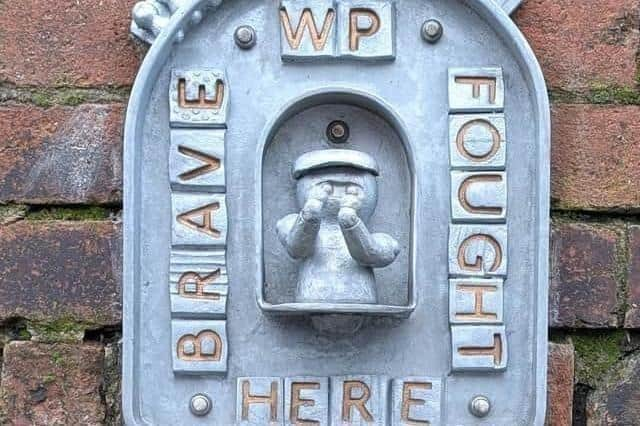
The commemoration event, organised by blacksmith Andrew Renwick, is taking place at his workshop at 35 Princess Street, Attercliffe, at 3pm on Saturday, April 26. Speeches will be made by the memorial plaque, which was made in a spring swage with a power hammer and placed by fellow blacksmith and sculptor Sam Sherborne in 2023, reigniting a conversation about a man who, despite his untimely death, is remembered in the city for his bravery.
“There's a good chance that William Plommer will have had a pint in my workshop, because it's an old pub (The Vulcan Tavern) and the locals talk about him,” says Sam, 62. “He's a sort of a folk hero on an unofficial level and the person I bought the lease off, this old pub, he used to talk about him. So he's a bit of a mythological character.”
He adds: “I believe he represents values that we are quite largely missing at the moment - or they're in hiatus - those good values of looking out for the underdog, doing something not for profit, doing something because it's right. And he's just a good example, especially to young lads who might think they're going to be some kind of hard man bully or something. No one's going to remember them in 100 years - it's going to be the guy that did the right thing that they remember.”
Coincidentally, Mr Plommer's Canadian great-grandson Tommy Plommer played for the Sheffield Steelers ice hockey team from 1992 to 2000.
Tommy, from Ontario, had been aware of the family history when he played at Sheffield Arena, recently telling The Star: “I once took family members to my great-grandfather's graveside and, ironically, you could look down and see the Arena from there.
“The site of the murder is also just around the corner from a building where they still hang my number 11 shirt on the wall."
Tommy, 56, admitted it was odd to have a great-grandfather who was murdered in a city he grew to love, adding: "It is wild that people are still remembering my great-grandfather, it is hard to put into words how thankful I am for keeping his memory alive."
Betty, meanwhile, remembers visiting Sheffield in the 1960s with her father and grandmother - she says it might be the only time Mr Plommer’s immediate family went back to the city - and thought they seemed nervous about her driving, but in retrospect thinks it was anxiety about returning.
“I can understand that there would have been an element of fear of retaliation or bad feeling from relatives or friends of the men who were hanged and this would have been another reason to stay away and not discuss it, at least in the early years,” says Betty.
“It’s with very mixed feelings that we look forward to meeting up at the memorial plaque, sadness for our parents and granny for what they suffered, pride that our grandpa was a brave man who didn’t cower to the bullies, and very thankful to these strangers to us who have highlighted and recognised the significance of the tragedy.”