
Yorkshire's pedestrianised high streets: Following in the footsteps of Munich, Barcelona and Florence

Flower beds are in place where traffic would have previously rumbled through. Seating areas are readily available.
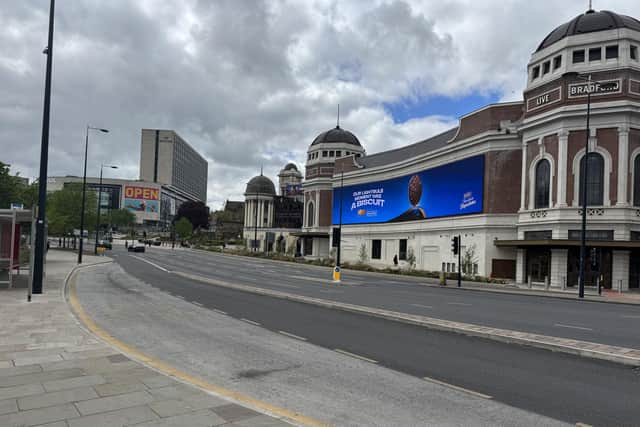
Bradford’s historic Wool Exchange, cushioned between The Broadway Shopping Centre and Centenary Square, is situated on the newly pedestrianised Market St.
It won't be long until these streets are filled with people dining and drinking al fresco.
A taste of Barcelona in Bradford.
People in Amsterdam had been reluctant about making the city ‘bicycle friendly’ but now it is applauded as the bicycle capital of the world.
Prior to 2020, Barcelona incorporated ‘Superblocks’ to reroute traffic and pedestrian zones.
Now it’s a model city for urban planning to introduce more green spaces, lower emissions and to forge more of a sense of a community.
Munich, Florence and Abu Dhabi have each been recognised by surveys as being the ‘most walkable cities.’


Closer to home, small-scale pedestrianised zones have already been trialled with Briggate in Leeds and Fossgate in York, proving a success.
Making Bradford ‘more walkable’
It took almost a year of road works for the plans to come to fruition.
Most people we spoke to enjoy the wider streets and the cosmopolitan effect that pedestrianisation has on the centre.
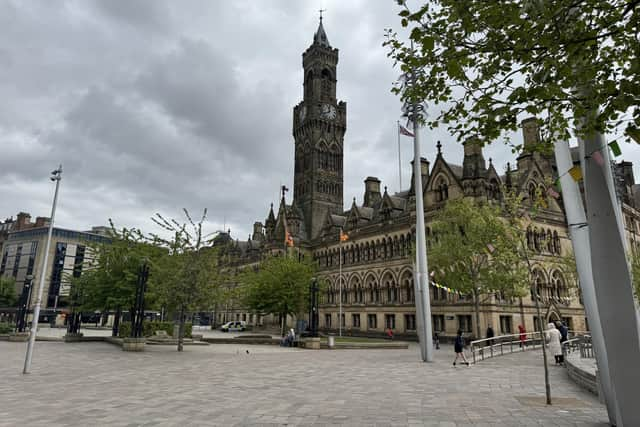
"There's more of a community now, less noise and pollution,” said Hayley Mclear, who works for Bradford Council.
David Smith, who lives in Bradford, agreed. He said for older and disabled people, it's "harder to park even with a blue badge."
Others say it’s more accessible now to get around.
Bradford is not the only Yorkshire city to improve its 'walkability.'
Parts of Sheffield's Pinstone Street, Surrey Street, and Charles Street are also becoming pedestrianised.
The City of York Council has been a trailblazer with pedestrianised streets since the late 1980s.
This included Parliament Street in York, one of the city's main shopping streets and the site of York's former market.
At the time, it was northern Europe's largest pedestrianisation scheme with pedestrian-only areas and no access to vehicles in certain times.
Gated areas of York however, can be accessed by blue badge holders.
Hull is the latest city on a mission to build a pedestrian-friendly route between Hull Old Town and the Fruit Market.
Part of this transformation is to incorporate the city's history into the new zones.
This is something Bradford has done throughout its pedestrian areas.
Steel panels have been fitted to the ten historic stone-work arches along the pedestrian route between Cheapside and Bradford Forster Square Station, a surviving part of the original Victorian station.
Each metal panel features three intertwining strands representing Bradford Beck, a fibre from the city’s mill heritage, and the railway tracks.
The strands also reflect the fibre sculptures already in place near the station at St Blaise Square, named after the patron saint of wool combers.
Benches are styled on large wool crates near Bradford’s iconic Wool Exchange.
Doncaster began transforming urban zones into pedestrianised streets before the then town was awarded city status in the Queen's Jubilee.
If social media is a study to go by, many people fear that restricting vehicles in urban centres will negatively impact the businesses in the city.
Late last year, a report by Living Streets, the national pedestrian charity, proved otherwise.
Catherine Woodhead, Chief Executive, Living Streets, said: “We hear a lot about the death of the High Street, as people choose to buy from the comfort of their own homes.
“This new report proves that making high streets and town centres more walkable increases time – and money–spent in those businesses.
“It’s slowly being recognised – the majority (95%) of London’s Business Improvement Districts identify a good walking environment as important to business performance.
“But high streets aren’t just shops – they provide services, entertainment, and a social hub for people of all walks of life.
“By making our town and city centres more accessible and attractive places to be, we can also help to bring communities together.”