
Almost one in five shops empty in some Yorkshire high streets
Almost one in five shops are empty in some Yorkshire cities, a new report has revealed which shows the stark divide in the state of the UK’s high streets.

Vacancy rates in Bradford are more than twice as high in London and Cambridge, according to new research from the Centre for Cities.
High streets in several other cities across the region, such as Doncaster, Huddersfield and Wakefield, have more than one in seven of retail units vacant.
The Centre for Cities report “Checking out: The varying performance of high streets across the country” has calculated these figures through millions of anonymised card transactions and new estimates of local retail vacancy rates.
The figures underline why many people feel a lack of pride in their town centres as “shuttered-up shops influence people's opinions”.
The report shows there are huge divides in the state of high streets just across Yorkshire.
York has one of the lowest vacancy rates in the country, due to the large numbers of tourists.
While Barnsley, which has had huge investment in the town centre, has the second lowest vacancy rate in the region.
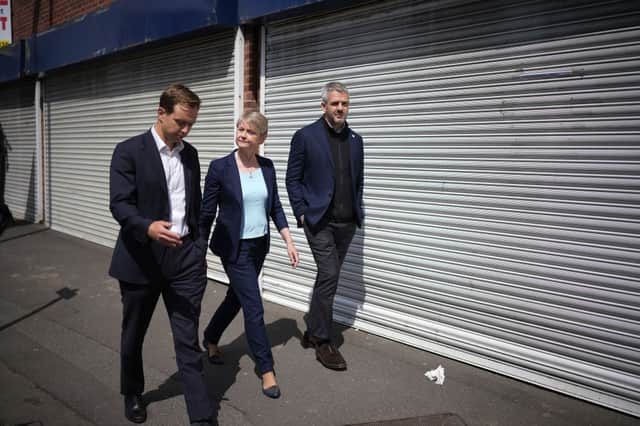

Andrew Carter, chief executive of Centre for Cities, said: “The high street has long been the bellwether of the local economy.
“Shuttered-up shops influence people's opinions about how successful their areas are.
“Our research shows the high street isn't failing everywhere.
“Where it is, the cause is not just cosmetic, it is economic. Policies relating to shopfronts, rents or parking miss the bigger picture.”
The report calls for certain cities and towns to reduce the amount of retail space to revive their streets.
It particularly cites Bradford, with a vacancy rate of 18 per cent, which loses a lot of its spending to nearby Leeds.
“City centres that struggle are over-supplied with shops and under-supplied with people,” Mr Carter said.
“If local residents don’t have money to spend or a reason to be in the centre, high streets suffer – no matter what interventions are made.
“It is possible to revive the fortunes of struggling high streets. But it will require local and national governments to start by fixing the economy, and not just focussing on the high street itself.”
The report called on the Government to treat city centres as critical parts of the national economy, and focus on the experience for residents as opposed to tourists.
In Prime Minister’s Questions this week, Great Grimsby and Cleethorpes MP Melanie Onn quizzed Sir Keir Starmer over the state of the region’s high streets.
She said: “Tax evasion, money laundering, illicit goods and illegal working all undermine our high streets … they undermine local business confidence and challenge community cohesion.
“That is the reality around the country because of the explosion of vape shops, fake barbers, Harry Potter shops and American candy stores.”
The Labour MP called on the Prime Minister to bring in a “national strategy to tackle the scourges of the high street”.
Sir Keir replied: “In March, we saw a major crackdown against criminals using high street businesses to launder money at almost 400 properties, which involved securing freezing orders over bank accounts totalling more than £1m and arresting 35 individuals.”
He pledged that “there is much more to come”.