
Andy Burnham: From 'King of the North' to Prime Minister?
The “King of the North” Andy Burnham could be about to try to take control of the whole country after succeeding in returning to the House of Commons.
Mr Burnham is expected to use his victory in the Makerfield by-election as a springboard to challenge Sir Keir Starmer for the Labour leadership, and with it, the keys to No 10.
He hopes it will be third time lucky after having failed in two previous attempts to lead his party after being beaten by Ed Miliband in 2010 and Jeremy Corbyn five years later.
Despite first becoming MP for Leigh in 2001 and serving in government under both Sir Tony Blair and Gordon Brown, Mr Burnham has frequently clashed with the Westminster establishment, playing up the divisions to portray himself as the champion of people in areas ignored by those in power in London.
His high-profile spat on Covid-19 pandemic restrictions and funding with then-prime minister Boris Johnson earned him the moniker “King of the North”.
The 56-year-old has also earned respect through his handling of two terror attacks during his mayoralty: Manchester Arena was targeted in a suicide bombing just weeks after he started in 2017 and Heaton Park synagogue was attacked in October 2025.
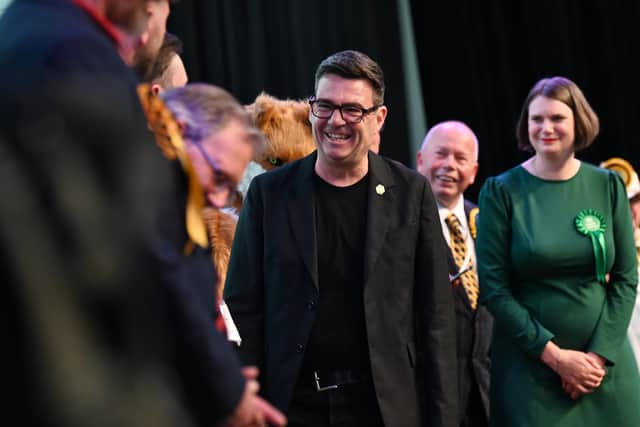

Mr Burnham stood down as an MP in 2017 with a call for “real change” in national politics to rebalance power towards the regions, saying UK politics was in a “crisis” and the Westminster system was “a major part of the problem”.
In January, he positioned himself for a potential return to Parliament by applying to Labour’s national executive committee (NEC), saying: “I have learnt in my nine years as mayor that Manchester won’t be able to be everything it should be without similar changes at a national level.
“This is why I feel the need to go back.”
But that attempt to win a route back in the Gorton and Denton by-election was blocked by the NEC, deepening the division between himself and Sir Keir.
By the time Josh Simons quit his Makerfield seat to give Mr Burnham another opportunity to return to Westminster, Sir Keir’s authority was so diminished after May’s mauling in local and devolved elections that he could not block his would-be challenger from the ballot paper.
Mr Burnham, the state-educated son of a BT engineer and receptionist, joined the Labour Party aged 15 and subsequently attended Cambridge University, rising up the political ranks to become one of the most senior and successful elected Labour politicians outside Parliament.
A former special adviser to Sir Tony’s culture secretary Chris Smith, Mr Burnham was one of New Labour’s rising stars.
Shortly after his election in 2001, he was made a parliamentary aide to the then-home secretary David Blunkett, a sign he was being groomed for bigger things.
Ministerial jobs followed, first as a junior minister in the Home Office, and then in the Department of Health, before Mr Brown’s move into Number 10 brought him into the cabinet as chief secretary to the Treasury.
But it was as culture secretary that he took on an issue that has become a cornerstone of his career – the fight for justice for the victims of the Hillsborough disaster.
Everton fan Mr Burnham was watching his team play Norwich when he learned of the unfolding crush at Hillsborough in 1989 that would eventually kill 97 Liverpool fans.
Twenty years later, hecklers interrupted his speech at an anniversary event at Anfield, demanding justice for the victims.
It prompted him to raise Hillsborough in Cabinet, leading to the creation of the Hillsborough Independent Panel (HIP). Three months later, the Home Office announced the full disclosure of all information to be looked at by the panel.
The HIP’s 2012 report was critical of the blame put on fans and prompted then-prime minister David Cameron to offer in the Commons a “profound apology” for the “double injustice”.
Labour was defeated in the 2010 general election and, after Mr Brown’s resignation, Mr Burnham made his first bid for the leadership, losing to Mr Miliband.
In 2015, he was again beaten in a leadership contest – this time by the left-winger Mr Corbyn, who later promoted him to shadow home secretary.
During that tenure, he gave a speech to the House of Commons condemning South Yorkshire Police over Hillsborough, which received a rare round of applause.
Serving in Mr Corbyn’s shadow cabinet led to an often-heard criticism within Labour ranks – that Mr Burnham, having supported both Mr Corbyn and New Labour, is a weather vane who goes with the flow to ensure his own electoral success.
In 2017, amid persistent Labour infighting, he left Westminster and took more than 60% of the vote to become the first metro mayor of Greater Manchester.
During his first working week in office, he outlined plans to end rough sleeping in the region by 2020 and announced he would donate 15% of his £110,000 salary – on a monthly basis – to kick-start a homelessness fund that would support frontline projects.
The 2020 target was not met, but he has continued to work on reducing homelessness in the region.
Mr Burnham won a second term in 2021 with a higher share of the vote, on an increased turnout, compared with the first election.
It was a rare victory in Labour’s “red wall” in the north that was crumbling rapidly at the time.
His election campaign materials relied heavily on his own successful brand, not the Labour Party red rose or the party leader – a tactic he used again in Makerfield.
His publicly-run transport system was set up in Greater Manchester in 2023, bringing local bus services – the Bee Network – back under public ownership, with more routes and lower fares.
It appeared to contribute to another landslide election victory when he won a third term in 2024 with 63.4% of the vote.
His success against Reform UK in Makerfield may persuade Labour MPs nervous about their own seats that he may be their best hope of seeing off the challenge from Nigel Farage’s party.