
Budget 2026: fiscal devolution to end 'begging bowl culture' of mayoral funding
Yorkshire mayors praised the move, with West Yorkshire’s Tracy Brabin saying it allows the “opportunity for long-term borrowing for big ambitious projects”.

Mayors will receive 20 per cent of business rates next year and a share of income tax in 2028 ending the “begging bowl culture”, which sees them going cap in hand to Whitehall.
As part of his fiscal devolution “roadmap”, the Chancellor said 100 per cent of business rates will be retained locally by the end of the decade while mayors and strategic authorities will have powers to introduce an overnight visitor levy from 2028.
John Healey described the local retainment of tax revenues as “the most radical act of devolution in a generation”.
He added: “Taken together, these are long-term funding streams. They can be used to back investment into big local infrastructure so that more of the money that is raised locally can be spent on projects.
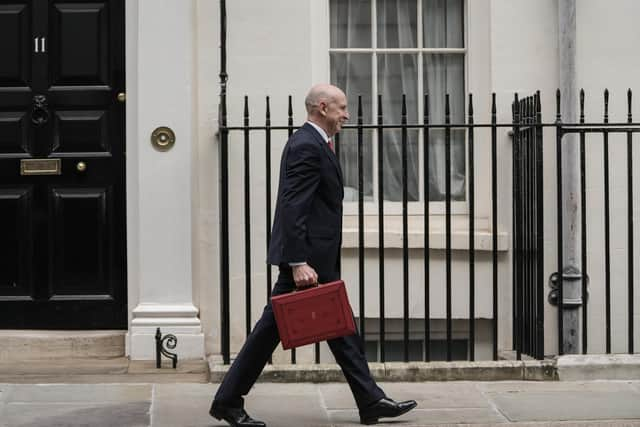

“[These are] new powers to the people who know their areas best – not sentimentality but supply-side economics. The biggest wave of devolution in a generation.”
Yorkshire mayors praised the move, with West Yorkshire’s Tracy Brabin saying it allows the “opportunity for long-term borrowing for big ambitious projects”.
“That money used to go back to the Treasury,” she explained, calling it "begging bowl culture”.
“We used to have to go and ask for it: ‘Can we have some more please?’
“It is a secure income stream that we can borrow against.”
She says this will support “massive infrastructure projects” like the Leeds South Bank, with 20,000 homes being built.
South Yorkshire Mayor Oliver Coppard said this will end the current “pocket money” system.
“It is really important and the reason it's important is it creates different incentives for South Yorkshire,” he told The Yorkshire Post.
“At the moment, ultimately, what we get is grants from government, pocket money essentially, and they tell us how that money is going to arrive, and sometimes they tell us how to spend it.
“What this does is it says, if you raise that money, you can keep that money, and you can spend it much more flexibly.
“If you can raise more money by growing the economy, you can keep more money and do even more.
“It creates an incentive in the system, perhaps for the first time, where if we grow the economy and take the hard decisions which are required to do that, as is the case with Doncaster Sheffield Airport, we will then keep the proceeds of that growth and do even more in South Yorkshire. So it becomes a virtuous cycle.”
York and North Yorkshire Mayor David Skaith added: “Investment in local apprenticeship services and greater local decision-making will mean that more of the money raised here is spent here.
“That means fewer decisions about key spending will be made in London, with more decisions made right here in York and North Yorkshire.”