
Teesworks: Public meeting held amid continued concern over £300m household waste project
A number of local councillors joined a public meeting held over controversial plans for a new energy from waste incinerator to be sited at Teesworks.
The Tees Valley Energy Recovery Facility (TVERF) would burn up to 450,000 tonnes of residual household waste a year – rubbish left over after recycling – converting it into electricity for the National Grid at a location on the outskirts of Grangetown.
The meeting, in Eston, was organised by the group Stop Incineration North East (SINE) and was also attended by representatives of Medact, another campaign group which draws together medical professionals and students from across the region.
Ray Casey, from SINE, said it was an “excellent, well attended” meeting with 40 members of the public present and nine elected representatives from Redcar and Cleveland Council who responded to an invite from organisers.
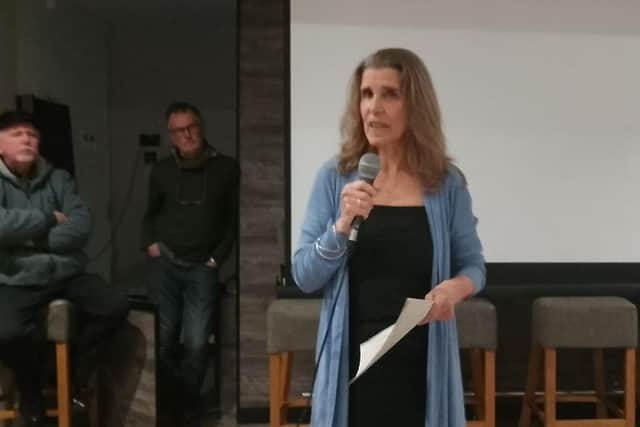

He said: “Not one person spoke in favour of the TVERF.”
The meeting consisted of a presentation from SINE, along with a question and answer session.
It heard claims from participants that there was already an over capacity of waste incinerators, taking into account those also under development, and they were three times more likely to be built in disadvantaged areas than wealthier ones.
Concerns were also raised about the burning of plastic.
Emily Parker, of Medact, said people should write to their local councillor, while it was also suggested that “best practice” from other areas should be looked at.
This included Wales, which was said to have upped its recycling rate to 60% within a decade, well above rates in the North-East.
South Bank ward councillor Neil Bendelow, one of the councillors at the meeting, said there remained a lot of uncertainty about the project.
He said: “I went in to see what people had to say and listen.
“I’d probably be minded to oppose it, but many of the decisions have already been made before some of us newer councillors came along.
“We need to know the pros and cons. Let’s ask some questions and get some answers from the people who are going to build this incinerator and are behind it.
“We have to get rid of our waste, that’s the crux of it, we’ve been trying to enhance recycling and have been struggling unfortunately.”
The TVERF scheme involves seven councils, Redcar and Cleveland, which has granted planning permission for the facility, Hartlepool, Middlesbrough, Stockton, Darlington, Durham and Newcastle.
The cost of the project has been put at approximately £300m with the eventual operator tasked with designing and building the plant and meeting the upfront costs.
The consortium of councils would pay back a service fee to the operator over the lifetime of a contract which could last up to 40 years.
Costs accrued already from the procurement process are being shared among the local authorities.
A so-called optimised final tender is due to be submitted from waste operator Viridor and considered before the councils decide on a contract award later this year.
The TVERF has been described by the project partners as diverting waste from landfill and a “local, secure, reliable and affordable solution”, as well as a “critical and essential” piece of infrastructure.