
Councillors warned that cost of processing contract could go up due to recycling contamination
The cost of a contract to sort Redcar and Cleveland’s kerbside recycling could go up due to residents continuing to put items in the wrong bins, councillors have been warned.
A report for members of the council’s climate and environment scrutiny committee described a “detrimental effect” due to high levels of contamination.
It said the council was due to start a procurement exercise for the processing contract – the current contract being due to end in March next year – and the tender price was “highly likely to increase” from the current price paid.
Councils already face financial penalties or further charges from waste management contractors when bin loads are found to be contaminated.
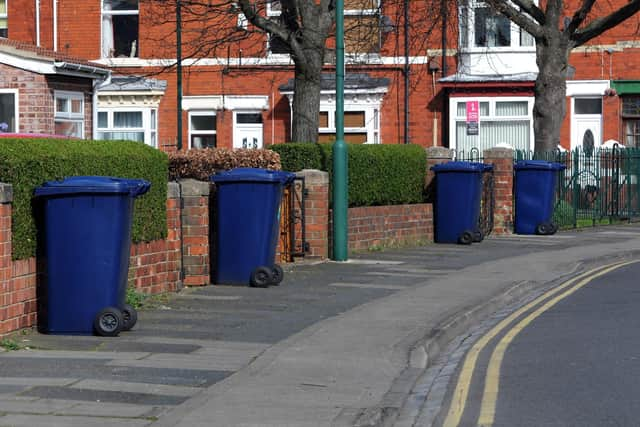

This is because further processing is required to separate out items.
If this proves impossible waste has to be disposed of by some other method, for example incineration or landfill with further expense incurred.
During a previous trial scheme Redcar and Cleveland Council carried out checks on recycling bins in selected streets in some areas of the borough to identify rogue items such as food waste, nappies and takeaway boxes.
Up to 7% of bins per collection round were tagged with explanations being left for householders why they had gone uncollected.
But despite a subsequent decrease in contamination rates, the trial was ended in August last year with council leader Alec Brown stating it was never meant to be a long-term policy, but rather a “short sharp shock”.
The committee report said recycling contamination remained a significant operational, financial and environmental issue for the council.
It said bin tagging helped improve the quality of recycling and had financial and environmental benefits.
But it could also lead to an increase in complaints and enquiries from residents with some viewing it as “punitive or confusing, particularly where they believe contamination decisions are inconsistent”.
Philip Shaw, the council’s lead officer for waste and fleet services, said the council’s recycling team continued to run an education programme in local communities and schools about what could be recycled and what couldn’t, but there was no specific checking of bins currently being carried out.
He said it was up to members to decide on what next steps they wanted to take over the issue with no specific recommendation being made.
Councillor Jemma Joy, who chairs the climate and environment scrutiny committee, said the data clearly showed the trial had a “significant effect” on recycling and there had been a spike in contamination thereafter.
But another councillor, Ceri Cawley, complained that in her ward, Dormanstown, there had been a rise in bin fires since more went uncollected and were being left out.
South Bank ward councillor Sue Jeffrey said she could not support another reintroduction of bin tagging without more information.
She said: “We need much more information about how it could be done in a way that actually works for this borough and improves our recycling rates without causing distress to residents.”
Mr Shaw said: “The challenges that we get are the same ones other authorities get.
“Resident feedback is not always positive, obviously, they just want their bins emptying.”
Councillor Barry Hunt, who represents Brotton, said: “A lot of good work was done and all of it sudden it stopped [bin tagging].
“A lady asked why it had happened and one of the bin men said to her ‘Oh we don’t do that anymore, just put what you like in’.”
Saltburn councillor Philip Thomson asked for a further report with a specific proposal on the re-implementation of bin tagging on a phased basis, while taking into account any reservations being expressed which could be addressed.
He said: “The evidence is so clear, it is cost saving and improves recycling performance.”
Mr Shaw, who authored the report, agreed to bring matters back again to the committee, promising to look at the “process and procedures” further and any issues raised.