
Crackdown on illegal vape shops and money laundering demanded as millions of illicit cigarettes seized
Councillors in Hull are calling on the government for stronger powers to crackdown on illegal vape shops, money laundering and racketeering.
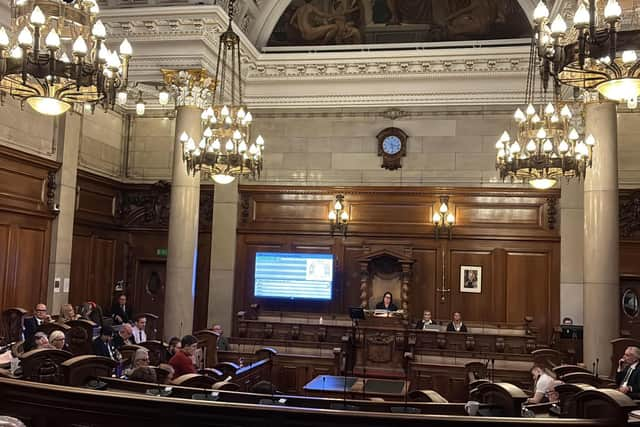
In a strong debate at The Guildhall, councillors agreed to write to Parliament to ask for more support in tackling hand car washes, vape shops and businesses operating illegally around the city.
Two overlapping motions made clear the council is already using every existing power at its disposal against rogue traders. But the authority is now pressing policymakers in London to ensure enforcement agencies on a local level have the resources and powers needed to investigate criminal networks that appear to be flourishing in Hull.
Both proposals warned that while the majority of businesses around Hull operate lawfully, criminal gangs are increasingly exploiting sectors such as vape shops, barbershops, mini-markets, nail salons and hand car washes to distribute illicit goods, facilitate illegal working and launder money. The chamber heard that this threat was highlighted in the National Crime Agency’s 2026 Strategic Assessment.

The scale of the problem in Hull has been laid bare by Trading Standards seizures, which saw officers confiscate approximately 2.4 million illegal cigarettes in 2024, rising to more than four million illegal cigarettes and 32,560 illegal disposable vapes across the city in 2025. Councillors noted that current enforcement arrangements often require complex, resource-intensive investigations, and warned that existing closure orders frequently fail to stop persistent offenders from simply reopening under new trading names, different ownership structures, or at alternative premises.
Call for government to strengthen closure powers for businesses engaged in persistent illegal trading
To close these loopholes, the first motion from Cllr Lisa Graham (Reform UK – Newington and Gipsyville ward) focused on residents’ growing frustration over the clustering of vape shops, barbershops and hand car washes, which has coincided with a national decline in traditional pubs since 2016. Her motion requested that the Leader of Hull City Council writes to the Secretary of State for Housing, Communities and Local Government, the Home Secretary and the Secretary of State for Health and Social Care, asking the Government to set a timetable for requiring planning permission for new vape shops. She also wants similar control over other high street uses including barbershops, and is asking for additional resources for Trading Standards and illegal working enforcement.
The second motion, from Hester Bridges (independent – Southcoates) requested that the government strengthen closure powers for businesses engaged in persistent illegal trading. She asked for extended closure orders and further measures to prevent offenders from evading enforcement by reopening under different names, ownership arrangements or at alternative premises. Cllr Bridges is particularly concerned about money laundering, with her motion asking for the government to strengthen measures against money laundering and organised crime, ensuring enforcement agencies have the resources and powers to investigate the individuals and criminal networks profiting from illegal businesses – rather than focusing solely on the seizure of illicit products.
The council needs stronger powers to tackle the problem
The chamber heard how vape shops and barbershops currently fall within Class E, so premises can convert into these businesses without needing planning permission – leaving the council powerless to limit their concentration. In response, councillors are being asked to consider banning new leases for vape shops, barbershops, and hand car washes in council-owned commercial properties within six months, while tasking scrutiny committees with reviewing planning enforcement and multi-agency work alongside Humberside Police, HMRC, and the National Crime Agency.
This new approach to planning permission for vape shops and barbershops, stronger licensing oversight, and tougher national action to dismantle organised high street crime is long overdue, according to Cllr Bridges. “Behind illegal trading are real consequences for our communities. It can put people at risk, damage confidence in our high streets and leave honest local businesses struggling to compete,” she said.
‘Residents deserve to feel proud of their local high streets’
Hull’s high streets should be places where families feel safe, local businesses can thrive and the law applies to everyone, added Cllr Hester Bridges: “Residents deserve to feel proud of their local high streets, and businesses that work hard and follow the rules deserve our support. This motion is a call for Hull to take the problem seriously and work together to protect our communities.”
Policymakers were urged not to look at the debate through a lens of race or ethnicity – and instead purely focus on illegality, said Daren Hale (Labour – St Andrews and Docklands). “The Kurds, the Bangladeshis, the ethnic minorities here in Hull have made such a great impact,” he said.
“I want them to be applauded for the great value they have brought to our communities. Let’s also applaud the great contribution many communities make in bringing shops and our high streets to life.”
Cllr Hale, who is the Labour group leader at Hull City Council, thinks the fines for illegal trading are not high enough. “The consequences are minimal compared to the returns,” he added.
Criminal gangs are agile and quickly adapting, the chamber heard
There was cross-party support in the chamber for the need for stronger powers to allow council officers to work more effectively. Cllr Ted Dolman (Liberal Democrat – Kingswood) is the Portfolio Holder for Communities and Community Safety at Hull City Council and he urged the chamber to recognise the hard work and success of trading standards officers.
“Hull isn’t alone. Illicit trade is becoming increasingly organised across our high streets and neighbourhoods,” he told The Guildhall.
“The criminals involved are adapting and moving into residential properties and storage containers and secret compartments in shops. It is shocking. Despite those challenges, I believe we have pound for pound one of the best trading standards teams in the country – in Hull we don’t mess around and use our powers straight away. ”
Cllr Dolman said officers were out conducting raids in Hull, disrupting supply chains and protecting residents each and every day. Despite this ongoing work, he estimated around 90 businesses were still operating illegally in Hull which makes it one of the worst affected cities in the UK.
Councillors came together across party to vow to work for better high streets in Hull. “This motion is not about attacking any small business. This is not a vendetta against anyone’s ethnicities. Our high streets are changing and residents are entitled to have their concerns,” Cllr Lisa Graham added.
“Residents deserve shopping areas with character and choice. We can’t just shrug our shoulders – we need to lobby government for stronger powers. Our residents deserve to be heard. That’s why they elected us. Put politics aside and support this motion.” With both motions carried across party lines, Hull City’s Council’s focus now shifts from The Guildhall chamber to Westminster – where Hull’s leaders will press government for further funding, better planning controls, and tougher closure powers needed to finally turn the tide against organised high street crime.