
Dame Shirley Porter obituary: The Conservative politician at the centre of the 'homes for votes' scandal
Dame Shirley Porter, who has died at 95, was an heiress to the Tesco fortune who became a controversial Conservative leader of Westminster City Council during the ‘homes-for-votes’ scandal of the 1980s.

The strategy, aimed at securing a Tory victory in the 1990 local elections, involved putting up for sale council homes in eight key marginal wards as part of the Thatcher government’s ‘right to buy’ policy, thus reducing the number of potential Labour voters in those areas. The cost to the taxpayer was estimated at the time as £27m.
Officially known as the Building Stable Communities policy, the initiative brought accusations of gerrymandering and was judged illegal by the district auditor, who in 1996 levied a surcharge on Dame Shirley of £27m. The figure was later raised to £42m with interest and costs.
She eventually settled in 2004, paying a final settlement of £12.3m, by which time she had emigrated to Israel where she was a governor of Tel Aviv University funding, through the Porter Foundation, buildings and projects on the campus.
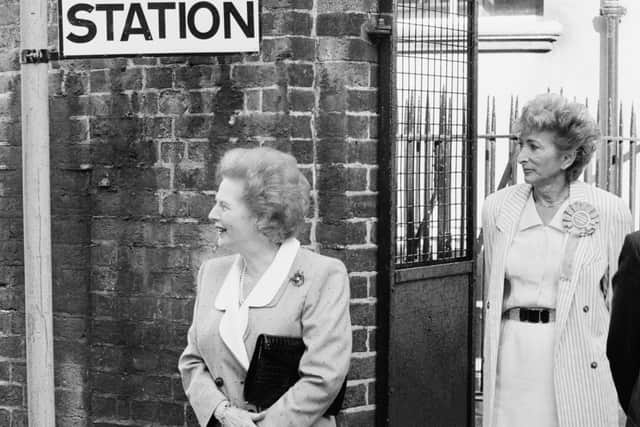

She was born Shirley Cohen in Upper Clapton, London, in November 1930. Her father, Jack Cohen, was the founder and owner of Tesco and her mother Sarah (née Fox) the daughter of a master tailor. The family lived in a former council house in the East End of London that Jack had purchased from Hackney Council with the help of a £1,000 council loan.
He opened the first two Tesco stores in 1931 and by 1939 owned more than 100 branches across the country.
Shirley spent the war years as a boarder at Warren School For Girls in Worthing, Sussex, followed by a year at a finishing school in Lausanne, Switzerland.
In 1949 she married Leslie Porter, 10 years her senior and a partner in his family’s textile business.
He joined the board of Tesco, becoming its chairman in 1973. Upon his knighthood in 1983, Shirley became Lady Porter.
She played no part in Tesco, devoting herself instead to Jewish charities and playing golf. In 1960 she helped expose 10 golf clubs in north London for discriminating against Jews.
She became a magistrate and entered local politics, standing successfully in 1974 as Conservative candidate for the Hyde Park ward on Westminster Council, where she took a lead on the Clean Up London anti-litter campaign.
Nine years later she was the council’s leader, taking a stand, too, on anti-drugs drugs initiatives and the Plain English campaign.
A committed Thatcherite who acquired the sobriquet ‘Iron Lady of the Town Halls’, she enthusiastically supported the abolition of the Greater London Council and also campaigned for the removal of sex shops from the Soho district.
The 1986 local elections saw the Conservatives reelected in Westminster with a vastly reduced majority and Porter, fearing an even greater trouncing in 1990, unveiled her Building Stable Communities programme to bring more Conservative voters into the bankable Bayswater, Little Venice, Millbank, St James’s, Victoria, Cavendish, West End and Hamilton Terrace wards.
The policy also involved removing homeless voters, students and others deemed less likely to vote Tory from the Westminster district, or at least into ‘safe’ wards where their votes would have less impact.
Many ended up in tower blocks that were discovered to contain dangerous levels of asbestos, so that their flats could be redeveloped and sold to potential Tory voters..
The 1990 election delivered a Tory landslide in the city and the following year Dame Shirley stood down as leader. After a year as Lord Mayor of Westminster she and Leslie retired to live in Israel.
But in her absence, the district auditor concluded that the Building Stable Communities policy had been illegal, and ordered her and five others to pay costs of £31.6m.
The judgement was upheld by the High Court in 1997 with liability reduced solely to Dame Shirley and her deputy leader, David Weeks. Subsequent hearings dragged on until 2007.
In 2009, ahead of Shirleymander, a BBC radio drama on her time at the council, its then leader Colin Barrow apologised to those affected by gerrymandering and for the first time publicly criticised his predecessor.
Meanwhile, Shirley and Leslie had in 1970 used family money to set up the Porter Foundation to fund projects in Israel and the UK. British beneficiaries included the National Portrait Gallery and the Victoria and Albert Museum.
Sir Leslie Porter died in 2005 and their son John died in 2021. Shirley is survived by their daughter, Linda.