
After broken promises, Hull MPs urge Government to 'ditch the diesel' on rail line
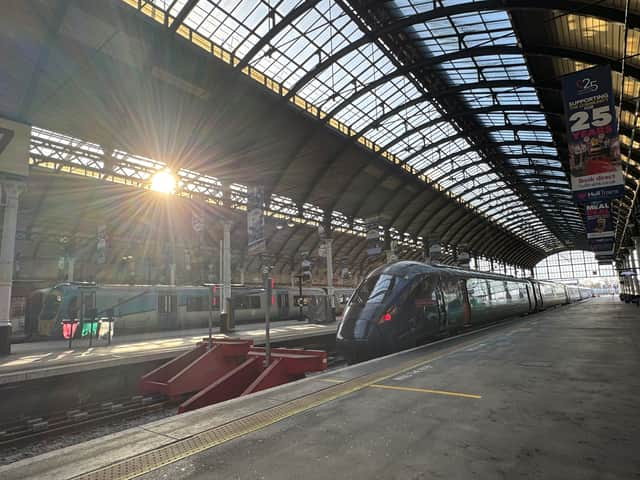
The railway line between Hull and Selby first opened in 1840 to carry people and cargo directly to the Humber Dock.

The route helped power the Industrial Revolution across the North and saw Hull’s port transform into a key international hub.
And while the city is still the east coast’s gateway to Europe, the railway line still has a Victorian feel to it.
Promises of electrification have come and gone, with spluttering diesel trains still chugging along from Hull to Selby and Doncaster.
Currently, it takes an hour to get from Hull to Leeds and almost two to go to Manchester. It is thought electrification would cut the latter journey by 23 minutes.
While travelling from Goole to Leeds - a 45-minute drive - requires a change at Doncaster, and can sometimes push two hours.
In 2012, First Hull trains put forward a private proposal to electrify the route to Leeds, and this was recommended as one of 12 priority areas across the country for electrification.
However, in 2016 this was rejected by the Conservative government, which said the disruption would outweigh the benefits.
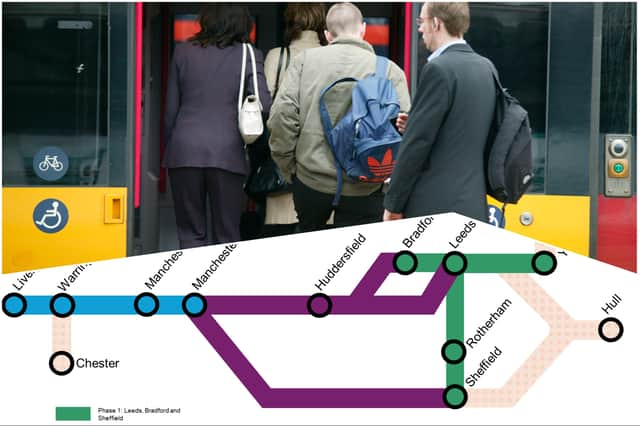
Hope was again given to the Humber that the line would become part of Northern Powerhouse Rail, connecting Hull to Liverpool along with the other great cities of the North.

This was included in Rishi Sunak’s Network North plan, however NPR was delayed as in the same breath he cancelled the remaining northern leg of HS2.
Local politicians thought they had secured electrification with the signing of the Hull and East Yorkshire devolution deal last year.
It said: “The Government will bring Hull into Northern Powerhouse Rail, electrifying and improving the line speed between Hull to Leeds and Hull to Sheffield.”
However, when Rachel Reeves finally announced her plans for NPR in January, Hull again missed out.
The Chancellor has insisted east Yorkshire would still get the benefits with NPR services going on to Hull on “existing infrastructure … with better trains, better reliability and better frequency”.
However, Hull City Council leader Coun Mike Ross said: “Let’s be clear here, the Labour Government have gone back on their side of the deal and it is deeply disappointing.”
Hull and East Yorkshire’s Reform Mayor Luke Campbell added that his region had not got “its fair share, yet again”.
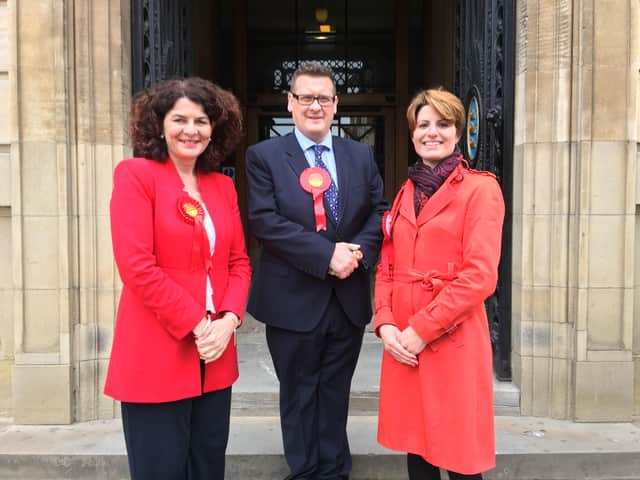
Now, the three Hull Labour MPs are calling on the Government to urgently “ditch the diesel” and invest in bi-mode trains.
These would run on electric tracks to Leeds and Sheffield and then switch to battery to go to Hull and the East Riding.
Conveniently, the state-of-the-art trains are made at Siemens Mobility’s Goole Rail Village, although so far the factory has not built any for Yorkshire.
1840 - Hull and Selby Railway is opened after it was authorised by Parliament
1869 - the Hull and Doncaster branch was completed after North Eastern Railway took over the line
1965 - the line connecting Selby with the east Yorkshire coast is closed
2012 - Plans to electrify the line between Hull and Leeds are investigated by Network Rail
2013 - First Hull Trains proposed a fast-track electrification of the 70 miles of track
2014 - The electrification project was given government funding up to planning stage
2015 - Electrification task force recommends line as one of 12 priority places, with funding announced in the Budget
2016 - Tory government rejects proposal saying the disruption would outweigh the benefits
2017 - Hull is included in Transport for the North’s plans for Northern Powerhouse Rail - which would connect the North’s east and west coasts
2023 - Rishi Sunak cancels northern leg of HS2 which delays NPR
2025 - mayoral devolution is granted to Hull and East Yorkshire which includes a clause stating the area will be included with electrification in NPR
2026 - Rachel Reeves announces Labour proposals for NPR which do not include electrification to Hull
Siemens has made them for rail companies in Denmark and Germany, and claims they will save the taxpayer £3.5bn over their lifetime.
It would also cut down on the costs and disruption of full electrification, as the only infrastructure required would be charging points at Hull station.
Writing in today’s Yorkshire Post, MPs Dame Diana Johnson, Emma Hardy and Karl Turner have said: “If the North wants to achieve rail electrification in the foreseeable future, we need to avoid being lumbered with diesel-powered trains for decades to come.
“There are other good reasons for ditching diesel – not just for Hull, but for the whole of Yorkshire, the North and beyond.
“Polluting diesel emissions from the rail industry are bad for air quality, especially in enclosed areas such as stations.”
Dame Diana, the MP for Hull North and Cottingham, explained: “There is a great opportunity to use the latest train battery technology to have faster, greener and more economic-to-run rail services, saving the Government money, not just for Hull but across the North and beyond.
“It would build on the recent NPR announcement, honour the commitment made in Hull and East Yorkshire’s Devolution Deal and boost the North’s economy.
“All that is needed is a conscious decision, as we commission the new train fleets that will be needed in coming years, not to lumber ourselves with polluting diesel traction for decades to come. It’s time to ditch the diesel.”
The bi-mode trains have been promised as part of the £45bn NPR announcement, made by Ms Reeves in January.
However, the timeline for this stretches from the 2030s to the 2040s. The three Hull MPs have held meetings with the Government, calling for the upgrades to be made sooner.
A Department for Transport spokesperson previously told The Yorkshire Post that the NPR plans do not "exclude other rail projects through other funding sources and the electrification of the lines to Hull remains under consideration”.
But as Henri Murison, chief executive of the Northern Powerhouse Partnership, writes, there is “no need to wait and wait – let’s get Hull better electric trains, and save Great British Railways and taxpayers some significant money”.
Mr Campbell added: “If we want to grow our region’s economy, we need a rail network that actually works for us.
“That means more freight capacity, quicker journeys and a proper east–west route, allowing imports and exports to move more easily.
“My aim is to get the right people around the table so we can make our case clearly, influence decisions and secure the investment we need to get things moving ourselves.”
The potential upgrades come at a pivotal time for the Humber. The huge carbon capture and storage project in Immingham is hoping for a final investment decision this Parliament.
If approved, that would see £15bn of private investment pour into the Estuary, which is the country’s biggest carbon emitter.
The region is also bidding to become the UK’s first hydrogen network. This comes after Vivergo Fuels Ltd and the Lindsey Prax Oil Refinery both closed their doors last year.
State-of-the-art trains built in Yorkshire should be able to serve Yorkshire passengers, which would be a huge boon to the wider region.