
Farmers should 'make a contribution' Chancellor says over IHT
The Chancellor has said farmers who have agricultural property worth more than £3 million should ‘make a contribution’, when asked about changes to inheritance tax.

On a visit to Belfast, Rachel Reeves was asked whether she had “sympathy for farmers who are now facing an inheritance tax bill”.
She replied: “We didn’t increase taxes that ordinary working people paid. Their national insurance, income tax, VAT, fuel duty did not go up in the way the previous Tory government had in their plans, so protecting the incomes of ordinary working people.
“And since we came into office, real wages have been rising at a faster rate than inflation, and specifically on agricultural property relief (APR), if you’ve got agricultural property worth less than £3 million and you own it jointly with a partner, you’ll pay no inheritance tax when you pass that farm on.
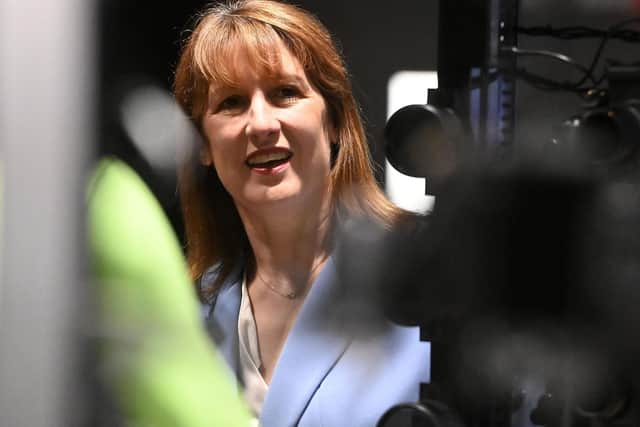

“But I do believe that if you do have agricultural property worth more than £3 million, you should make a contribution, but the APR, the inheritance tax on that is half the rate that anybody else pays, just 20 per cent, and it’s payable over 10 years interest-free.”
She had earlier said in response to the same question: “Last year at the budget, I had to raise significant sums of money to put our public finances back on a firm footing but also to put that record investment into our NHS, and also to provide that record settlement for the Northern Ireland Executive, the biggest real-terms settlement since the Good Friday Agreement.
“And that money is only available because of the decisions that we took in the budget last year.
“But they were the right and they were the fair decisions.”
The Chancellor made the comments shortly after new figures released yesterday showed UK’s unemployment rate stuck at a four-year high.
On this, she said the Government had “more work to do”, but defended her economic record.
She said Labour had been “creating more jobs” since entering office despite vacancies declining over the last quarter, with experts warning of a further “cooling in the labour market”.
“There is more to do, but in the first year, we’ve managed to return stability to the economy, we’re growing the economy and reducing costs, particularly mortgage costs for hard-pressed families,” she said.
The Office for National Statistics (ONS) earlier released figures showing the rate of UK unemployment struck 4.7 per cent in the three months to June.
It was the same as the previous three-month period, which had been the highest level since June 2021.
Meanwhile, average earnings growth, excluding bonuses, remained at 5 per cent for the period to June.
UK vacancies tumbled by 44,000 over the three months to July to 718,000 – the lowest number of job openings since April 2021.
Ms Reeves acknowledged there had been a decline in the quarter but said there was “really positive news” in the figures, with some 384,000 more jobs in the economy than there were just over a year ago.
“The most important figure today is that there are 384,000 more people in work than when I became Chancellor,” she said.
“Everybody who can work should be in work, and as a government, we’re committed to helping more people back to work. There are huge opportunities in our economy.”
The signs of further pressure in the labour market alongside recent weak economic growth pose a challenge for the Government and policymakers at the Bank of England.
Last week, the Bank of England indicated that unemployment was likely to rise further later this year as it chose to cut interest rates again to 4 per cent.
The latest labour market statistics from the ONS were in line with predictions from economists.
The data showed that the number of payrolled employees fell by 66,000 for the quarter to June, with an estimated 26,000 drop between May and June.
It came as figures also revealed that recent weakness in the UK hiring market continued further, with vacancies dropping to a four-year low.
Vacancy numbers fell 5.8 per cent over the quarter to July, with a particularly sharp drop in the arts, entertainment and recreation sectors.
Meanwhile, wage growth remained at 5 per cent for the three months to June, but was only 1.5 per cent once inflation is taken into account, thanks to an uptick in the cost of living in recent months.