
Hull’s notorious Royal Hotel has been closed as asylum accommodation
Hull’s notorious Royal Hotel has been closed as asylum accommodation and is being returned to the people of Hull.
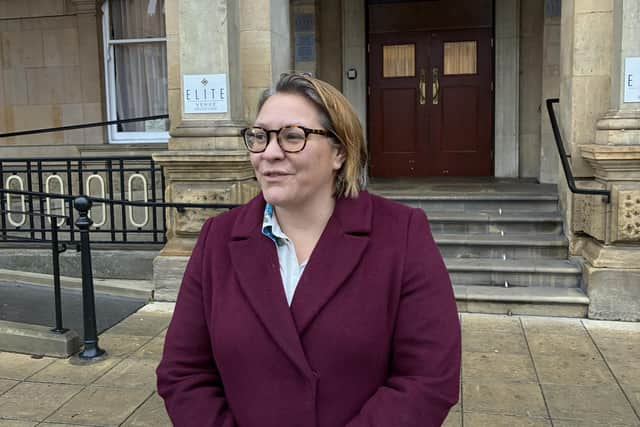
The announcement was made as part of a visit from Anna Turley MP, the Minister for Border Security and Asylum, who made clear ‘Hull has done its bit’.
She explained the people that were living in the hotel have already been moved into the wider asylum system and dispersed around the country. And she claimed there was no danger of asylum seekers being moved into the city’s houses in multiple occupation (HMOs).
“The hotel use was mad. It was expensive, it was chaotic. Ending it is an important part of getting a grip of the system,” Ms Turley said.

Hull has a status as a ‘city of sanctuary’ but the minister emphasised that this did not mean the city would see its HMOs filled with asylum seekers. And she said the government was working hard to address rough sleeping with new funds and a strategic focus on getting everyone off the streets.
“The Royal Hotel, which has for several years been used to house asylum seekers is being handed back to the people of Hull – back to the community,” Ms Turley said outside the hotel, close to Hull’s Paragon Interchange.
“Its return will support regeneration opportunities, support jobs and support the city’s thriving culture and tourism sector. It’s back over to the people of Hull.”
The government is trying to deliver a fairer and more controlled asylum system
The hotel’s closure means that everybody living there has already been decamped and moved around the country to more stable, more secure and cheaper accommodation. It forms part of the government’s drive to deliver a fairer, more controlled asylum system across the UK, which reduces the burden on local communities.
“We’re trying to be fairer, and not overburden communities,” Ms Turley explained. “We want everybody to play their part and are trying to have a much more managed estate. We are working with local authorities around the country to ensure we have decent accommodation and no-one is taking more than their fair share. And we are also looking at former military bases which are more contained and more secured and have less of an impact on local communities. I know Hull has done its bit.”
A total of 52 asylum hotels have closed so far this year, leaving around 140 open – down from 400 at the 2023 peak and 213 at the 2024 election, according to government figures. The number of people in asylum hotels has halved in just a year to 16,000, down 71% from a peak of 56,000.
The most recent closures are expected to reduce asylum costs by around £16 million, the Home Office hope. The Labour government say this is because of system-wide immigration reforms made, including a significant drop in small boat arrivals, a fourfold increase in asylum decision making, a 21% reduction in asylum claims, and the highest level of removals in nearly a decade.
While asylum hotels continue to close, the overall asylum population is also falling, according to the Home Office which states 13,800 fewer people are now in taxpayer funded accommodation compared to last year, marking a 13% reduction.
And more efficient processes mean those who have their asylum claims approved are swiftly moved on from the asylum estate, while those who are refused are removed from the country wherever possible.
While claims are considered, rather than staying in costly hotels such as the Royal Hotel – asylum seekers are being moved to alternative and more basic forms of accommodation. This includes former military barracks. Unlike hotels, large sites provide greater control and are self-contained, with essential on-site services and 24/7 CCTV and security.
‘Closing the hotel isn’t enough’ claim Hull’s Reform politicians
Hull’s Reform group welcomed the Royal Hotel’s closure as an asylum hotel. “Reform have repeatedly raised this, at Full Council and in our letter to the Home Secretary asking for a firm closure date, so we’re glad it finally has happened,” Coun Duncan Graham (Reform UK – Marfleet ward).
Coun Graham argued that “closing the hotel isn’t enough.” He added: “The Labour government, and the Lib Dem-run council, need to be open with residents about where people have been moved to. Hull’s status as a City of Sanctuary (commonly known as Anyone Else First) should not be used as an excuse for more illegal migrants to be brought into the city. Hull’s Reform group thinks this status should be removed.”
Attention now turns to the future of the Royal Hotel. Coun Graham added: “It is a landmark building in the heart of our city centre and residents will want to see it used in a way that truly benefits Hull.”
What is the future of a building with the wow-factor?
The building needs to regain its magic and be a gateway to the city, according to Coun Maria Coward (independent – Boothferry).
“I want it to come back as a hotel,” she said. “As a kid it had the wow-factor, and was somewhere I wanted to get married one day. It’s the first thing you see when you come out of the train station – it really is a magnificent building.”
It is currently owned by Britannia Hotels. Earlier this week a spokesperson from the business said the hotel group remains committed to exploring opportunities to re-establish the hotel as a respected community asset.
“The hotel is a valued landmark in Hull and we recognise there will be considerable local interest in its future. We are currently reviewing our options, giving due consideration to local perspectives, and will share further updates as our plans develop,” the spokesperson added.
On the steps of the Royal Hotel, MP Anna Turley, emphasised the hotel being handed back was an opportunity for the region. “The future of the hotel is up to the people of Hull,” she said.
“It’s over to the community now, it’s back in our hands. It’s a great heritage asset, an iconic building – it even had Queen Victoria stay here. I really hope it is part of Hull’s future regeneration.”