
Michael Meadowcroft obituary: The former Yorkshire Liberal MP who was an 'anarchist at heart'
Michael Meadowcroft, who has died at 84, was the influential former Liberal MP for Leeds West, an alderman, journalist and political affairs consultant.

Liberal politics were part of his life from a young age and he viewed the party as a vehicle for change and reform.
He favoured nuclear disarmament and opposed the Falklands War, troops in Northern Ireland and membership of NATO – a stance considered unusually radical by Liberal standards.
His outspokenness brought him into frequent conflict with party leader David Steel, whom he criticised for sacrificing Liberal ideals on the altar of an alliance with the Social Democratic Party.
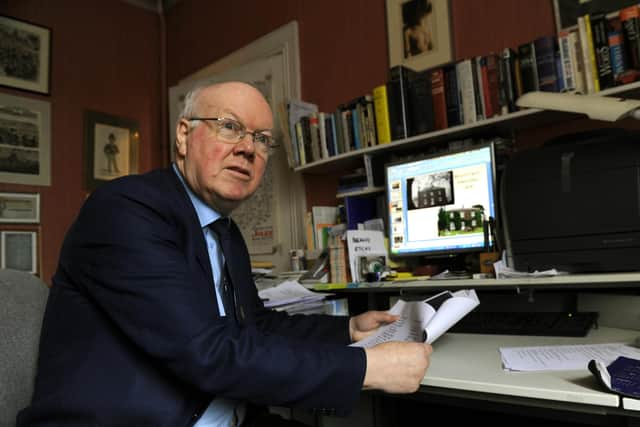

Meadowcroft’s background was untraditionally Liberal.
Born in March 1942, he came from a Labour supporting, working-class family in Elland, near Halifax, but was brought up in Southport as a consequence of his railwayman grandfather’s promotion from signalman at Sowerby Bridge to St Luke’s, Southport.
His brothers had been able to go to university but by the time Michael left school in 1958 their father had lost his job through illness and the consequent shortage of funds meant sending Michael out to work as a bank clerk.
At around the same time he joined the Liberal Party and became chairman of the Merseyside Regional Young Liberals. In 1962 he gave up the bank job and went to Party HQ in London.
He was the party’s local government officer for five years before being asked to take over its Yorkshire regional office in 1967.
The following May he was elected to Leeds City Council as one of the first group of three Liberal councillors there for 30 years. He would be Liberal Group leader for 13 years.
In 1973 he was elected to the old West Yorkshire Metropolitan County Council and 10 years later, after two unsuccessful runs in the general elections of 1974, went to Westminster as MP for Leeds West.
It was a victory that made him the first Liberal to gain a parliamentary seat from Labour in a general election for over 50 years.
In parliament he was an outspoken critic of the SDP alliance with the centrist Labour rebels David Owen, Roy Jenkins and Shirley Williams.
The term ‘Meadowcroft Tendency’, a reference to the Militant Tendency faction on the Labour Left, became briefly common currency as a label for those Liberals who wanted alliances with civil rights groups and the Campaign for Nuclear Disarmament, rather than with the SDP.
He was, in his own words, an anarchist at heart, but a constitutionalist by conviction.
“My seniors in the party suspect that some of my opinions are quite unorthodox: indeed, are positively heretical,” he wrote in a piece for The Times in 1986.
Despite his clashes with Steel, Meadowcroft was variously made deputy Liberal Whip, health spokesman and head of the party’s by-election unit.
As spokesman on community relations he opposed the introduction of visas for Commonwealth migrants.
But the distraction over the alliance was unhelpful in his predominantly working-class constituency and he lost Leeds West in 1987 to Labour’s John Battle – who would hold it until 2010 when it passed to Rachel Reeves.
Meadowcroft, meanwhile, was elected the last president of the Liberal Party but found little call amongst employers for an ex-MP and survived through journalism until the Policy Studies Institute gave him the exotic title of Distinguished Visiting Fellow in 1989.
From 1990, as chairman of the Electoral Reform Society, and approached originally as a consequence of the collapse of the Soviet Union, he was in considerable demand as a consultant to new and emerging democracies and led or was a member of 50 missions to 35 different countries.
He was involved in numerous voluntary organisations, both as chief executive and as a member of management committees and wrote columns for The Yorkshire Post and The Times as well as appearing on Any Questions and Question Time.
Away from politics, he was a jazz musician. He formed the Bienville Jazz Band in 1958 and in later life continued to play at clubs in Leeds.
He was elected in 1998 a Chevalier de la Commanderie du Faugères, the appellation in the French region of Languedoc where he had a share of a house, and was appointed an honorary alderman of Leeds in 2002.
Michael is survived by his wife Elizabeth Bee, and by two children, seven grandchildren and four great grandchildren.