
Middlesbrough: Shop given licence to sell alcohol again despite objections
A Premier store in Middlesbrough has received a licence to sell alcohol once again, in spite of objections.
The decision comes following a licensing sub-committee which saw disagreement over whether a petition, opposing the potential licence, could be accepted.
As has been previously reported, the store sought permission to sell alcohol once again, after previously having their licence revoked in 2018. There had been an attempt to decide on the recent application at a sub-committee in October, however this did not materialise. Successful applicant Meehu Retail Ltd must comply with several conditions listed on the decision letter, including the requirement to maintain an incident book.
Middlesbrough Council licensing manager Tim Hodgkinson confirmed at the November 10 meeting that the premises are currently operating as a “general store”, selling cigarettes, groceries and other household products. He explained that the store had held a licence to sell alcohol for almost a decade from March 2008 to February 2018, “when the premises licence was revoked by the licensing sub-committee following a review application by Middlesbrough Trading Standards.”
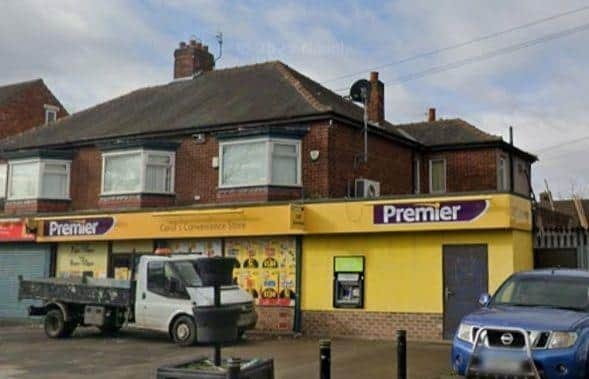

Mr Hodgkinson highlighted how, previously, there had been concerns around the sale of counterfeit alcohol and non-payment of UK excise duty. These concerns resulted in the revocation of the premises licence over seven years ago.
The council has a Cumulative Impact Policy (CIP) in relation to off licence premises in Middlesbrough, covering eight wards including Longlands & Beechwood, where this Premier store is located. The aim of a CIP is to limit the growth of licensed premises where the promotion of the licensing objectives is being compromised. Documents explain that within this ward, there are currently nine licensed premises for off sales of alcohol.
Numerous objections to the plans had been submitted to the council, including from Bay Bashir, a business owner who currently operates three off-licensed premises in the area. Independent ward Councillor Joan McTigue was a fellow objector. Both were at the licensing sub-committee on November 10.
There was disagreement at the start of the meeting over whether a petition, brought by Mr Bashir, on behalf of residents in the area opposed to the proposed licence, could be accepted, which caused the meeting to be paused and Cllr McTigue to comment that the communication from the council’s end was inadequate. Following a lengthy adjournment, it was decided that a shorter version of the petition, sent in on September 8, could be accepted, however the full petition was not taken into consideration, as it was not agreed to by the applicant and agent.
Once the meeting had resumed, the agent set out his applicant’s case and explained how wine and spirits would be behind the till, and cited an “extensive consultation” that had been undertaken. The agent spoke about the four licensing objectives and how he wanted to promote these, highlighting the Challenge 25 policy in place.
He was questioned by committee members about the designated premises supervisor. There was also a back and forth about what percentage of the store’s stock/floorspace would be filled by alcohol, in the end a figure of 25% floorspace was cited. Mr Hodgkinson confirmed to the committee that unannounced visits would take place by the licensing team.
Cllr McTigue objected to the proposals, saying: “My question to the panel is do we really need four [premises selling alcohol] in that short stretch of road?” She also highlighted the number of school children that travel up and down Saltersgill Avenue, pointing out how many of them are 14, but she thought could pass for 18. The agent responded that “need” is not part of licensing law.
Mr Bashir offered his objections, saying he was “disappointed” not to be able to submit the whole petition. He went on to add that he had grown up locally, lived there for his entire life and that he “takes pride” in the area, adding: “I accept business is business,” and that he wasn’t trying to protect his own business through his objection, rather trying to protect the area.
In the end, the sub-committee decided to grant the application for the off sale of alcohol between 9am and 10pm daily, subject to a large number of conditions. One of these conditions will see: “A ban on perry, a ban on beer, lager or cider of a strength of 6.5 ABV or above, and a ban on the sale of single cans of beer, lager or cider.”
One of the other conditions will see alcohol only displayed in the areas identified on the plan, “this will prevent the store operating wholly as an off-licence which would likely attract different clientele and be of greater risk,” the decision letter explains.