
Sir Olly Robbins: No10 put Foreign Office under 'constant pressure' to approve Lord Mandelson
Sir Olly Robbins, the Foreign Office’s former permanent secretary, told MPs Downing Street showed a ‘dismissive approach’ to vetting.

The Foreign Office was under “constant pressure” to approve Lord Peter Mandelson, the department’s former most senior civil servant has said, claiming that Downing Street showed a “dismissive approach” to vetting.
Sir Olly Robbins was the permanent secretary at the Foreign Office (FCDO) until Sir Keir Starmer sacked him last week for failing to disclose the peer had “failed” his security vetting to become US ambassador.
The Prime Minister told MPs yesterday that this had been a “deliberate decision” by FCDO, and that he found it “staggering”.
Sir Keir sacked Lord Mandelson last September after further revelations of his friendship with paedophile Jeffrey Epstein, and said he would not have appointed the peer in the first place had he known he had not been recommended by the security vetting.
Giving bombshell evidence to the Foreign Affairs Committee this morning, Sir Olly explained that there had been constant pressure from Downing Street to clear the appointment.
He told MPs that there was a “very, very strong expectation” from No 10 that Lord Mandelson “needed to be in post and in America as quickly as humanly possible”.
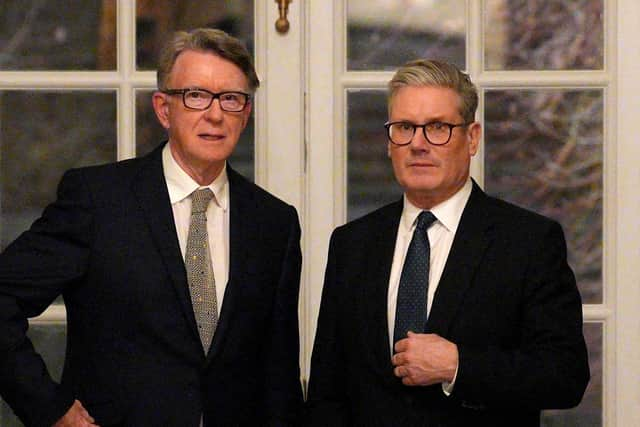

The former permanent secretary at the Foreign Office said that when he took on that role in January 2025, the developed vetting process was already under way.
He told MPs that during that period FCDO officials had been under “constant pressure” from No10 to approve the appointment.
“Due diligence (which assesses reputational suitability and checks if a candidate is fit to serve) had been completed by the Cabinet Office,” he said.
This document, assessed by Sir Keir, informed the Prime Minister that Lord Mandelson posed a “reputational risk” over his links to Epstein.
However, “Mandelson was being granted access to highly-classified briefing on a case-by-case basis”, Sir Olly told MPs.
He said this “resulted in a dismissive approach to DV” from Number 10.
“Nonetheless, despite this atmosphere of pressure, the department completed DV to the normal high standard,” he said.
Lord Mandelson was granted DV status despite the concerns raised by UK Security Vetting, the expert agency which carries out checks.
Sir Olly said he had not seen the UKSV document relating to Lord Mandelson, but was briefed on its finding by the Foreign Office’s security chief.
He told MPs he was briefed that UKSV considered Lord Mandelson a “borderline” case, “leaning towards recommending that clearance be denied”.
The risks in his case did not relate to the peer’s links to disgraced financier Jeffrey Epstein, Sir Olly said.
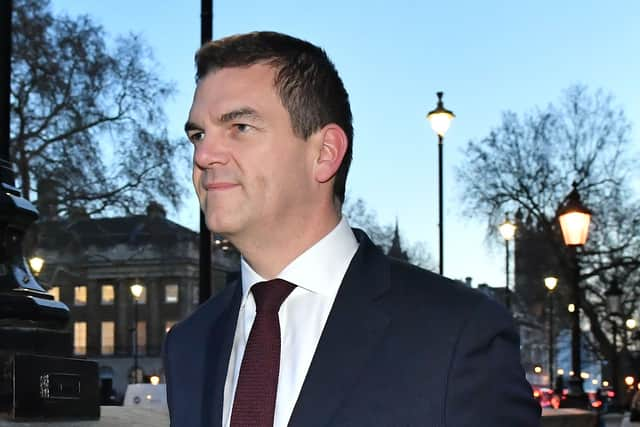
The Foreign Office’s security chief assessed that the risks could be “managed and mitigated”.
In a letter to the Commons Foreign Affairs Committee ahead of his appearance on Tuesday, Sir Olly said: “DV clearance is a risk judgment. This is especially true the more senior a candidate is and the longer their career.
“Managing these risks as part of the clearance process is not unusual.”
He said he therefore agreed with the Foreign Office’s estates security and network directorate (ESND) approach, and clearance was granted.
That meant that when Sir Keir told MPs the “proper process had been followed… he was correct”.
Sir Olly said it would have been better for Lord Mandelson’s vetting to have been carried out before he was announced as ambassador in December 2024.
The former cabinet secretary Lord Simon Case has warned the Prime Minister of making the announcement ahead of vetting due to the nature of the “political appointment”.
“That’s a very, very sensible position to be in and it’s what I would have advised in this case too,” he told MPs.
He added: “It’s a particularly sensitive issue because the United States government is very hot on the clearances people hold and so it would have been a sensible precaution.”
Sir Olly said removing Lord Mandelson from the process and trying to change the person nominated for the Washington role would have caused problems because the US had already agreed the peer as an acceptable candidate – agrement in the diplomatic terminology – while Joe Biden was still in office.
“The process of getting agrement was taken at quite some pace and was delivered, I think still technically, just by one working day, by the Biden administration.
“I think if the nomination had changed after that point, the incoming administration may well have commented on it publicly and it would, yes, have caused quite an issue in the relationship.”