
"Parliament at its best" - how MPs came to momentus assisted dying decision
For four and a half hours, MPs listened in near silence as their colleagues set out their arguments for and against the Assisted Dying Bill, even as noisy pro and anti demonstrators protested outside.

Even as the tellers read out the result - 330 ayes and 275 noes, the usually rambunctious chamber sat in somber silence, as the gravity of the decision elected members had just taken was taken in.
It was, in all senses, an unusual day in Westminster, a debate where staunchly held views were exchanged with the utmost respect, and devastating personal tales of suffering - of constituents and family members - were shared from all corners of the house.
Countless MPs remarked that it had shown Parliament in its best light, with a broad consensus from both sides that collaborative working on an issue so vital would be essential.
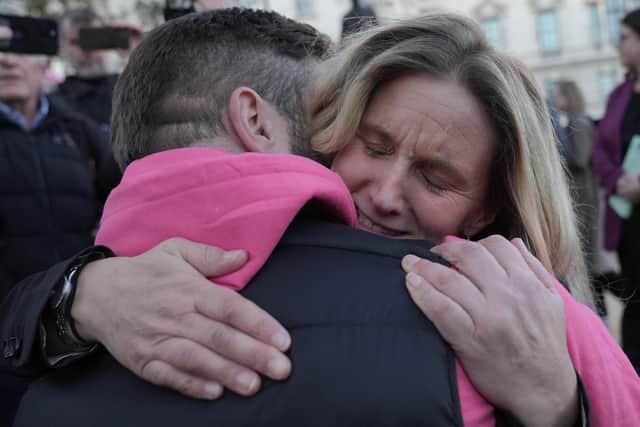

Among those to vote against the bill was York Central MP Rachel Maskell, who called it the “wrong and rushed answer to a complex problem”.
She said: “The Bill falls woefully short on safeguarding patients, it is too flawed to amend.
“While we recognise coercion in relationships or elder abuse in dying – where there is malign intent – this Bill fails to safeguard.”
She also raised concerns about the Bill’s impact on disabled people, saying: “We fight in this House to take stigma, give dignity, equality and worth, it is why disabled people fear this Bill.
“It devalues them in a society where they fight to live.
“If you stand for equality, you will recognise the safeguarding failures in this Bill.”
Labour MP Dame Meg Hillier was one of many MPs visibly emotional during the debate.
She wiped away tears as she spoke of her daughter’s admission to hospital with acute pancreatitis and how “good medicine” can relieve the pain.
Former minister Dame Meg told the Commons: “The principle at stake is that we do cross a Rubicon whereby somebody who is terminally ill by the definition of this Bill is assisted by the state to die.
"This is a fundamental change in the relationship between the state and the citizen, and the patient and their doctor.
“If we have a scintilla of doubt about allowing the state that power, we should vote against this today.”
She said a “failure in palliative care and support is not a reason to continue” with the Bill, adding about her daughter: “She was admitted to hospital with acute pancreatitis as a teenager so this Bill would not have covered her at that point, but I did not know for five days, in fact many months, whether she would live or die.
“Those first five days she did not sleep and she was crying out in pain. But I saw what good medicine can do that palliated that pain, that got her to a place where although for two-and-a-half months she was unable to eat, she was saved and the key was she was not in pain – well, she was in pain but it was managed.”
Jake Richards, the newly-elected Labour MP for Rother Valley said: “I really welcome the contributions from all sides of the house on this debate, this has been Parliament at its best.
“I support this bill, and I am proud to co-sponsor this bill.
“We will all have received emails from constituents with harrowing stories about the agonising final days and weeks suffered by loved ones,
“I have no doubt that they will weigh heavily on each of us, however we vote later today.
“Fundamentally I believe that if we are able to safely offer peace and empowerment to those at the end of their life then we have a moral imperative to do so.
“If (the bill) fails today, do not think that vulnerable people will not be subject to coercion this weekend, and over the coming weeks. The police will investigate, a coroner will undertake an inquest into the circumstances of any suicide at the end of life. A prosecution may begin. But all these authorities would have happened after the individual has died.
“This bill shifts the emphasis on such enquiries to before the event - it’s more logical, more rational and more humane.
“I appreciate this decision is difficult for colleagues, and I respect views on all sides of this debate, but these moments do not come around often. I urge colleagues to seize the moment, shape the world around us and provide for compassion.”