
Spiritual abuse expert Lisa Oakley to give lecture at York Minster as Church of England faces up to safeguarding scandals
Lisa Oakley is to give a timely lecture in York on tackling abuse in a religious context as the Church of England deals with safeguarding scandals. Chris Burn reports.
The Church of England has been rocked by abuse and safeguarding scandals which brought about the resignation of the Archbishop of Canterbury Justin Welby and heavy criticism of his temporary leadership successor, the Archbishop of York Stephen Cottrell.
In the circumstances, there will be keen interest in an event this week at York Minster which will prioritise the voices and experiences of victims and survivors of so-called ‘spiritual abuse’ and explain strategies for how they can be treated better by institutions like the Church of England.
On Wednesday evening, the Minster will host a lecture entitled ‘From Silencing to Strength: Addressing Spiritual Abuse and Abuses of Power’ being delivered by internationally-renowned safeguarding expert Professor Lisa Oakley.
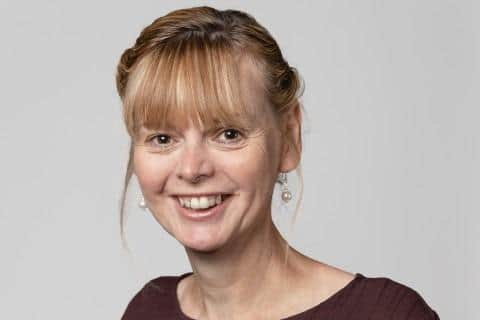

The talk is part of The Centre for Religion in Society at York St John University’s Ebor Lectures series and is the first to be held at the Minster since Covid.
Professor Esther McIntosh, director of the Centre for Religion in Society, says arrangements for Professor Oakley to deliver the talk at the Minster were made prior to the dramatic sequence of events which have engulfed the CoE’s leadership in recent months.
Mr Welby announced in November that he was to stand down following failures in handling a Church abuse scandal involving Christian camp leader John Smyth.
The Makin report into Smyth – thought to be the most prolific abuser associated with the Church – concluded Mr Welby did not adequately follow up on reports about Smyth and said.he might have been brought to justice had Mr Welby formally reported allegations to police in 2013.
Archbishop of York Stephen Cottrell, who has temporarily taken over Mr Welby’s duties as head of the Church, then faced his own calls to quit after being accused of not acting quickly enough in his then-role as Bishop of Chelmsford over priest David Tudor. Tudor was allowed to remain in post despite having been barred by the Church from being alone with children and having paid compensation to a sexual abuse victim.
In February, Mr Cottrell admitted he has “made mistakes” but vowed he is determined to “lead the change we all know we need” in the Church of England with a permanent successor to Mr Welby not due to be decided until later this year.
Professor McIntosh says circumstances mean the lecture at the Minster could hardly be more timely. "All of these things have come together that have made the location and the topic itself even more significant than when we first started planning it.”
While the venue is undoubtedly a fitting one, Professor Oakley, who gave evidence to the IICSA and chairs the British Psychological Society’s Safeguarding Advisory Group, says her lecture will be less concerned about its setting and more with sharing the stories of victims and survivors.
“What is more important is hearing the voices of people who have these experiences and understanding what spiritual abuse actually is and how it and other forms of abuse can be experienced at the same time. It is also about understanding how to respond well when somebody is disclosing and working for better prevention in the future.
"Part of that is looking at what has gone wrong but also what do we need to do to create safer, healthier cultures in the future where this is less likely to happen and more likely to be identified earlier if it is.
"The focus for me has always been listening to the voices of people who’ve had these experiences, who’ve often been silenced, and learning from them about what the impact is.”
She classifies spiritual abuse as a form of psychological or emotional abuse, which is characterised by a systematic pattern of highly controlling and coercive behaviour in a religious context or with a religious rationale that can have a deeply damaging impact on the affected person. Professor Oakley says her long-standing interest in the topic initially came from personally experiencing spiritual abuse herself.
"I did a lot of reading to try and understand the experience I had. I knew there was research that needed to be done and there was nothing being done about it, particularly in the UK. That began the journey.
"It began as a personal journey in one sense but it has become an academic and personal journey. What was important to me was we looked at really good quality research, we centred the voices of those who’d had this experience and we learnt from it.
"We have seen the Church of England now has a policy that includes spiritual abuse and other denominations have that included in different ways so we have seen some movement. But there’s a long way to go.”
She adds: "We are really grateful for everybody who has shared experiences because it is deeply emotionally costly to do that and that’s why we need to make sure we do everything we can with what we’ve learnt.”
When asked if she is surprised about what has happened in the Church of England over recent months, Professor Oakley says: "That’s quite a difficult question. I don’t think I’ve been surprised because from the work we have done we know these experiences are there. As with other forms of harm and abuse, as awareness grows then those experiences are going to come out.
"My response has been concern for those at the centre of those experiences and how they will be impacted by what is happening, how it is responded to and what happens next.
“Your policy and process matters but it needs to be person-centred. A response not being about protecting the institution but about actively listening to people is really important.”
Professor McIntosh says she is hopeful the lecture will attract a broad audience, including the general public as well as ordained people in faith communities.
She adds: “We also hope victim-survivors will be there too and feel like their voice is being heard and there are people who do want to change the system.”
A spokesperson for York Minster said: “Professor Lisa Oakley is a hugely respected figure whose work informs current safeguarding training and practice within the Church of England. We are delighted to welcome her for this lecture, organised by the York St John University’s Centre for Religion in Society, as we continue to develop and refine our safeguarding practice.”
The event takes place on May 21 at York Minster from 7pm. To book a free ticket, visit the Eventbrite website.