
Teesworks: 'No viable other solution' to ‘damaging’ household rubbish incinerator, say councils
A consortium of councils says there is “no viable solution that is significantly cheaper” after renewed attacks on a proposed incinerator scheme at Teesworks by a prominent critic.
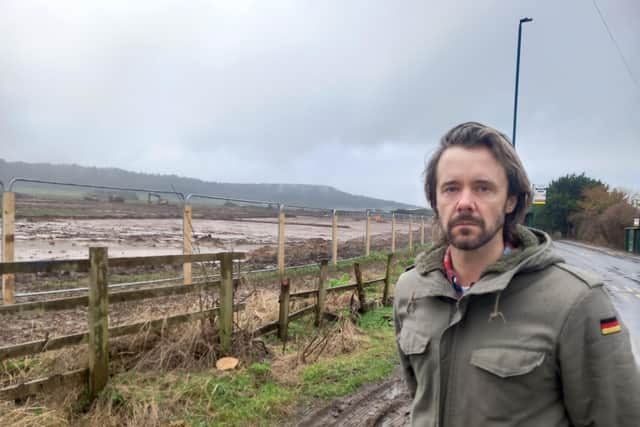
Councillor Dr Tristan Learoyd said the Tees Valley Energy Recovery Facility (TV ERF) due to be constructed on the Grangetown Prairie site, west of Tees Dock Road, which is part of the Teesworks industrial complex, could “bankrupt” the local authorities involved, a claim branded “erroneous”.
Coun Learoyd, who previously wrote to Energy Secretary Ed Miliband calling for a halt to the project, claimed a new carbon tax being introduced by the Government in 2028, which will place a cap on the volume of emissions allowed from such facilities, could potentially lead to a £950m bill over the lifetime of the project, leading to “huge council tax rises”.
There were 60 fully operational energy from waste plants in the UK at the end of last year, which generated about 3.1% of the country’s total net power generation and kept 16 million tonnes of residual waste from heading to landfill. But critics of incinerators argue that generating energy from burning waste contributes to greenhouse gas emissions compared with renewable power and may deter efforts to cut single-use plastics and improve recycling.

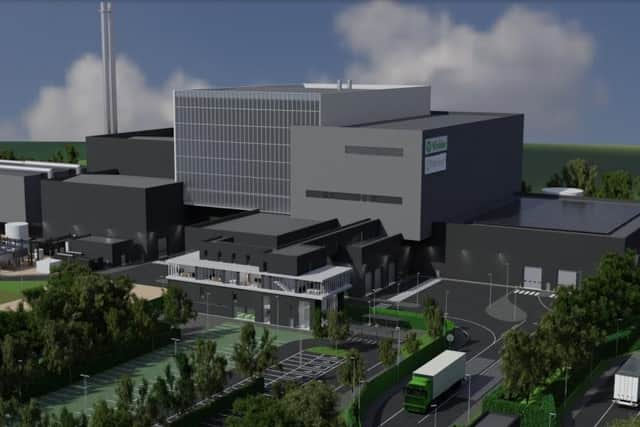
Once operational, the Teesside plant will burn up to 450,000 tonnes of general rubbish annually from seven councils – Darlington, Durham, Hartlepool, Middlesbrough, Newcastle, Redcar and Cleveland and Stockton – generating almost 50,000 megawatts of electricity – enough to power the equivalent of 60,000 homes.
A statement on behalf of the project partners said: “Final costs for the TV ERF contract are still subject to a live procurement process, but the project partners can categorically state that there is no viable alternative solution which has been proven at scale, which is significantly cheaper and which fulfils the same vital role as the TV ERF.”
It added: “To suggest the TV ERF project will ‘bankrupt’ the councils is erroneous and illogical and does a disservice to the teams of subject-matter experts who have carefully prepared a detailed strategic and commercial case for the TV ERF, considering many other options, over a period of several years.
“To the contrary, this innovative partnership will achieve economies of scale for each authority, while a competitive tender process will deliver the best available operational expertise at the best value for the partner councils as well as providing long-term clarity on costs.”
Reserved matters planning permission for the TV ERF was granted last year, but the project encountered a delay after uncertainty over how soon a National Grid connection could be provided. As a result the evaluation of tenders submitted by two shortlisted potential operators, Viridor and Green Recovery Projects Limited was stopped.
In an update in August, Denise McGuckin, the managing director of Hartlepool Council, who chairs the project board, said the process had since resumed and the preferred tenderer was due to be appointed in 2025 with the facility entering full operation from 2029. Earlier stages of the project had seen April 2026 identified as a potential start date.
As part of the tender specification the bidders have been required to demonstrate how they will reduce carbon dioxide output year-on-year through operational efficiencies and will be given targets. The successful bidder will design, finance, build and operate the plant, recouping their upfront costs through a service fee paid by the councils and energy receipts from electricity offtakes with its ownership reverting to the partner authorities once the contract, which could extend up to 40 years, expires.
In an e-mail exchange with Councillor Dr Juna Sathian, the cabinet member for climate and transport at Newcastle City Council, Coun Learoyd said it was a “heinous climate, economic and health damaging” project. He said the level of fine particulate matter that would be produced – minute particles that are created when elements such as dust and carbon dioxide emissions react with each other – and which can be breathed in would be above safe World Health Organisation limits.
Coun Learoyd wrote: “There is an increasing opinion locally that somehow people in Grangetown and Redcar and Cleveland are deemed to be worth less than the political and metropolitan elite of Newcastle.”
The statement on behalf of the council consortium said the bulk of Teesside’s residual household waste had been treated locally and safely via the energy from waste process for nearly 30 years and some from Newcastle for more than a decade. Last month, in answering further criticism of the scheme by Coun Learoyd, a Marske ward councillor, Redcar and Cleveland Council leader Alec Brown said an environmental permit application already granted by the Environment Agency had concluded there would be “no significant impacts on air quality or health”.
Councillors have been told that the new facility will use the best available technology to control emissions, regulations having been tightened to reflect advances in technology. Rules in place are said to have been met and exceeded in the designs being proposed by the project tenderers through the installation of comprehensive emissions control equipment, which physically and chemically filters gases produced from the burning of waste.
The TV ERF statement acknowledged there were emerging technologies that could allow for the alternative treatment of residual waste in the future – for example converting it to aviation fuel. But it said such potential solutions were in their infancy, required incoming waste to have a very low proportion of plastic in it to achieve a more sustainable outcome than conventional energy waste and had not been successfully demonstrated at the necessary scale to reliably meet the region’s waste management requirements.
The statement said the partner authorities remained committed to reducing, re-using and recycling as much as possible. However it also said: “With forecasted population and economic growth over the next 30 years, even under the most ambitious future recycling and waste-avoidance scenarios, hundreds of thousands of tonnes of residual waste produced by nearly 1.5 million people living in the region each year will still require safe treatment – an important role that will be fulfilled by the TV ERF.”
It said the planned plant could potentially deploy carbon-capture technology, which also could avoid any carbon charges associated with waste management activities being introduced in the future.