
The inside story of Brexit and how Britain still 'hasn't reckoned with' causes 10 years on
Westminster Correspondent Ralph Blackburn reports on the twists and turns of the EU referendum campaign, and how Brexit is still charting out politics 10 years on.

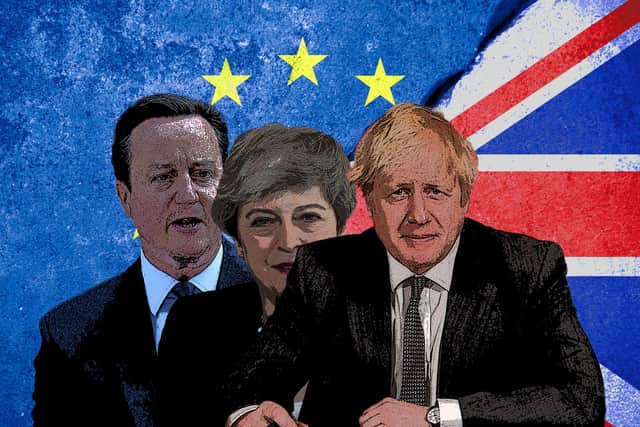
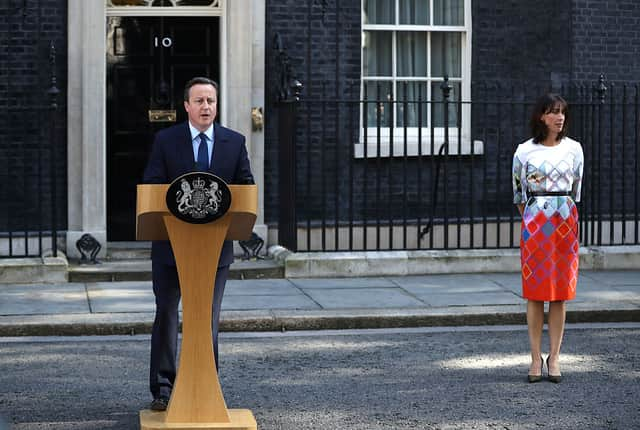
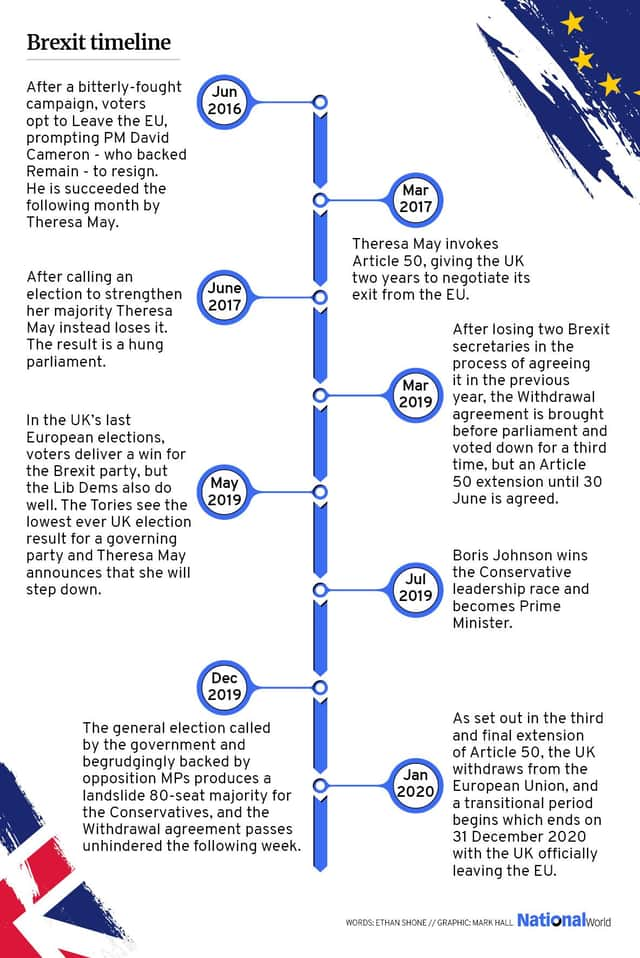
When David Cameron walked back into Downing Street on 8 May 2015 to a surprise majority, little did anyone know just over a year later he would be retracing those steps to resign.
But in that election manifesto, the Conservative prime minister has pledged to hold a referendum on the UK’s place in the European Union, a decision which would cause shockwaves for years.
The poll would see a revolt against the status quo, which many believe the country has still not come to terms with.
The campaign would be what many consider the first of the modern age of social media, and would divide the UK into two political tribes of Leave and Remain.
It would precipitate a further five prime ministers over the next eight years, and political chaos the likes of which Britain had hardly seen before.
Even now, with talk of a potential referendum to rejoin being put on the table at the next election, the matter is hardly finished.
But now, 10 years on, how do politicians and the public reflect on the seismic Brexit campaign?
The referendum’s origins came back in the early 1990s when a little-known Conservative politician, Nigel Farage, decided to quit the party in protest at John Major signing the Maastricht Treaty and form Ukip (the UK Independence Party).

In elections throughout the 2000s, Ukip’s share of the vote continued to grow, and in the 2013 local elections it won 23 per cent of the vote.
Mr Farage hailed the results as a “game changer” and so they proved. Mr Cameron, then the prime minister in a coalition government, said: “We need to show respect for people who have taken the choice to support this party and we are going to work really hard to win them back.”
Mr Cameron hoped to do this by pledging at the start of 2013 to hold a referendum on the UK’s membership of Europe if the Conservatives won the next election.
Ed Miliband, the Doncaster North MP and then Labour leader, said the prime minister was "going to put Britain through years of uncertainty, and take a huge gamble with our economy”.
Mr Cameron has always said that a referendum was “inevitable”, and it certainly began to feel that way as two Conservative MPs - Mark Reckless and Douglas Carswell - defected to Ukip and won their subsequent by-elections.
However, Sir Julian Smith, first elected as MP for Skipton and Ripon in 2010, told the UK In A Changing Europe think tank that he didn’t think that was the case.
Sir Julian, who was chief whip during Theresa May’s tortured Brexit negotiations, said: “Somebody like me had benefited from a business point of view from the EU and felt very strongly we should be part of it.
“I think, as that Parliament progressed, probably you saw an acceleration.
“You saw Ukip, you saw it becoming more black and white, but I’m not sure it was inevitable.”
What was unexpected was Mr Cameron and the Conservatives winning a majority in the 2015 election.
Most of the polls and bookies expected Mr Miliband to become prime minister, either through a majority or in a coalition.
As such, it appeared unlikely that a referendum would get called. However, when Mr Cameron delivered a majority, that set the stage for a showdown on Europe.
It also entrenched the campaign message of economic fear, which Mr Cameron and Chancellor George Osborne had successfully used in that election, and the year before in the Scottish independence referendum.
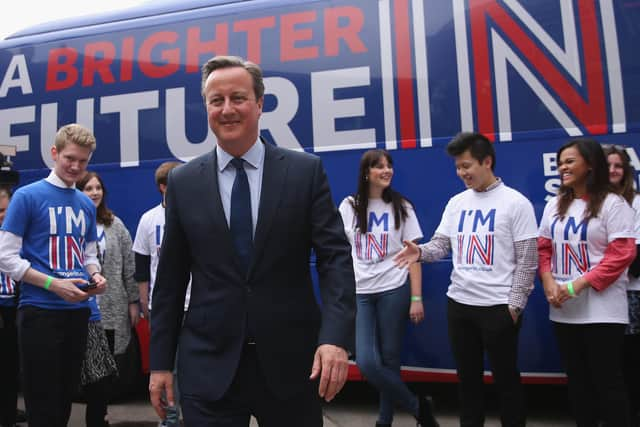
That was about to come badly unstuck. The current South Yorkshire Mayor Oliver Coppard was appointed director of the Britain Stronger In Europe campaign at the end of 2015.
He remembers “the expectation was at the outset was that Remain would probably win”.
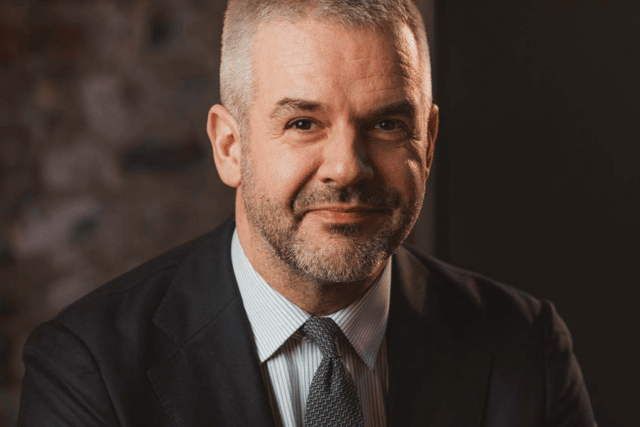
“I think frankly that was the feeling within the country, that Remain would win out.”
Mr Coppard had been working in the Dearne Valley, one of South Yorkshire’s old coal mining heartlands which had once been the most polluted place in western Europe.
This had been transformed by millions of pounds of EU funding into a place of nature reserves and reclaimed landscapes.
“In South Yorkshire in particular we had a really strong story to tell, and yet that message never cut through with those communities that felt the benefit the most,” he said.
Mr Coppard is blunt about the failures of the overall Remain campaign.
“It was a terrible campaign led from the centre, by David Cameron and George Osborne, people who were high on their own supply after the Scottish Referendum and thought this was a gamble worth taking to save the Tory Party,” he tells me.
“The way in which the campaign was done - the ground campaign itself in terms of how it was prosecuted was woeful.
“The data didn’t come through until really late in the day.
“It was a running joke amongst campaigners that we kept being promised this data to target communities and make sure we were talking to the right voters, that you normally would in a campaign, and it just never came through.
“Meanwhile, we were just leaden footed compared to a set of Leave campaigners who were much more agile at talking to voters who they were bringing onto their team, and over time that whole thing just didn’t work.”
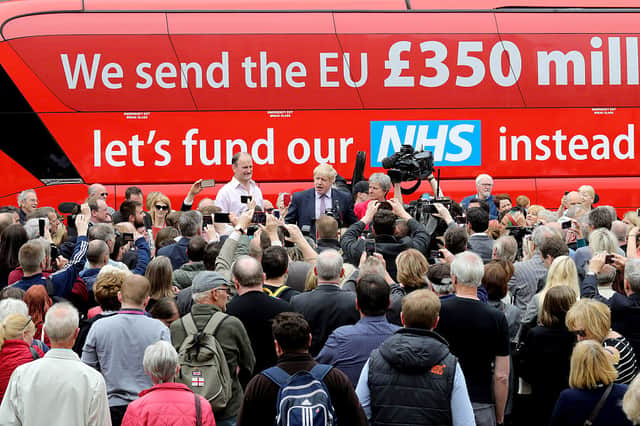
While all this was going on Vote Leave were using social media, particularly Facebook adverts, to pepper voters with arguments about immigration and £350m a week for the NHS.
Andy Wigmore, Mr Farage’s right-hand man, said the Leave campaign was focused on “emotion not facts”.
Whereas Mr Cameron and Mr Osborne only wanted to focus on so-called “project fear” - the terrible economic consequences of leaving.
The pair stuck to their blueprint from the Scottish referendum and 2015, refusing to engage on migration.
Mr Coppard said he realised that Leave might be edging ahead when he had a conversation outside Sheffield Town Hall.
He was speaking to a man and told him he feared leaving the EU might help Russia, after a recent sortie from Russian jets close to the UK.
“He said that didn’t happen, that’s not true, if that had happened it would have been all over the news,” Mr Coppard remembers.
“He was a proponent of Brexit, and he had this view in his head that the negatives and the challenges were being overblown and for him it was more important that we left the EU.
“It came home to me that we weren’t always having a conversation based on the same facts.”
This encounter was to prove prescient for election night on 23 June 2016. Craven in North Yorkshire was the first place to declare, narrowly backing Leave.
This was followed by similar results in Richmondshire, Scarborough, Ryedale, North East Lincolnshire, and the East Riding of Yorkshire.
In Barnsley and Doncaster, voters backed Leave by more than two to one.
And the seismic moment of the night came when Sheffield narrowly voted for Leave. Mr Farage said: “Sheffield votes to Leave [the] EU. Amazing stuff. Delighted.”
Overall the UK voted to leave the EU by the now iconic 52 per cent to 48 per cent.
Within 24 hours, Mr Cameron had announced he was resigning, and this started political turmoil which saw four other Conservative prime ministers over the next six years.
After much wrangling, the UK eventually left the EU on January 31, 2020.
However, Mr Coppard does not think the sentiment behind Brexit has gone away.
“There’s all too many people who felt the system is working against them,” he said.
“The system that has been prosecuted by politicians of every stripe of government since arguably the late 1970s early 1980s hasn’t worked for places like South Yorkshire or large parts of it.
“Those people said [with Brexit] this might not be a better idea but frankly I’ve got very few options to send a message to the Government, and I’m going to take this opportunity to say this isn’t working for me.
“That is something I still don’t think we have quite reckoned with in this country.”