
'Too little too late': Inside the 'chaos and toxicity' of Downing Street during covid
The Government did ‘too little too late’ when responding to the emerging Covid pandemic, costing 23,000 lives, the public inquiry reported.
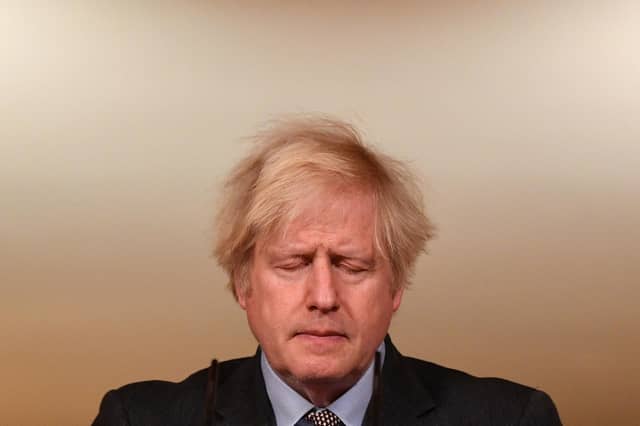


The scathing report described in detail a ‘toxic’ and ‘chaotic’ atmosphere in Number 10, with former Prime Minister Boris Johnson’s overly optimistic attitude directly contributing to excess deaths.
It found public confidence in decision making had been undermined by the alcohol-fuelled parties in Downing Street, and that children were ‘not always prioritised’ when decisions were made to close schools, despite them not being at risk of serious direct harm.
Further, it said the second and third lockdowns – and the inevitable social and economic harm that came from them – were avoidable if the Government had acted sooner.
Baroness Heather Hallett was also especially critical of Mr Johnson’s former special adviser Dominic Cummings, whose “offensive, sexualised and misogynistic” language “poisoned” the atmosphere in Downing Street.
Rishi Sunak and Matt Hancock were also criticised, with the Eat Out to Help Out scheme described as “inconsistent” with public health objectives and devised “in the absence of any scientific advice”, while Mr Hancock had ‘overpromised’ and misleadingly exaggerated the UK’s preparedness.
Frequent law changes “fuelled confusion, misunderstanding and – at times – incorrect enforcement”. It said: “The public – and even the police – struggled to distinguish between government advice and binding legal restrictions.”
Not imposing any lockdown at all – something which the inquiry heard had been discussed but not acted upon – would have “led to an unacceptable loss of life”.
However, bringing the lockdown in one week earlier, on March 16, would have cut deaths in the first wave to July “by 48 per cent – equating to approximately 23,000 fewer deaths” in England.
Yesterday’s release is the second in a series of reports which will make up the final inquiry, with this one looking specifically at political decision making and cultures during the crisis.
In the report, Lady Hallett said the Covid threat was initially treated as a “health issue”, adding it was “surprising” that a Government Cobra meeting was not chaired by Mr Johnson until March 2.
The report added that Mr Johnson “should have appreciated sooner that this was an emergency that required prime ministerial leadership to inject urgency into the response”.
Instead, he failed to appreciate the urgency of the situation “due to his optimism it would amount to nothing”, his “scepticism arising from UK experiences of infectious disease” along with “misleading reassurances” from the Department of Health, headed by Mr Hancock.
Elsewhere, the report criticised the theory of “behavioural fatigue” – the concept that the public would not adhere to restrictions over a long period of time – which was promoted by England’s chief medical officer, Professor Sir Chris Whitty.
Lady Hallett said the behavioural fatigue theory has “no grounding in behavioural science”.
On the ability to test for Covid-19, the report was highly critical of the UK’s lack of testing capacity, which meant officials had “no real understanding of the spread of the virus”, with “dire” consequences.
After imposing the first lockdown, the government did not have a strategy for exiting it, even though this “should have been at the forefront of decision-makers’ minds”.
Later on, there was also “insufficient attention” given to the prospect of a second wave of the virus.
The weakness of the restrictions in the middle of 2020 and Mr Johnson’s “oscillation” enabled the virus to continue spreading at pace, and ultimately resulted in a second lockdown.
In a statement, Lady Hallett said all four governments across the UK failed to “appreciate the scale of the threat or the urgency of response” Covid-19 demanded.
Sir Keir Starmer said the Government would "carefully consider" Lady Hallett's report.
Comment: Page 12.