
Trump's tariffs set to put 25,000 UK car manufacturing jobs at risk, report finds
More than 25,000 jobs in the car manufacturing industry could be at risk if Donald Trump confirms his car tariffs today, a new report has found.
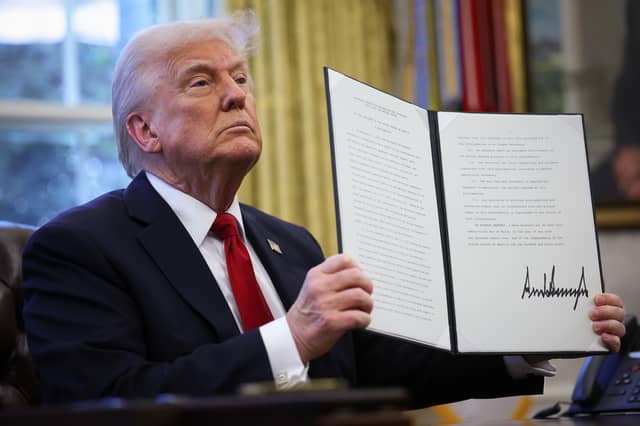


The unpredictable US President is set to unveil global tariffs on US imports from the White House’s rose garden this afternoon, an event he has dubbed “liberation day”.
The UK is seeking to carve out an exemption, the Business Secretary said, but could not give a timescale for when he expects to get the taxes on UK exports reversed.
Jonathan Reynolds explained that the longer a deal takes, the more likely the Government would consider retaliatory tariffs, saying: “The longer we don’t have a potential resolution to that, the more we will have to consider our own position in relation to that.”
He did not rule out dropping or reducing the digital services tax for US businesses but said food standards were a “red line” in trade talks, when asked by Times Radio.
Mr Trump has already levied a 25 per cent tariff on steel imports, which was one of the reasons given by British Steel for opening the consultation to close Scunthorpe’s blast furnaces.
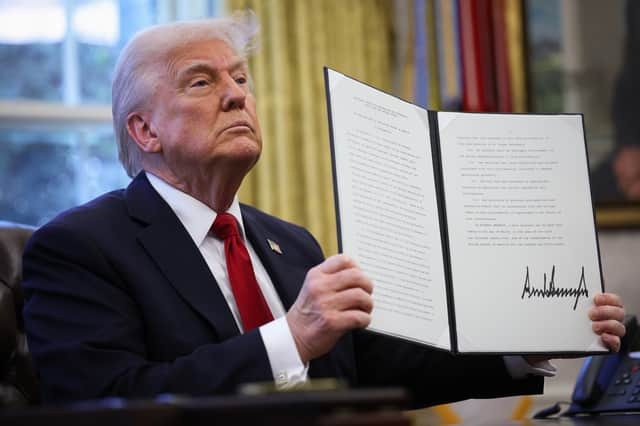
The US President has indicated he is considering a general 20 per cent tax on all UK products in response to the rate of VAT, which he deems to be discriminatory against the US.
Mr Trump has also confirmed he will place a 25 per cent levy on all cars imported to the US, a measure which will be a blow to the UK’s automotive industry.
Some 16.9 per cent of UK car exports were to the US last year, representing a total of more than 101,000 units worth £7.6bn.
A report by the Institute For Public Policy Research has found that more than 25,000 direct jobs in the car manufacturing industry could be at risk as exports are predicted to fall, with employees at Jaguar Land Rover and Mini some of the most exposed.
However, the think tank argued, the UK is well-placed to capitalise on the transition to net zero and build on its niche of manufacturing green planes, trains and cars.
IPPR said that there is a huge untapped internal market for cars, as the UK currently has a significant overreliance on imports from abroad.
Pranesh Narayanan, research fellow at IPPR, said: “Trump’s tariffs have huge potential to completely destabilise the UK car manufacturing industry, affecting tens of thousands of jobs and putting the government’s growth plans at jeopardy.
“However, as one door closes another one opens. There is huge untapped potential in manufacturing green planes, trains and automobiles and selling them at home and abroad.
“If the government uses the upcoming industrial strategy to drive investment in these sectors, this could be the spark that leads to thousands of new consumers to start buying British and buying green.”
One of the industries which is already being impacted by the tariffs is steel, with British Steel saying customers are already considering cancelling orders based on Mr Trump’s levies.
The Business and Trade Committee of MPs has written to Mr Reynolds urging the Business Secretary to put “maximum pressure” on British Steel’s Chinese owners to keep the Scunthorpe blast furnaces open.
“Steel is not just a commodity —it’s the spine of our national strength, a cornerstone of industrial communities and a sovereign capability we cannot afford to lose in this new and uncertain world,” chair Liam Byrne MP said.
“A decade ago, we paid the price of doing nothing: furnaces went cold, jobs were lost, communities were hollowed.
“Now, the pressures on our steel makers are multiplying once more — global overcapacity, protectionist shocks, and the high cost of decarbonisation all threaten to tip the balance again.
“The blast furnaces at Scunthorpe are not symbols of the past — they are pillars of the future.
“Keeping them online is not only an industrial decision, it’s a national imperative and so if needed, we will call British Steel’s chief executive Mr Zengwei An to personally explain to Parliament what more is needed to keep the furnaces blazing and the steel rolling.”