
War in the Middle East: Seven days that shook the world
War in the Middle East began a week ago with the first wave of airstrikes on Iran. Andrew Vine looks at the first seven days of the conflict that is shaking the world.

IT began in broad daylight, as the people of Iran went about their business on a Saturday morning.
Just after 9.30am, clear blue skies over Tehran were filled with the fiery trails of missiles as waves of explosions obliterated command centres and military installations, hour after hour of destruction serving notice that this was not a raid, but a full-scale air assault.
As media organisations across the world flashed out breaking news alerts, their focus abruptly shifted to the United States and its President, Donald Trump, who posted an eight-minute video to social media as the first missiles hit Iran.
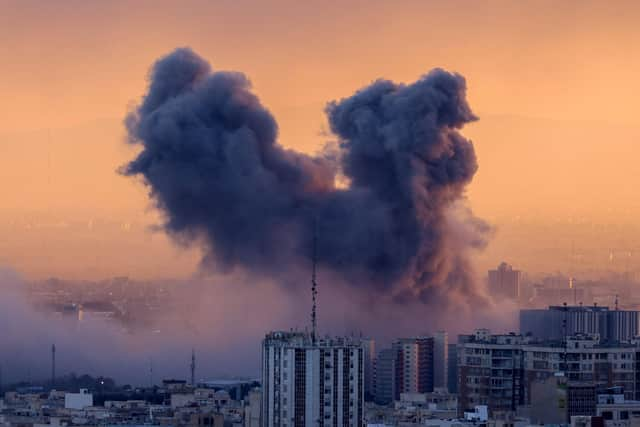

Standing at a lectern against a dark background and wearing a baseball cap emblazoned with “USA”, he vowed to “annihilate” Iran’s navy and “raze their missile industry to the ground”, adding: “Our objective is to defend the American people by eliminating imminent threats from the Iranian regime, a vicious group of very hard, terrible people.”
There was more. The president called on the Iranian people to rise up and overthrow their government, saying America “is backing you with overwhelming strength and devastating force.
Now is the time to seize control of your destiny and to unleash the prosperous and glorious future that is close within your reach…The hour of your freedom is at hand.”
This was Operation Epic Fury, he said, launched jointly by the US and Israel to once and for all subdue Iran after months of escalating tension and years of it sponsoring terrorism and attempting to develop a nuclear weapon.
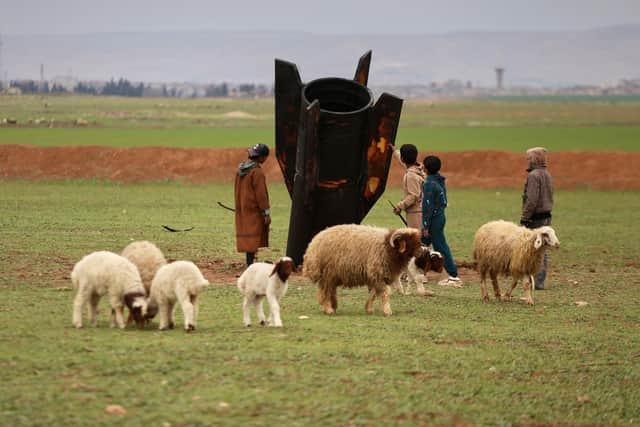
In the first wave of strikes, about 500 targets across the country were hit.
But within hours, an assault had developed into a war as Iran hit back, not only against the US and Israel, but its neighbours.
Missiles hit an American airbase in Bahrain, and more targeting a base in Qatar were shot down. Six US military personnel were killed by a strike on a Kuwait airbase.
Tel Aviv took at least two missile strikes, and in the United Arab Emirates, a hotel in Dubai was hit.
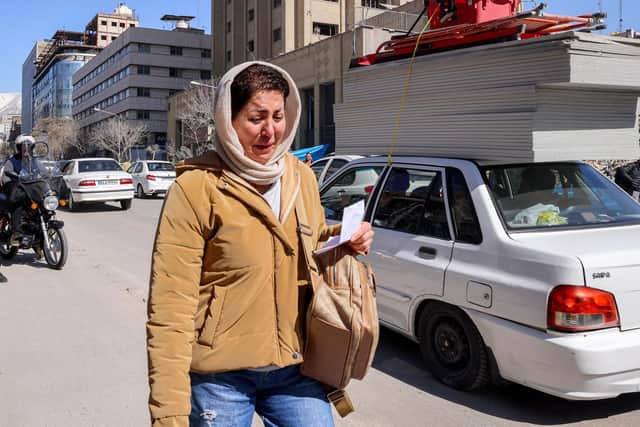
Air raid sirens across the Gulf sounded day after day, as citizens and visitors scurried for cover in search of safety.
Airlines cancelled flights to the region and financial markets were jittery as the widening conflict threatened oil and gas supplies.
Governments, including Britain’s, began making plans to evacuate holidaymakers and expats clamouring to come home aboard chartered planes.
Then, on Sunday morning, an Iranian newsreader broke down in tears as he confirmed what the US and Israel had suspected – and intended.
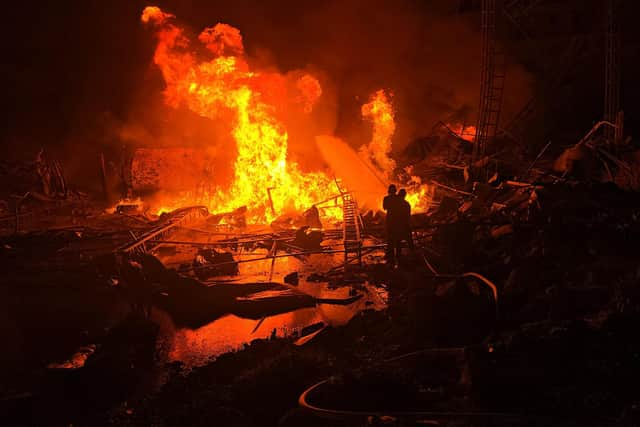
Iran’s supreme leader, Ayatollah Ali Khamenei, 86, who had ruled with an iron fist for four decades and had the blood of tens of thousands of his own people on his hands, was dead, killed in a strike on his official residence.
Satellite images showed a plume of smoke rising from the remains of the building.
Yet his death did not diminish Iran’s counter-attack as blasts continued to shake Bahrain, Doha, Abu Dhabi and Dubai.
Oil and gas refineries were left ablaze as they became targets as Iranian ships blocked the Straits of Hormuz, the vital route for tankers from the Gulf, further stoking fears of huge hikes in worldwide energy prices.
In the skies above Kuwait, air defences mistakenly brought down three US warplanes, their crew ejecting before they hit the ground.
Meanwhile, US missiles continued to pound Iran, and Israel attacked its proxy, Lebanon.
And as war raged throughout the week, with repeated waves of strikes on Iran, diplomacy turned nasty. The special relationship between Britain and the US suddenly appeared to be in tatters.
The government had refused permission for British airbases, particularly Diego Garcia in the Indian Ocean, to be used by US warplanes carrying out the first wave of strikes.
But once Iran started attacking neighbours, the bases were opened to American operations.
Without naming Britain, the US secretary of war, Pete Hegseth, derided allies for “clutching their pearls” and “hemming and hawing about the use of force”.
On Monday, Sir Keir Starmer told a subdued House of Commons that the attack on Iran breached international law and “lacked a viable thought-through plan”.
Citing the lessons of the lengthy and bloody conflict in Iraq that began in 2003, costing the lives of many British service personnel, he said: “This government does not believe in regime change from the skies.
"The use of British bases is limited to the agreed defensive purposes – we are not joining the US and Israeli offensive strikes.”
Predictably, this public rebuke did not go down well with President Trump, who suggested the Prime Minister had ruined the special relationship, adding he was “not happy” with the UK.
He was especially scathing about Britain’s refusal to allow Diego Garcia to be used for attacks, and the planned deal to hand over control of the territory to Mauritius, taking a swipe at Sir Keir in the process.
He said: “That island … It’s taken three, four days for us to work out where we can land there.
"It would have been much more convenient landing there as opposed to flying many extra hours so we are very surprised. This is not Winston Churchill that we’re dealing with.
“I will say the UK has been very, very uncooperative with that stupid island that they have, that they gave away and took a 100-year lease; having to do with, perhaps, indigenous people claiming the island that never even saw the island before. What’s that all about? They’ve ruined relationships.”
On Tuesday, amid criticism from Gulf allies that Britain was doing too little to help defend them, the government announced a Royal Navy destroyer, HMS Dragon, would be sent to protect Cyprus after RAF Akrotiri was hit by a drone.
That same day, there were emotional scenes at Heathrow as the first commercial flights bringing British citizens to safety from the Gulf landed, with chartered government flights home from Oman beginning on Thursday.
The evacuation task ahead is potentially huge, with 140,000 British people in the Gulf who may need to be airlifted to safety.
With alarming rapidity, the conflict spread. On Wednesday, a US submarine sank an Iranian warship off the coast of Sri Lanka, killing at least 87 of its crew, and the following day Azerbaijan was attacked by two Iranian drones, as air strikes continued on the UAE.
On Thursday, a strained-looking Sir Keir defended his decision not to join the strikes, and insisted the working relationship between the US and Britain remained strong.
He said the “long-standing British position” is in favour of a “negotiated settlement with Iran where they give up their nuclear ambitions”.
“That’s why I took the decision that the UK would not join the initial strikes on Iran by the US and Israel. And that decision was deliberate, it was in the national interest, and I stand by it.”
As he spoke, Iran was under the heaviest bombardment so far, with footage emerging from the country of buildings gutted by explosions and fires, some draped with flags in a gesture of defiance.
And in America, President Trump said the heaviest attacks were yet to come.
As the first week of bombardments drew to a close, the Iranian death toll stood at more than 1,000. In Lebanon, at least 40 were dead, and in Israel 10.
With attacks intensifying, the world watches and wonders when and how this war will end – and what happens afterwards.