
Torrential rain is having a 'dire impact' on farmers and push food prices up, government told
The wet weather that has been drenching Yorkshire will have a “dire impact” on farmers and push up food prices, the Country Land and Business Association has warned.

Up until February, Britain was hit with the wettest 18 months on record, while 10 counties had record rainfall in September.
This has been a disaster for farmers with many forced to abandon crops completely, in turn putting pressure on imported food.
In the House of Commons, Shadow Environment, Farming and Rural Affairs Secretary Steve Barclay has warned many farming businesses are “unlikely to survive” without support.
CLA director north, Harriet Ranson, told the Yorkshire Post: “The continued wet weather will have a dire impact on both arable and livestock farmers’ ability to produce food, which in turn will lead to limited and costlier choices on supermarket shelves.”
Ms Ranson also questioned why farmers were still waiting for compensation from flooding from Storm Henk in January.


Under the Conservative government, those in Yorkshire were not able to claim as the county was not deemed to have been impacted enough, despite families having to leave their homes.
Ms Ranson explained: “Farmers, already struggling with inflation, are looking at an Autumn weather pattern replicating the last two years, delaying or preventing drilling of crops entirely.
"As climate change worsens, flooding will become more common.
“The government must quickly compensate those affected by Storm Henk and create lasting solutions, like paying farmers to store water on their land, working with and creating new Internal Drainage Boards as well as correctly maintaining waterways.
“Without action, farmers will keep paying for a problem they didn’t create.”
Shadow minister Robbie Moore, the Keighley and Ilkley MP, told the Commons: “Thousands of farmers across the country are being crippled by crop losses and damage to their fields.
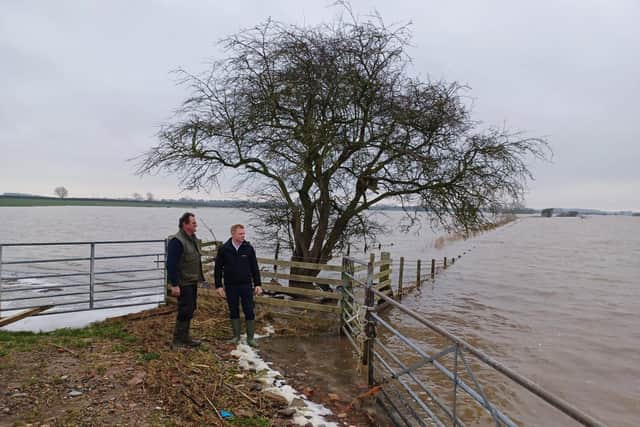
“In fact, farmers are already fearing for their second year without any crop at all.”
He claimed that £50 million was set aside by the Conservatives to help with flooding, but said: “Farmers on the ground, however, say that they have not seen a penny of it.”
Mr Moore added that “there are reports that the farming budget is about to be slashed, leaving uncertainty and farmers facing a cliff edge”.
A Labour source told the Yorkshire Post that “no decisions on the farming budget have been taken” and added “we will not be over-turning the applecart”.
Steve Reed, the new Environment Secretary, said: “We will restore stability and confidence with a new deal for farmers to boost rural economic growth and strengthen Britain's food security.
“We will cut farmers’ energy bills by switching on GB Energy, protect farmers from being undercut in trade deals, and use the Government’s own purchasing power to buy more British produce.”
NFU President Tom Bradshaw accused Labour of “policy paralysis” saying that farmers and growers are waiting “surrounded by flooded fields and failed crops”.
Calling for a multi-year settlement from the government, he said: “High costs, record inflation, low farm returns and the persistent bad weather has resulted in a collapse in farmer confidence, which is at its lowest level since records began.
“This October budget is key to delivering certainty to our food producing businesses, food security and environmental targets, all of which contribute to the government’s missions for growth and prosperity.”