
Exclusive:Improving workplace health could give John Healey Budget boost, ex-John Lewis boss says
Sir Charlie Mayfield, who led John Lewis from 2007 to 2020, is in charge of the Government’s Keep Britain Working review.

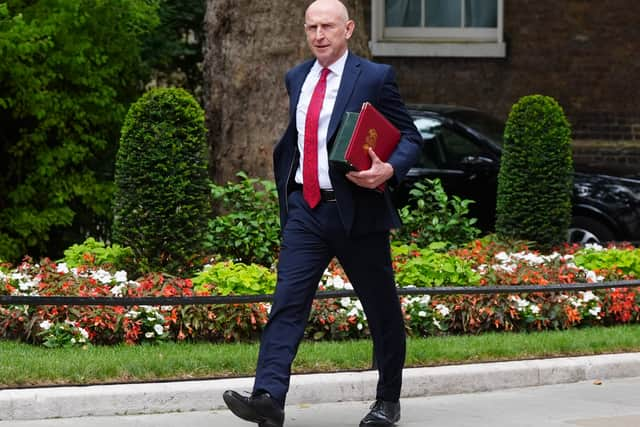
Chancellor John Healey could more than double his fiscal headroom in the Budget by taking action on ill health and keeping people in work, the former boss of John Lewis has said.
Sir Charlie Mayfield, who led the department store from 2007 to 2020, will today publish his latest report on this subject as part of the Government-commissioned programme Keep Britain Working.
He has been travelling across the country for more than a year discussing with employers how to keep people in work with disabilities and ill health.
Yesterday, he spoke to The Yorkshire Post from the Arville Textiles Ltd factory in Wetherby after meeting with more than a dozen manufacturers.
One in five adults in the UK are not working due to ill health or disability, primarily over mental health with youngsters and musculoskeletal issues in the elderly, which is costing the economy £212bn a year.
Sir Charlie believes it is feasible to get workplace health back to where it was in 2014, which would save £57bn.


This is easily double the £24bn of headroom that Chancellor John Healey was handed by his predecessor Rachel Reeves, which has likely been cut in half due to the US-Iran War.
The financial impact from the Middle East conflict is putting Mr Healey under pressure to raise taxes or cut spending.
However, Sir Charlie has said that improving workplace health is a “national growth opportunity”.
He told The Yorkshire Post: “I think this is one of the most attainable and most important growth opportunities we have got in front of us and it is becoming increasingly critical that we grasp it.
“If we can get workplace health back to the level where it was at in 2014 it can be worth £57bn a year.
“I think in the context of all of the challenges we have got across the economy - growth, fiscal pressures etc - we cannot afford not to grasp opportunities like this.
“Particularly, as this one is unusual in that it is good for employers, it is good for employees, it is good for government and it does not require a big chunk of up front government investment to go after it.”
Sir Charlie’s plan brings together employers, the NHS, local authorities and other support services to ensure companies have better data on workplace health and inclusion to drive change.
His report announced 11 regional “vanguards”, including West and South Yorkshire mayoral authorities and Hull City Council.
These areas are testing new systems with employers, unions and disabled people.
Hull City Council, in partnership with provider Latus, is creating the Hull Resilience Hub, a buyer's pool letting local businesses access occupational health services at the same prices as large corporates.
While the South Yorkshire Mayoral Combined Authority will be trialling independent case workers sitting part-time within businesses to support employees with health concerns.
South Yorkshire Mayor Oliver Coppard said: “Our trial will help us work alongside employers, employees and health experts to find practical ways of supporting people to stay well, stay in work, or return to work when they’re ready.
“By testing new ideas and listening to the voices of both working people and employers, we can help create healthier workplaces where people and businesses can get on, contribute to our communities and our economy, and help us build the South Yorkshire we all want to see.”