
Year in review part one: Bradford's city of culture success and Doncaster Sheffield Airport prepares for lift off
Bradford took centre stage, Doncaster showed ambition, presidents had a heated debate and we all felt the heat as temperatures rose. In the first part of our review of 2025, Andrew Vine looks at the events of January to June.

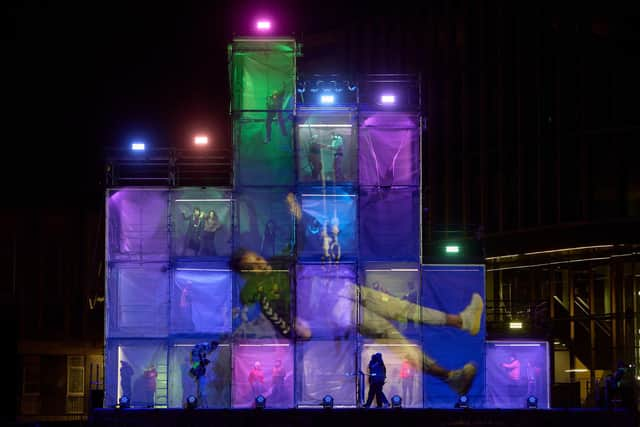
On a freezing winter night, Yorkshire proclaimed itself home to the nation’s most vibrant arts and cultural scene when a crowd of 10,000 people braved sub-zero temperatures to cheer the opening ceremony of Bradford’s year as UK City of Culture.
Entitled RISE, the stunning production in Centenary Square on January 10 featured professional performers and community groups in a spectacular that wove together the many strands of Bradford’s rich heritage.
Bradford had triumphed over stiff competition to be crowned the country’s cultural capital and it created an inspiring year-long programme of events embracing music, art, exhibitions and dance that brought visitors flocking to the city to join residents in celebrating everything it has to offer.

Highlights included a dance version of The Jungle Book and a new production of Edith Nesbit’s classic story, The Railway Children, staged at the Keighley and Worth Valley Railway, where audiences were transported to the auditorium at the end of the line aboard a steam-hauled train.
The production attracted rave reviews, but then so did Bradford’s entire year as UK City of Culture, which as it draws to a close, leaves unforgettable memories.
One of the hopes for Bradford’s year in the spotlight is that it leads to lasting economic benefits, and the same aim propelled another spectacular project in Yorkshire that gathered pace throughout 2025 – the reopening of Doncaster Sheffield Airport.
This is one of the most ambitious regeneration efforts ever undertaken in the region, which if successful could support 5,000 jobs, boost the economy by £5bn and provide wider benefits of £2bn by 2050, with freight operations due to start in 2027 and passenger flights the following year.

Bringing the airport back to life after its closure in 2022 has been debated long and hard all year, and the costs are formidable – £193m, with council leaders and South Yorkshire Mayor Oliver Coppard agreeing to spend almost £160m of public money.
There was grim news for the region in mid-January, when it was revealed that the deaths of 56 babies and two mothers at the Leeds Teaching Hospitals NHS Trust over a five-year period may have been preventable.
A nationwide investigation into maternity services was launched by the Government, but after meeting bereaved parents from Leeds, Health Secretary Wes Streeting announced there would be a separate probe into the trust.
That same month, the nation watched as Axel Rudakubana, 18, went on trial for the murders of three girls at a dance class in Southport in the summer of 2024, which triggered riots around the UK. Rudakubana was sentenced to life imprisonment with a minimum term of 52 years. Weeks later, a Government review concluded that the Prevent anti-terrorism scheme had “prematurely” closed its case on him three years before the attacks, potentially missing the opportunity to have stopped them.
Criticisms of the Prevent programme were far from the only difficulties for the government.
It lost a minister on January 14 when the Economic Secretary to the Treasury, Tulip Siddiq, resigned. Questions had been raised about property she owned, and though cleared of any wrongdoing under the ministerial code, she went anyway.
Her boss, Chancellor Rachel Reeves, also faced questions after it emerged on February 13 she was the subject of an expenses investigation while a senior manager at Halifax Bank of Scotland in the late 2000s.
Her online CV was also reported to have exaggerated the length of time she was employed by the Bank of England. Ms Reeves responded that no concerns were raised with her at the time of the investigation.
Later that month, the Government lost an MP when Mike Amesbury was convicted of punching a man in his Cheshire constituency, and jailed for 10 weeks. The sentence was suspended on appeal and Amesbury freed. He resigned and Reform UK took the Runcorn and Helsby seat in the by-election that followed.
But nothing in British politics even remotely rivalled the extraordinary public row that erupted between US President Donald Trump and his Ukrainian counterpart Volodymyr Zelensky in the White House on February 28.
In the glare of the world’s media, a full-on shouting match ensued. The visit by Mr Zelesnky to plead for more aid in his country’s fight against Russia quickly went downhill as he was ganged-up against.
First, a member of the White House press corps asked why Mr Zelensky wasn’t wearing a suit and tie. Matters got rapidly worse.
US vice-president J D Vance then had a go, calling Mr Zelensky “disrespectful”, before his boss weighed in. Voices were raised, with the two presidents trying to tall over each other before Mr Trump barked: “You’re gambling with millions of lives, you are gambling with World War Three…and what you’re doing is very disrespectful to the country, this country, that’s backed you far more than a lot of people said they should have.”
In a world where disagreements between heads of state are kept behind closed doors, nothing like it had been seen before.
The meeting ended acrimoniously, with Mr Zelesnky leaving the White House earlier than scheduled and Mr Trump withdrawing US aid and intelligence to Ukraine.
On March 10, a maritime emergency off the Yorkshire coast sparked a massive rescue operation when two ships collided about 14 miles from Withernsea – and the country held its breath, fearing catastrophic pollution of precious natural habitats.
The oil tanker MV Stena Immaculate was anchored in a holding area for vessels waiting to enter the Humber when the container ship MV Solong, heading south at a speed of about 16 knots, ploughed into her port side at 9.48am, triggering explosions, a fireball and a plume of smoke visible from shore.
Lifeboats and firefighting vessels headed to the stricken Stena Immaculate, which was ablaze with her cargo of oil leaking into the sea. Thirty-two people who had abandoned the two ships now entangled were brought safely ashore, but one crew member from the Solong was missing, presumed dead.
Fires aboard the Stena Immaculate burned for two days before being extinguished, and both ships were salvaged.
Thankfully, major oil pollution along the beaches of Holderness, which especially threatened the fragile wildlife sanctuary of Spurn, did not materialise.
The 59-year-old Russian captain of the Solong was charged with the gross negligence manslaughter of the missing crew member and awaits trial.
April saw the Government introduce emergency legislation to save the British Steel plant in Scunthorpe after its Chinese owners announced their intention to close it.
A scramble to ensure that the steelworks’ furnaces were not allowed to cool, damaging them beyond repair, involved shipping emergency supplies of coal into Immingham to guarantee they could be kept lit. That same month saw a landmark ruling by the Supreme Court that the legal definition of a woman is based on biological sex, ending a wrangle over the status of trans women.
Bestselling author J K Rowling, long a campaigner on the issue, posted a picture of herself smoking a cigar as she celebrated the ruling with a drink.
On April 21, Pope Francis died at the age of 88 after a lengthy period of illness. As Roman Catholics around the world mourned, the King led Britain’s tributes, saying: “His Holiness will be remembered for his compassion, his concern for the unity of the Church and for his tireless commitment to the common causes of all people of faith, and to those of goodwill who work for the benefit of others.”
His successor was elected on May 8. Cardinal Robert Francis Prevost, 69, born in Chicago, became Pope Leo XIV, the first Pontiff from North America.
The beginning of May launched a summer of headaches for both the government and the Conservatives.
In the local elections on May 2, Reform UK made huge strides, mostly at the Tories’ expense, winning 677 of the 1,600 seats it contested.
For the Government, it was U-turns causing problems. The first was on winter fuel payments. After being heavily criticised for stripping most pensioners of the payment in 2024, the Chancellor announced on June 4 that three-quarters of those who had lost out – about nine million people – would again receive them.
And then on June 27, plans to cut the benefits bill – forecast to cost £100bn a year by the end of the decade – were effectively abandoned after a rebellion by the Government’s backbenchers.
There was, though, some good news for Yorkshire from the Government that month, when it allocated £2.1bn to allow work to begin on the West Yorkshire mass transit system.
It wasn’t only the Government feeling the heat. Temperatures had been rising all spring, with yellow and amber heat alerts and some places in the south sweltering at 35 degrees.
There had been little rain for months, and the Department for the Environment, Food and Rural Affairs declared it the driest January to April in the North since 1929.
Farmers were worried about their crops, and on June 12, a drought in Yorkshire was officially announced by the Environment Agency. Then on July 11, Yorkshire Water introduced a hosepipe ban.